Key takeaways
- Seating Comfort: A thick padded cushion isn’t a luxury — it’s the whole point if you’re sitting down daily to put on shoes. Look for at least 2.5 inches of high-density foam covered in a fabric you can actually wipe clean.
- Shelf Adjustability: Fixed shelves assume every household wears the same shoe height. Adjustable tiers let you configure space for ankle boots, heels, or chunky sneakers without wasting a single inch of vertical room.
- Weight Capacity: Solid-wood and rubberwood frames routinely handle 300 to 550 lbs of seated weight, while thinner MDF panels may wobble under half that. Check the rated capacity and lean toward higher numbers if multiple people will use it daily.
- Dimensions & Door Count: Measure your entryway floor-to-wall space before anything else. Four-door designs hide clutter completely, while open-front styles keep frequently worn pairs within arm’s reach — decide which trade-off fits your routine.
- Material & Finish: Farmhouse white reads clean and bright in small foyers; warm walnut or natural bamboo adds texture to Scandinavian and mid-century interiors. Whatever you pick, ensure the finish resists scuffs from wet soles and muddy heels.
What's inside
Walk into most entryways and you’ll find the same quiet chaos: shoes piled by the door, boots wedged under a console, sneakers multiplying near the coat hooks. The real issue isn’t a lack of willpower — it’s a lack of furniture that actually solves the problem while looking like it belongs in the room. A well-chosen shoe bench storage unit does triple duty: it hides clutter, gives you a place to sit while lacing up, and anchors the space with intentional design.
We tested and compared dozens of entryway storage benches across build quality, seating comfort, capacity, and visual appeal. This guide breaks down the six models that earned a permanent spot in our recommendations, walks you through the key factors worth weighing before you buy, and answers the questions we hear most from readers upgrading their mudroom or foyer in 2026.
As an Amazon Associate we earn from qualifying purchases.



How to Choose Shoe Bench Storage in 2026
- Seating Comfort: A thick padded cushion isn’t a luxury — it’s the whole point if you’re sitting down daily to put on shoes. Look for at least 2.5 inches of high-density foam covered in a fabric you can actually wipe clean.
- Shelf Adjustability: Fixed shelves assume every household wears the same shoe height. Adjustable tiers let you configure space for ankle boots, heels, or chunky sneakers without wasting a single inch of vertical room.
- Weight Capacity: Solid-wood and rubberwood frames routinely handle 300 to 550 lbs of seated weight, while thinner MDF panels may wobble under half that. Check the rated capacity and lean toward higher numbers if multiple people will use it daily.
- Dimensions & Door Count: Measure your entryway floor-to-wall space before anything else. Four-door designs hide clutter completely, while open-front styles keep frequently worn pairs within arm’s reach — decide which trade-off fits your routine.
- Material & Finish: Farmhouse white reads clean and bright in small foyers; warm walnut or natural bamboo adds texture to Scandinavian and mid-century interiors. Whatever you pick, ensure the finish resists scuffs from wet soles and muddy heels.
The Best Shoe Bench Storage (2026) Reviewed
Homleke 4-Door Shoe Storage Bench
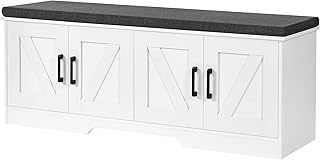
The Homleke bench balances concealed storage with a generously padded seat that actually feels substantial. Four cabinet doors hide two adjustable shelves behind each, and the 45.3-inch width makes it a natural fit for wide entryways without overwhelming the wall. It’s the pick for anyone who wants a clean, closed-up look with zero visual clutter.
VASAGLE CUSTOS 15-Compartment Bench
With fifteen individual cubbies in a cloud-white and dove-gray frame, the VASAGLE CUSTOS is a high-density organizer disguised as a sleek entryway bench. Each compartment fits one to two pairs, making it ideal for larger households that need every shoe visible and off the floor. The padded top adds a surprisingly comfortable seat for such an open, grid-style design.
HOMSHO Farmhouse Barn Door Bench
Four shaker-style barn doors give the HOMSHO an instant farmhouse presence, while adjustable interior shelves let you customize the layout behind each panel. The 47.2-inch frame sits low enough to read as intentional rather than bulky, and the white finish pairs naturally with rattan baskets, linen runners, and warm wood accents popular in 2026 interiors.
XKZG Rubberwood Shoe Rack Bench
At 47.2 inches wide and built from solid rubberwood, the XKZG offers a generous footprint in a warm brown tone that reads premium without the premium price tag. The open two-tier design keeps daily-wear shoes front and center, and the sturdy frame feels planted from the moment you sit down — a no-fuss option for busy households.
Pipishell 3-Tier Bamboo Bench
Bamboo gives the Pipishell bench a lightweight, organic silhouette that works beautifully in minimalist and Japandi-inspired spaces. Three open tiers hold up to 300 lbs total, and the natural grain pattern means no two benches look exactly alike. It’s the most visually restrained option on this list and arguably the easiest to integrate into an already styled room.
Frequently Asked Questions
How many shoes can a typical bench hold?
Most entryway shoe benches accommodate between six and fifteen pairs depending on whether the design uses enclosed cabinets, open shelves, or individual cubbies. Open two-tier models like the XKZG hold around six to eight pairs comfortably, while compartment-style benches such as the VASAGLE CUSTOS can store up to fifteen.
Are shoe bench storage units easy to assemble?
Most models ship flat-packed with illustrated hardware and average 45 to 90 minutes of assembly time. Having a power drill and a second person speeds things up considerably, especially when aligning cabinet doors or leveling shelves on larger benches.
Can a shoe bench double as regular seating?
Yes — as long as the frame is rated for adequate weight and the seat cushion provides real support. Solid-wood and rubberwood models frequently handle 300 lbs or more, making them perfectly viable as extra seating in living rooms, bedrooms, or walk-in closets.
What finish hides dirt and scuffs best?
Warm wood tones like walnut and natural bamboo are the most forgiving with everyday marks, while white and light-gray finishes show dirt sooner but brighten dark entryways. A bench with a matte or textured surface will mask minor scuffs better than a high-gloss coating.
Final Thoughts
For most homes, the Homleke 4-Door Bench hits the sweet spot of concealed storage, seating comfort, and clean design. If you’re managing a larger household and need maximum capacity, the VASAGLE CUSTOS keeps every pair organized and visible. And for style-forward spaces where natural materials matter, the Pipishell Bamboo Bench brings quiet elegance without sacrificing function. Any of these three will transform a messy entryway into the most intentional room in your home.