Key takeaways
- Measure the open footprint, not the closed one: A pull-out bed typically extends 35 to 45 inches beyond the frame. Chalk that rectangle on your floor before you buy, and confirm the coffee table has somewhere to go.
- Interrogate the mattress, not the sofa: Most complaints trace back to a thin foam pad over a spring deck. Look for at least 4 inches of foam, and plan on a topper regardless if the bed will host guests more than a few nights a year.
- Modular versus fixed: Modular sections let you flip the chaise, split the pieces across walls, or shrink the configuration after a move. Fixed frames are usually more rigid and cost less, but you’re committing to one layout permanently.
- Count the storage, then subtract: Under-seat compartments are excellent for bedding but shallow. Verify usable depth before assuming your pillows and duvet will fit alongside the folded mattress mechanism.
- Match upholstery to your traffic: Chenille reads soft and modern but shows pet claws. Tightly woven brown fabrics in the lodge style hide wear and pet hair far better, which matters more than most buyers expect.
What's inside
The sleeper sofa has spent decades apologizing for itself. Buyers walk into a showroom wanting one piece of furniture to handle Tuesday-night streaming and the in-laws’ surprise December visit, and they leave with something that does neither well: a firm slab that sits like a waiting-room bench, or a plush cloud hiding a mattress thin enough to feel every crossbar. The compromise has always been the point of friction, and it’s why so many people delay the purchase entirely, then panic-buy the week before guests arrive.
What’s changed for 2026 is the architecture. Modular systems now let you rearrange the footprint as your room evolves, storage has moved into the seat bases rather than being an afterthought, and chenille has largely displaced stiff microfiber as the default upholstery for its softer hand and more forgiving wear. This guide covers six sleeper sofa sets worth your attention, from apartment-scale L-shaped modulars to full four-piece lodge groupings, along with the specifications that actually predict whether you’ll still like the piece in year three.
As an Amazon Associate we earn from qualifying purchases.



How to Choose a Sleeper Sofa Set (2026)
- Measure the open footprint, not the closed one: A pull-out bed typically extends 35 to 45 inches beyond the frame. Chalk that rectangle on your floor before you buy, and confirm the coffee table has somewhere to go.
- Interrogate the mattress, not the sofa: Most complaints trace back to a thin foam pad over a spring deck. Look for at least 4 inches of foam, and plan on a topper regardless if the bed will host guests more than a few nights a year.
- Modular versus fixed: Modular sections let you flip the chaise, split the pieces across walls, or shrink the configuration after a move. Fixed frames are usually more rigid and cost less, but you’re committing to one layout permanently.
- Count the storage, then subtract: Under-seat compartments are excellent for bedding but shallow. Verify usable depth before assuming your pillows and duvet will fit alongside the folded mattress mechanism.
- Match upholstery to your traffic: Chenille reads soft and modern but shows pet claws. Tightly woven brown fabrics in the lodge style hide wear and pet hair far better, which matters more than most buyers expect.
The Best Sleeper Sofa Sets (2026) Reviewed
85-Inch Modular Chenille Sectional Sleeper
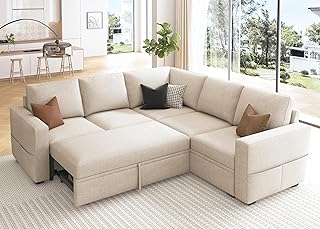
This is the strongest choice for apartments and smaller great rooms: an 85-inch L-shaped five-seater that hides both a pull-out bed and storage seating in a footprint that won’t swallow the room. The chenille has that low-sheen, cloud-adjacent softness that photographs beautifully in beige, though I’d steer households with cats toward a tighter weave.
HONBAY Modular Sectional Sleeper
HONBAY has quietly become the reliable name in configurable seating, and this one earns it — the sections reassemble without tools, so the chaise can move sides after a rearrange. The storage seat is genuinely useful for guest bedding, and the beige upholstery is neutral enough to survive several rounds of decor changes.
Txtin 112-Inch U-Shaped Sleeper Sofa
At 112 inches in a U-shape, this is the entertainer’s pick: enough seating to host without dragging in dining chairs, plus a pull-out bed for whoever stays late. The warm-white chenille is the most design-forward option here, and it demands a room with real square footage and a clear-eyed view of your stain tolerance.
American Furniture Classics Sierra Lodge 4-Piece Set
A complete four-piece grouping in a cabin-leaning brown, this set solves the whole-room problem in a single order — useful for basements, lake houses, and rentals you’re furnishing on a deadline. The durable upholstery is far more forgiving of muddy dogs and wet swimsuits than any light chenille will ever be.
American Furniture Classics Alpine Lodge 4-Piece Set
Alpine Lodge covers the same practical ground as Sierra with a slightly different pattern language, so choose based on which reads better against your flooring and wall color. The four-piece structure means consistent proportions across every seat, which is harder to achieve when you assemble a room piece by piece.
Frequently Asked Questions
Can a sleeper sofa work as a full-time bed?
For a few nights a month, yes. For nightly use, no — the folding mechanism creates pressure points no topper fully resolves. If someone will sleep there every night, buy a daybed or a proper mattress instead.
How much clearance do I need in front of the sofa?
Budget 40 inches of clear floor for the bed to extend, plus a walking path around it. In tight rooms, a lightweight ottoman that can be pushed aside beats a heavy coffee table.
Is chenille durable enough for daily use?
It holds up well to sitting and cleans reasonably with mild soap and water, but it’s vulnerable to snagging from claws and zippers. Households with pets should consider the tighter woven options.
Do modular sections shift apart over time?
Most use interlocking brackets or clips that hold well on carpet and hard floors alike. Check the connectors every few months, and add non-slip pads underneath if the pieces creep on smooth surfaces.
Final Thoughts
For most buyers, the 85-inch modular chenille sectional hits the clearest balance of scale, storage, and contemporary looks, with the HONBAY modular a close alternative if reconfigurability tops your list. If you’re furnishing an entire room at once or need upholstery that shrugs off heavy traffic, the American Furniture Classics Sierra Lodge four-piece set is the pragmatic, durable choice.