Key takeaways
- Ceiling clearance, not just floor space: Measure from the floor to your ceiling and subtract the bed’s total height. You want roughly 30 to 36 inches of air above the top mattress so a child can sit up comfortably. Low bunks solve this problem outright in rooms with 8-foot ceilings or a ceiling fan in play.
- Stairs versus ladder: Staircase models are safer for younger kids and often hide drawers in the treads, but they add 12 to 20 inches of footprint along one side. Ladders keep the silhouette tight; removable ladders let you switch which end they mount to as your layout changes.
- Material and joinery: Solid pine and poplar frames feel quieter underfoot and take paint well. Powder-coated steel frames are slimmer, visually lighter, and typically carry higher weight ratings, but check that slats sit on welded supports rather than clips.
- Convertibility: A bunk that separates into two freestanding platform beds is the single best hedge against changing needs. Confirm the manufacturer includes the hardware and headboard panels for the split configuration, not just a vague claim that it’s possible.
- Integrated storage and power: Drawers, hanging rods, LED strips, and USB charging ports reduce the amount of extra furniture the room has to absorb. Prioritize drawers on casters over drawers on plastic runners, and verify that any built-in electrical component is UL-listed.
What's inside
Bunk beds occupy an odd place in the furniture world: they are bought to solve a square-footage problem, then judged for years on everything else. Parents discover that the ladder lands exactly where the closet door swings. A top bunk sits so high that nobody can change the sheets without a stepstool. The frame that looked sturdy in photos develops a sway by month four. And the bed chosen for a seven-year-old becomes visually childish long before the child outgrows the mattress.
This guide approaches bunk beds the way a designer approaches any built-in: as architecture first, furniture second. Below are the models worth your attention in 2026, spanning solid-wood low bunks, steel frames with integrated stairs and drawers, and convertible full-over-full designs that separate into standalone beds when the shared-room phase ends. We cover how to read specs that actually matter, then break down each pick with an eye toward proportion, longevity, and how the piece behaves in a real room.
As an Amazon Associate we earn from qualifying purchases.



How to Choose a Bunk Bed Best (2026)
- Ceiling clearance, not just floor space: Measure from the floor to your ceiling and subtract the bed’s total height. You want roughly 30 to 36 inches of air above the top mattress so a child can sit up comfortably. Low bunks solve this problem outright in rooms with 8-foot ceilings or a ceiling fan in play.
- Stairs versus ladder: Staircase models are safer for younger kids and often hide drawers in the treads, but they add 12 to 20 inches of footprint along one side. Ladders keep the silhouette tight; removable ladders let you switch which end they mount to as your layout changes.
- Material and joinery: Solid pine and poplar frames feel quieter underfoot and take paint well. Powder-coated steel frames are slimmer, visually lighter, and typically carry higher weight ratings, but check that slats sit on welded supports rather than clips.
- Convertibility: A bunk that separates into two freestanding platform beds is the single best hedge against changing needs. Confirm the manufacturer includes the hardware and headboard panels for the split configuration, not just a vague claim that it’s possible.
- Integrated storage and power: Drawers, hanging rods, LED strips, and USB charging ports reduce the amount of extra furniture the room has to absorb. Prioritize drawers on casters over drawers on plastic runners, and verify that any built-in electrical component is UL-listed.
The Best Bunk Bed Best (2026)s Reviewed
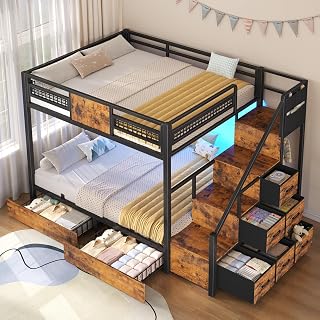
Twin Over Twin with Stairs, Storage Drawers and LED Lights
This is the most complete small-room solution on the list: eight drawers, a hanging area, full-length guardrails, and a staircase that eliminates the nightly ladder negotiation. The steel construction keeps the visual weight low despite all that storage, which matters when a bunk is the largest object in a 10-by-11 bedroom.
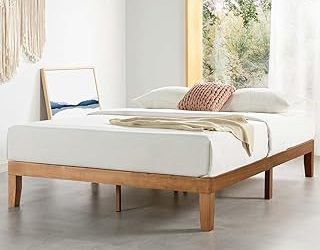
Max & Lily Fundamental Twin Low Bunk
The low profile is the point here, and it changes the character of a room entirely, sitting closer to a piece of furniture than a structure. Solid wood with non-toxic finishes and a genuinely high weight capacity, and the Pecan tone reads warm and adult enough to survive several redecorations.
Merax Twin Over Full Bunk Bed
The twin-over-full configuration is the smartest choice for siblings with an age gap, giving the older child a full mattress without committing to two full beds. Removable ladders, two drawers, and a clean split into separate beds make this the most flexible wood option in the group.
Full Over Full Bunk Bed with Trundle
Three sleeping surfaces in one footprint, sized for teens and adults rather than small children, which is rarer than it should be. The grey finish is neutral to the point of disappearing, and the two-bed conversion gives it a clear second act as a guest room solution.
Full Over Full with Desk, 5 Drawers and Charging Station
Effectively a bedroom in one purchase: desk, drawers, storage pockets, charging station, and LED lighting on a black steel frame that suits older kids and teens. Choose this when the room has to serve as a study space and you’d rather not fit a separate desk against a wall you don’t have.
Frequently Asked Questions
What age is appropriate for the top bunk?
Manufacturers and safety guidance consistently point to age six as the minimum for upper bunks. Beyond age, look for the ability to climb down independently at night, which varies widely between children.
How thick should a bunk bed mattress be?
For the top bunk, stay at or below the maker’s stated maximum, usually 6 to 8 inches. Guardrails need to sit at least five inches above the mattress surface, and a plush mattress quietly eliminates that margin.
Can adults use bunk beds?
Yes, provided you check the per-bunk weight rating rather than a single combined number. Full-over-full frames and steel constructions generally accommodate adults comfortably; twin low bunks built for children often do not.
Why do bunk beds develop a wobble?
Almost always loosened hardware. Retighten every bolt after the first month and then twice a year, and anchor the frame to a wall stud if the manufacturer provides brackets.
Final Thoughts
For most shared kids’ rooms, the Twin Over Twin with Stairs, Storage Drawers and LED Lights does the most work in the least space, and its staircase earns its footprint. Design-led buyers who want something that ages gracefully should look at the Max & Lily Fundamental Twin Low Bunk in Pecan, while households planning for teenagers or overnight guests will get more mileage from the Full Over Full with Trundle, which quietly becomes two standalone beds when the bunk phase ends.