Key takeaways
- Back height: Floor to top of chair back. Stretch covers fit best at 36–42 inches total height.
- Back width: Widest point of backrest. Standard stretch fit is 15–18 inches; XL stretch fits 18–21 inches.
- Seat width and depth: Side to side and front to back of the seat pan. Most stretch covers assume a seat 15–19 inches wide and 16–19 inches deep.
- Seat height: Floor to top of seat. Standard is 17–19 inches; seat covers with elastic need at least 1.5 inches of clearance under the seat frame to grip.
- Leg thickness: If legs flare wider than 2.5 inches or have stretchers, a full-length cover may ride up.
Chair covers for dining chairs are best chosen by fit type first, then fabric: stretch-knit covers give the cleanest, wrinkle-free look for standard parsons chairs, elasticized seat covers are the easiest washable fix for daily kid and pet messes, and relaxed slipcovers are the only option that reliably fits armchairs and odd-sized frames.
Our top picks
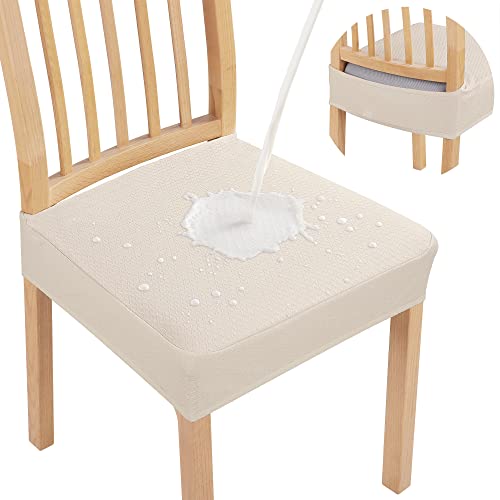
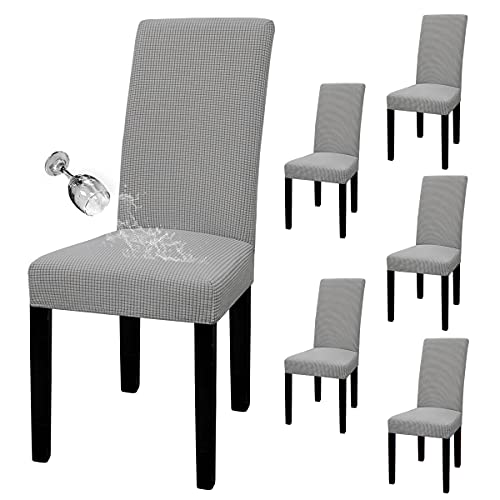


As an Amazon Associate we earn from qualifying purchases at no extra cost to you. Ratings are shown as listed on Amazon.
3 Fit Types Compared: Stretch vs. Elastic Seat vs. Relaxed Slipcover
All three are sold as “universal” but they work very differently once you put them on. Use this to filter before you shop by fabric or color.
| Fit Type | Coverage | Stretch & Stay-Put System | Best For | Price Range (Set of 4) |
|---|---|---|---|---|
| Stretch / Form-Fit | Full chair: seat, back, and legs | 92-95% polyester + 5-8% spandex, elastic hem + sewn-in foam anchors | Parsons and straight-back chairs without arms; modern look | Usually $35–$70 |
| Elasticized Seat Cover | Seat only, with 4-6 inch skirt | Elastic band sewn into hem, sometimes with buckle straps underneath | Rental-friendly, quick changes, protecting seat upholstery only | Usually $20–$40 |
| Relaxed Slipcover / Loose Drape | Full chair, loose and tucked | Ties, velcro, or drawstring; minimal or no spandex | Armchairs, wingbacks, curved backs, vintage chairs | Usually $40–$85 |
1. Stretch-Knit Covers: The Tailored Look
These are the most popular for a reason. The spandex blend hugs the contours of a parsons chair and hides minor stains, scratches, or mismatched chairs without reupholstery. Look for separate sewn panels for the back and seat rather than a single tube of fabric — they wrinkle less and recover better after washing. Most include small foam tubes you tuck into the crevice between seat and back to lock the fabric in place.
Limitation: They need a fairly standard shape to work. If your chair back is wider than 20.5 inches, has a deep curve, or is wider at the top than the bottom, the seams will pull and snap back. They also rarely stay neat on armchairs; the fabric bags around the arms.
2. Elasticized Seat Covers: The Practical Workhorse
This is essentially a fitted sheet for your chair seat. An elastic band grips under the seat pan. It takes 10 seconds to put on, comes off for washing in seconds, and doesn’t trap heat like a full cover. It’s ideal if your chairs are in good shape and you only want to protect the highest-wear area from food, oils, and pet hair.
Limitation: No back protection and the elastic loosens over 12-18 months of frequent hot washing. If your seat cushion is not removable and has a skirt or wood frame tight to the seat, there is nowhere for the elastic to grip.
3. Relaxed Slipcovers: The Universal Fit
Made from woven cotton, denim, or linen-blend, these drape over the entire chair and are held with ties at the back legs or a drawstring. Because they don’t rely on stretch, they accommodate almost any silhouette, including dining armchairs with 24 to 28-inch arm width, barrel backs, and high wingbacks. They give a casual, farmhouse or coastal look and are easy to adjust for a perfect drape.
Limitation: You will need to re-tuck after use. They wrinkle, shift with movement, and are not ideal if you want a tight, modern silhouette.
Fabric Durability and Washability Trade-Offs
Fabric determines how the cover feels, how long it lasts, and whether you will actually wash it. Don’t choose by color alone.
| Fabric Type | Feel and Look | Durability (Martindale Rub Count) | Washability and Shrinkage | Best For |
|---|---|---|---|---|
| Polyester-Spandex Blend (Jacquard/ Knit) | Smooth, slight sheen, 4-way stretch | 20,000–30,000 rubs | Machine wash cold, tumble low; shrinkage <1%; resists wrinkles and stains | Daily use, kids, pets, frequent washing |
| Polyester Velvet / Velour | Soft, matte, heavier drape | 30,000–40,000 rubs | Wash cold, air dry best; holds pet hair more than knit; 1-2% shrinkage if heated | Formal dining rooms, hiding worn upholstery |
| Cotton or Cotton-Linen Blend (Woven Slipcover) | Breathable, textured, casual | 12,000–20,000 rubs | Wash warm, will wrinkle; expect 3-5% shrinkage if not pre-washed; iron or steam needed | Natural texture, armchairs, style-first homes |
| Water-Resistant / Spill-Proof Knit | Smooth knit with laminated backing | 20,000–25,000 rubs | Wipe clean or wash cold; do not use high heat or fabric softener (damages coating) | Young children, spill-prone households |
What wears first: On stretch knits, the elastic hem and foam anchors fail before the fabric does. On water-resistant covers, the backing cracks after 30-40 hot washes. On cotton slipcovers, seams at the arm corners abrade first. Washing cold and air-drying doubles usable life for all types.
Sizing Guide: How to Measure for Parsons and Armchairs
One-size-fits-most only works within a narrow range. Measure your chair before ordering — it takes two minutes and prevents returns.
For Parsons and Side Chairs (No Arms)
Measure at the widest points, not the seat cushion alone:
- Back height: Floor to top of chair back. Stretch covers fit best at 36–42 inches total height.
- Back width: Widest point of backrest. Standard stretch fit is 15–18 inches; XL stretch fits 18–21 inches.
- Seat width and depth: Side to side and front to back of the seat pan. Most stretch covers assume a seat 15–19 inches wide and 16–19 inches deep.
- Seat height: Floor to top of seat. Standard is 17–19 inches; seat covers with elastic need at least 1.5 inches of clearance under the seat frame to grip.
- Leg thickness: If legs flare wider than 2.5 inches or have stretchers, a full-length cover may ride up.
If any measurement is over the range by more than 1 inch, size up to XL or switch to a relaxed slipcover. A cover that is 0.5 inch too small will pull and expose the legs; 1 inch too large just needs deeper tucking.
For Dining Armchairs
Stretch covers rarely list arm dimensions — that’s your clue they won’t fit. For armchairs, use these targets for a relaxed slipcover:
- Overall width including arms: 23–28 inches
- Arm height from seat: 7–10 inches
- Arm width: 2–5 inches per arm
- Back width including arms at widest point: Up to 26 inches
If your armchair has a curved or barrel back, add 2 inches to the back width measurement to account for the drape needed. Look for slipcovers with separate tie closures at the back legs — they let you cinch excess fabric instead of letting it puddle.
Clearance and Room Fit Check
Cover thickness is minimal, but a full slipcover adds about 0.5–1 inch per side. In a 10×12 ft dining room with a 60-inch table and four chairs, you need 36 inches of clearance from table edge to wall for chairs to slide back comfortably. If you are already tight at 32–34 inches, a bulky slipcover with ties at the back will make the space feel tighter and snag on the wall. In that situation, a thin stretch knit or seat-only cover keeps the footprint unchanged.
Decision Matrix: Which Cover Fits Your Situation
Match your household to the right choice without overthinking fabric names.
| Your Situation | Recommended Fit | Recommended Fabric | Why |
|---|---|---|---|
| Small apartment, mismatched rental chairs | Stretch-knit, set of 4-6 | Polyester-spandex jacquard | Unifies different chairs with one tight look; no tools, fully removable |
| Kids under 8 and daily meals at table | Elasticized seat cover + spare set | Water-resistant knit or polyester-spandex | Seat takes 90% of spills; swap and wash in minutes; keep 2 sets in rotation |
| Pets that shed or scratch | Stretch velvet or tight knit | Polyester velvet with 30,000+ rub count | Tight weave resists claws and hides hair; no loose fabric to pull |
| Wood or leather armchairs you want to protect but show shape | Relaxed slipcover with ties | Cotton-linen blend or denim | Drapes without hiding chair design; breathable and washable |
| Formal hosting, style before function | Stretch-knit, floor-length | Velour or damask jacquard | Tailored, wrinkle-free look for photos and events; spot clean between washes |
| Back pain / need extra cushioning | Stretch with padded seat | Thick knit with foam backing | Adds 0.25-0.5 inch padding without changing seat height significantly |
Fit and Care Tips That Keep Covers From Slipping
- Install with foam anchors: After pulling the cover on, push the included foam cylinders deep into the seat-back crevice and the side seams. This does more than elastic to prevent riding up when you stand.
- Wash cold, never hot: Hot water breaks down spandex and water-resistant coatings. Wash on gentle cold, mild detergent, and skip fabric softener. Tumble low for 10 minutes then air dry taut on the chair to avoid wrinkles.
- Measure doorway and chair weight if storing extras: Not for fit but for practicality — boxed sets of 6 stretch covers weigh 3–5 lbs and store flat, while cotton slipcovers are bulkier. Keep a second set vacuum-sealed if closet space is tight.
- Test one before buying six: Order a single cover first if your chairs are non-standard. Check that the seat seam sits exactly at the seat edge and the back seam doesn’t bow out more than 0.75 inch when pulled taut.
- For non-removable seats: If elastic seat covers won’t grip, add small adhesive velcro dots under the seat frame — invisible, renter-friendly, and keeps the cover from shifting sideways.
FAQ
Will a standard stretch cover fit a chair with a removable cushion?
Yes, but remove the cushion, put the cover over the frame, then place the cushion back inside the covered seat if possible. If the cushion is thick (over 4 inches), the foam anchors won’t reach the crevice and the cover will slip — use an elastic seat cover on the cushion itself instead.
How do I keep covers from sliding on leather or faux leather?
Leather is slippery. Choose a cover with a textured knit back or silicone dot backing, and always use the foam anchors. A thin non-slip shelf liner cut to seat size under the cover also helps without adhesive.
Can I use dining chair covers on office or desk chairs?
Only if the desk chair is a simple parsons shape without wheels and arm height under 26 inches. Task chairs with adjustable arms, lumbar knobs, and 5-star bases will not fit stretch covers and look bulky in slipcovers.