Key takeaways
- Performance polyester or solution-dyed acrylic: rated 30,000 to 100,000 double rubs, cleanable with water or mild soap (cleaning code W or WS), and resistant to fading. The best all-around family choice.
- Faux leather (PU): wipes clean instantly, costs the least, but peels in three to five years and feels sticky in summer. Fine for young-kid years if you plan to replace or reupholster.
- Genuine leather: $150 and up per chair, lasts 10 to 20 years, tolerates spills if wiped quickly, develops patina rather than stains.
- Linen and cotton blends: attractive, breathable, and the worst for families; they absorb liquid and show wear. Only with a removable, machine-washable slipcover.
- Velvet: polyester velvet is surprisingly tough and hides crumbs, but wet stains crush the pile. Cleaning code S or WS; check before buying.
Upholstered dining chairs fail families in two ways. Either the fabric gives up first, with a beige linen-look weave that holds every drop of spaghetti sauce and pills where kids kneel on it, or the frame gives up, with legs that loosen at the seat rail after a year of chairs being dragged across tile. Both problems are visible in the specs before you buy: fabric type and cleaning code, frame material, joinery, and weight rating. The mistake is shopping by color and back shape and ignoring the parts that determine whether the set survives to the next school year.
Decide These 3 Things First
1. Spill reality. Toddlers and elementary-age kids mean daily wipe-downs. Performance fabric, faux leather, or a removable washable cover are the only sane choices. Teens and adults can manage a standard polyester or linen blend with a fabric protector.
Our top picks



As an Amazon Associate we earn from qualifying purchases at no extra cost to you.
2. Chair count and table match. Allow 24 inches of table edge per chair; a 63 inch table takes six, a 71 to 79 inch table takes six to eight. Seat height should sit 10 to 12 inches below the table top: 18 to 19 inches for a 29 to 30 inch table. Check that armless chairs are 18 to 20 inches wide so they tuck in without touching.
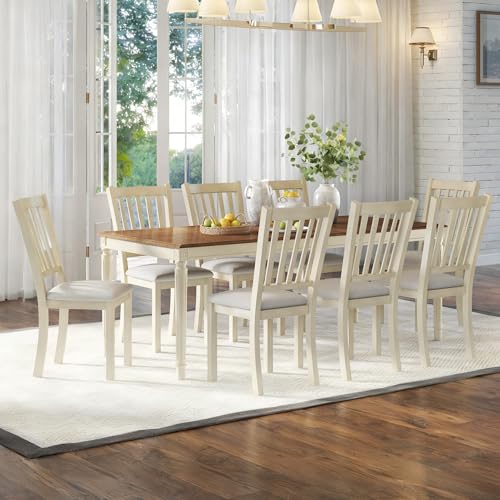
3. Full upholstery or padded seat only. A fully upholstered wingback or tufted chair looks plush and costs $60 to $100 per chair in sets, but every surface is a stain target. A padded seat on a wood or metal frame limits fabric to the one area you can easily clean or replace.
Fabric and Cover Material
- Performance polyester or solution-dyed acrylic: rated 30,000 to 100,000 double rubs, cleanable with water or mild soap (cleaning code W or WS), and resistant to fading. The best all-around family choice.
- Faux leather (PU): wipes clean instantly, costs the least, but peels in three to five years and feels sticky in summer. Fine for young-kid years if you plan to replace or reupholster.
- Genuine leather: $150 and up per chair, lasts 10 to 20 years, tolerates spills if wiped quickly, develops patina rather than stains.
- Linen and cotton blends: attractive, breathable, and the worst for families; they absorb liquid and show wear. Only with a removable, machine-washable slipcover.
- Velvet: polyester velvet is surprisingly tough and hides crumbs, but wet stains crush the pile. Cleaning code S or WS; check before buying.
Look for a stated double-rub count of 25,000 or more, a cleaning code, and a description of the foam under the fabric: 2 to 3 inches of high-density foam (1.8 pounds per cubic foot or denser) holds shape for years, while thin 1 inch pads flatten in months.
Frame Material and Construction
Solid wood legs and rails, typically rubberwood, beech, or oak, are the standard at $40 to $80 per chair. Look for legs at least 1.25 inches square or in diameter and a seat frame joined with corner blocks, dowels, or mortise-and-tenon, not just screws through the rail. Steel frames with powder coating are lighter and very stiff but can scratch floors without proper glides. Avoid engineered wood or plastic frames on chairs that will be dragged daily.
Weight capacity of 250 to 300 pounds is typical; heavier duty chairs list 330 to 400 pounds. Chair weight of 15 to 22 pounds indicates a substantial frame; under 12 pounds is a warning. Check that the back attaches to the seat frame with bolts or a continuous rear leg, because a back that is only screwed into the seat is the first joint to loosen when kids lean back on two legs.
Comfort and Fit
Seat depth of 17 to 19 inches suits adults; children’s feet dangle regardless, but a shallower 16 to 17 inch seat helps school-age kids sit upright. Seat width of 18 to 20 inches allows adults to shift position through a long dinner. Back height of 34 to 38 inches overall (16 to 20 inches above the seat) supports the mid back; wingback and high-back chairs of 40 inches or more look formal but block sight lines across a kitchen. A slight backward tilt of 5 to 10 degrees in the backrest is more comfortable than a bolt-upright back for meals that stretch past 30 minutes. Curved backs distribute pressure better than flat panels.
Price Tiers
Budget, $30 to $50 per chair ($120 to $200 for four): polyester fabric or PU on rubberwood or steel, 1.5 to 2 inch foam, screws into rails. Expect three to five years with kids.
Mid-range, $50 to $95 per chair ($200 to $380 for four to six): performance fabric, 2 to 3 inch high-density foam, solid wood frames with corner blocks, 300 pound ratings. Full dining sets with a 79 inch table and eight chairs land around $600 to $800.
Premium, $150 to $400 per chair: kiln-dried hardwood, eight-way hand-tied or sinuous spring seats, genuine leather or 100,000 double-rub fabric, and replaceable seat cushions.
Warranty, Delivery, and Assembly
Budget sets carry 30 to 90 day returns and a one-year frame warranty; fabric is rarely covered beyond defects. Mid-range brands typically warrant frames for one to three years. Sets of four ship in one carton weighing 50 to 75 pounds; sets of six run 80 to 110 pounds. Assembly is usually four legs bolted to a pre-upholstered seat, 10 to 15 minutes per chair with the included hex key. Retighten all bolts after two weeks, and prefer one-piece seat-and-back designs over backs that bolt on separately.
Spec Checklist
| Spec | Budget | Mid | Premium |
|---|---|---|---|
| Fabric | Polyester or PU, no rub rating | Performance fabric, 30,000 to 50,000 double rubs | Leather or 100,000 double rubs |
| Cleaning code | Often unstated | W or WS | W or WS, or leather |
| Foam | 1 to 2 in, low density | 2 to 3 in, 1.8 lb per cu ft | 3 in high resilience or sprung seat |
| Frame | Rubberwood or steel, screwed | Solid hardwood, corner blocked | Kiln-dried hardwood, mortise and tenon |
| Leg thickness | 1 to 1.25 in | 1.25 to 1.5 in | 1.5 in plus |
| Weight capacity | 250 lb | 300 lb | 330 to 400 lb |
| Chair weight | 10 to 14 lb | 15 to 22 lb | 20 to 30 lb |
| Seat height | 17.5 to 19 in | 18 to 19 in | 18 to 19 in |
| Warranty | 1 year frame | 1 to 3 years | 5 years to lifetime frame |
| Price per chair | $30 to $50 | $50 to $95 | $150 to $400 |
Red Flags
- No fabric composition, rub count, or cleaning code in the listing.
- “Linen” chairs marketed to families with no slipcover or protective treatment mentioned.
- Chair weight under 12 pounds or shipping weight under 45 pounds for a set of four.
- Legs that attach with a single bolt each through the fabric-covered seat base.
- Seat height not listed, or over 20 inches for a standard-height table.
- Reviews that mention wobble after a few months or fabric pilling where knees rest.
- No stated weight capacity.
FAQ
What is the easiest upholstered dining chair fabric to clean?
Faux leather wipes clean fastest, followed by performance polyester with a W cleaning code. For a fabric look without the worry, choose a solution-dyed performance weave rated 30,000 double rubs or higher.
How many double rubs do dining chairs need?
Fifteen thousand is the residential minimum, 30,000 is comfortable for daily family meals, and 50,000 or more will outlast the foam. Most listings that state a number at all are in the 30,000 to 50,000 range.
Should I get chairs with a removable seat cover?
If you have children under ten, yes. A zip-off, machine-washable cover turns a sauce disaster into a laundry cycle. Otherwise, a spray protector applied twice a year on performance fabric is enough.
Are wingback or tufted chairs practical for families?
They are comfortable and look finished at a farmhouse table, but tufting traps crumbs and the extra fabric surface means more to clean. In 2026, a curved-back chair with a padded seat and performance fabric delivers most of the comfort with far less upkeep.