Key takeaways
- Use a tape measure to confirm the topper and fitted-sheet dimensions before buying.
- Choose two inches for a modest comfort adjustment, three inches for balanced contouring, and five inches for a pronounced plush feel.
- Rotate the topper occasionally if the manufacturer permits, but avoid folding memory foam sharply.
- Keep a breathable protector between the topper and sheets to reduce stains, moisture, and premature wear.
What's inside
A mattress topper is one of the quickest ways to refine a bedroom without replacing the entire bed. The right memory foam layer can soften a firm mattress, ease pressure at the shoulders and hips, or make an older guest-room bed feel considerably more inviting. It can also change the visual and practical experience of a room: a neatly fitted topper helps bedding sit higher and more smoothly, while a washable cover adds a useful layer of protection.
This guide explains how to choose a memory foam topper in 2026, from thickness and density to cooling design, fit, and care. We’ll also look at several promising options for different sleep preferences, including slim comfort layers, ventilated gel foam, and extra-thick pillow-top styles. The goal is not simply to find the softest topper, but to match the construction to your mattress, body, climate, and budget.
As an Amazon Associate we earn from qualifying purchases.


Start With the Mattress You Already Have
A topper should correct a mattress problem, not disguise a fundamentally unsuitable bed. If your mattress is too firm but still supportive, a two- or three-inch memory foam topper may add welcome cushioning. If it feels slightly worn yet remains flat and structurally sound, a thicker model can refresh the surface. However, deep sagging, exposed coils, persistent lumps, or damaged edges usually call for a mattress replacement rather than an accessory.
Consider your existing firmness, sleep position, and body weight together. Side sleepers often benefit from more pressure relief around the hips and shoulders. Back sleepers typically need cushioning without allowing the pelvis to sink too far. Stomach sleepers usually fare better with a thinner, firmer-feeling layer that preserves spinal alignment.
Choose the Right Thickness
Thickness is the most noticeable buying decision. A two-inch topper, such as the Linenspa 2 Inch Gel Memory Foam Mattress Topper, is a relatively subtle upgrade. It can smooth out a firm surface while retaining much of the mattress’s original feel, making it useful for guest rooms, dorms, and sleepers who do not want a dramatically softer bed.
Three-inch toppers are the versatile middle ground. The EGO 3 Inch Queen Mattress Topper, Best Price Mattress 3 Inch Ventilated Memory Foam Topper, and SINWEEK 3 Inch Gel Memory Foam Topper are the kind of options to consider when you want more contouring and pressure relief without adding an exceptionally deep layer. They are often a practical choice for side and combination sleepers.
Five-inch designs create a more substantial change. The WhatsBedding 5 Inch Memory Foam Mattress Topper and SHOUREN 5 Inch Extra Thick Gel Memory Foam Topper suit shoppers seeking a plush, pillow-top-style feel. Before choosing one, measure your fitted sheets and bed frame clearance. A thick topper can make standard sheets too shallow and may affect the height of nightstands or bed rails.
Understand Foam, Density, and Support
Memory foam is designed to respond to body heat and pressure, creating a conforming feel. That contouring can reduce pressure points, but it is not automatically the same as firm support. A very soft topper placed on a soft mattress may allow excessive sink, particularly for heavier sleepers or anyone who sleeps on their stomach.
Product descriptions do not always provide foam density, so read the specifications carefully when available. Higher-density foam generally feels more substantial and may resist impressions better, while lower-density foam can feel lighter and more immediately plush. Look for CertiPUR-US or comparable certification when possible; it indicates that the foam has been assessed against specific emissions and material standards. Certification is useful context, but it does not guarantee a particular firmness or lifespan.
Look for Cooling Features That Match Your Climate
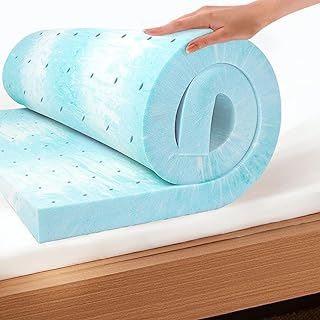
Traditional memory foam can retain heat because it closely surrounds the body. Gel infusion, perforated or ventilated channels, breathable covers, and open-cell structures may improve airflow and surface comfort. The EGO, Best Price Mattress, and SINWEEK toppers all emphasize ventilated or gel-infused construction, which may appeal to warm sleepers.
Cooling is influenced by more than the foam. A waterproof protector, flannel sheets, a dense mattress beneath the topper, room temperature, and even a heavy duvet can limit airflow. Treat cooling features as helpful design elements rather than a guarantee of a cold sleeping surface. If you sleep hot, pair a ventilated topper with crisp cotton or linen bedding and a lightweight blanket.
Check Fit, Cover Design, and Everyday Maintenance
Measure the mattress before ordering, including its width, length, and current depth. Queen-size dimensions can vary slightly between brands, and a topper that is too short or wide may shift under the sheets. Straps, elastic edging, or a textured underside can help, especially on adjustable beds or slick mattress fabrics. The SHOUREN model includes four-way straps, a feature worth considering if movement is a recurring problem.
A removable, machine-washable cover is a meaningful convenience. It does not make the foam itself washable, so use a breathable mattress protector over the topper and allow the foam to air out after unboxing. Most compressed toppers need time to expand. Follow the manufacturer’s setup instructions, and do not judge the final feel until the material has fully recovered and any initial packaging odor has dissipated.
Tips
- Use a tape measure to confirm the topper and fitted-sheet dimensions before buying.
- Choose two inches for a modest comfort adjustment, three inches for balanced contouring, and five inches for a pronounced plush feel.
- Rotate the topper occasionally if the manufacturer permits, but avoid folding memory foam sharply.
- Keep a breathable protector between the topper and sheets to reduce stains, moisture, and premature wear.
Frequently Asked Questions
Are memory foam toppers good for back pain?
They can help by distributing pressure and filling small gaps around the body, but results depend on the mattress underneath and your sleeping position. A topper cannot correct severe sagging or replace appropriate medical care. Choose a supportive, not excessively soft, surface if you tend to sink around the hips.
Is a thicker topper always better?
No. Thickness changes the feel rather than guaranteeing comfort. A five-inch topper may feel luxurious to one sleeper and unstable to another. If you already have a soft mattress, a two- or three-inch layer may provide better balance and easier bed-making.
How long does a memory foam topper last?
There is no single lifespan because usage, foam quality, body weight, room temperature, and rotation habits all matter. Replace it when it develops lasting body impressions, uneven support, tearing, or a persistent odor. A protector and careful handling can help preserve the cover and foam.
Can I use a topper on an adjustable bed?
Many flexible foam toppers can work on adjustable bases, but thick or rigid constructions may bend awkwardly. Check the manufacturer’s guidance, secure the topper with a fitted sheet or compatible straps, and confirm that the combined mattress height remains within the base’s recommended range.
Conclusion
The best memory foam mattress topper is the one that makes a specific improvement without creating a new problem. Start with the mattress you own, then match thickness and contouring to your sleep position, body, climate, and sheet depth. For a restrained upgrade, consider a two-inch gel model such as Linenspa; for more adaptable cushioning, explore the three-inch EGO, Best Price Mattress, or SINWEEK options; and for a dramatic pillow-top transformation, compare the thicker WhatsBedding and SHOUREN designs carefully. Thoughtful sizing, realistic expectations, and a good protector will matter just as much as the foam itself.