Key takeaways
- Blot spills outward from the edge toward the center to avoid spreading the stain ring wider than it started.
- Use the manufacturer’s matched solution where possible; off-formula detergents can leave residue that attracts soil and dulls fiber over time.
- Empty and rinse both tanks after every session — dirty water left standing is the fastest way to make a machine smell worse than the carpet.
- Run fans or open windows during drying, and lift furniture legs onto foil or plastic to prevent stain transfer from wood finishes.
What's inside
Carpet is the quietest design decision in a room. It sets the acoustic tone, softens architectural hard edges, and anchors a palette — right up until a spilled glass of red or a muddy paw print turns it into the loudest thing in the space. Rugs and wall-to-wall broadloom absorb the everyday life of a home in a way that a sealed floor simply does not, which means the machine you keep in the utility closet has more influence on how your interiors age than most people expect.
This guide walks through how to choose a carpet cleaner in 2026 based on the way you actually live: how much square footage you’re maintaining, whether pets are part of the equation, how quickly you need fibers dry, and when a bottle of spot treatment beats a full machine. You’ll learn the difference between an upright extractor and a portable spot cleaner, how suction and brush design affect results, what to look for in cleaning solutions, and the technique that separates a genuinely refreshed carpet from one that looks clean for a week and then goes gray.
As an Amazon Associate we earn from qualifying purchases.


Match the Machine to Your Floor Plan
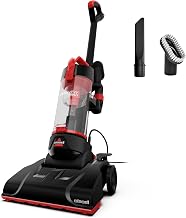
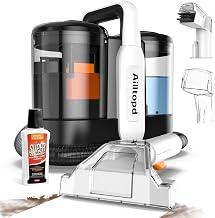
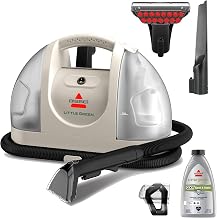
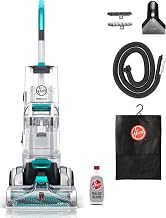
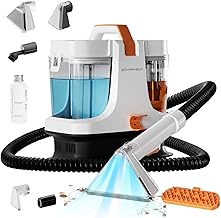
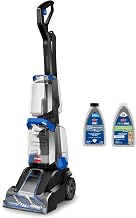
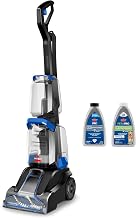
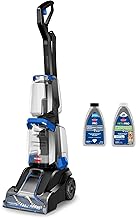
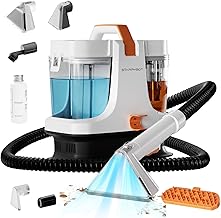
Start with coverage, not features. If you have carpeted bedrooms, a stair run, and a living room, a full-size upright extractor earns its storage space — something like the BISSELL TurboClean Upright or the Hoover PowerScrub Deluxe, both of which pull water and detergent through the fiber and recover it in a single pass. If your carpet footprint is smaller — a few area rugs, a sectional, a car interior, one stubborn hallway runner — a portable unit like the BISSELL Little Green or the Starrybot Upholstery Cleaner handles the same job without hauling a 20-pound body around corners. Buying a large machine for a small footprint usually means it stays in the closet.
Understand Suction, Brushes, and Drying
Three specs do most of the work. Suction determines how much dirty water leaves the carpet instead of soaking deeper — the Starrybot’s 18Kpa rating is the kind of number worth comparing across portables. Brush design determines agitation: counter-rotating systems like Hoover’s SpinScrub or the dual Dirt Lifter Powerbrush on the BISSELL ProHeat 2X Revolution Pet Pro Plus loosen soil that a flat nozzle glides over. Drying is the third and most overlooked factor. Heated airflow features such as Hoover’s HeatForce shorten the window in which damp backing can develop odor, which matters enormously in humid climates and in rooms with limited air movement.
Decide Whether You Need a Pet-Specific Build
Pet ownership changes the requirements rather than just the marketing. Urine penetrates to the backing and pad, so surface agitation alone will not resolve the smell — you need a machine with enough recovery power to lift saturated moisture and an enzymatic or oxy-based formula to break down the compounds causing the odor. The ProHeat 2X Pet Pro Plus and the TurboClean with its OXY formula and Oxy Urine Eliminator are both built around this problem. Also check for a dedicated upholstery tool: pets rarely limit themselves to the floor, and a hose attachment lets you treat sofa cushions and stair edges with the same machine.
Keep a Spot Treatment in Rotation
A machine is for maintenance; a spot treatment is for accidents. Pulling out an extractor for a single coffee ring is inefficient, and over-wetting a small area often leaves a visible halo once it dries. A professional-strength bottle like Resolve Spot and Stain lives under the sink and gets used within the first sixty seconds of a spill, which is when the majority of stains are still fully reversible. Treat the two as a system: immediate spot response, then periodic deep extraction across the whole room to reset the fiber evenly and prevent patchy brightness.
Use the Right Technique
Even excellent machines underperform with poor method. Vacuum thoroughly first — extractors are designed for embedded soil, not loose debris. Pre-treat high-traffic lanes and let the solution dwell for a few minutes. Then make one wet pass and two or three dry passes over the same stretch, overlapping slightly, so more water comes out than goes in. Work from the far corner toward the door, and keep foot traffic off the area until the fiber feels cool and dry to the back of your hand.
Tips
- Blot spills outward from the edge toward the center to avoid spreading the stain ring wider than it started.
- Use the manufacturer’s matched solution where possible; off-formula detergents can leave residue that attracts soil and dulls fiber over time.
- Empty and rinse both tanks after every session — dirty water left standing is the fastest way to make a machine smell worse than the carpet.
- Run fans or open windows during drying, and lift furniture legs onto foil or plastic to prevent stain transfer from wood finishes.
Frequently Asked Questions
How often should carpet be deep cleaned?
Every 12 to 18 months for average households, and every 6 to 9 months with pets, children, or light-colored carpet in high-traffic zones. Spot treat as needed in between.
Can I use a carpet cleaner on upholstery?
Yes, with the correct attachment and a solution rated for fabric. Check the manufacturer’s tag code first, and always test on a hidden section before treating a visible cushion.
Why does my carpet look dirty again days later?
Usually detergent residue or wicking. Too much solution, too few dry passes, or skipping the rinse step leaves soil-attracting film behind and pulls deep-set stains back toward the surface as it dries.
Is a portable spot cleaner enough on its own?
For apartments, a few rugs, and upholstery-heavy homes, often yes. For wall-to-wall carpet across multiple rooms, a portable becomes tedious and an upright extractor is the better long-term investment.
Conclusion
The best carpet cleaner is the one sized correctly for your floor plan, matched to whether pets are in the picture, and paired with a spot treatment you actually reach for in the first minute. Get those three things right and carpet stops being a maintenance liability and goes back to doing what it does best — making a room feel considered, quiet, and lived in.