Key takeaways
- Vacuum thoroughly first. Wet extraction on dry grit turns loose soil into mud and makes rinsing harder.
- Blot spills, never scrub. Pressing straight down with a white cloth lifts liquid out; circular scrubbing pushes it into the backing and frays fibers.
- Pretreat high-traffic lanes and let the solution dwell three to five minutes before you extract, so it has time to break bonds.
- Empty and rinse the dirty-water tank after every fill. Residue in the recovery path is the main cause of lingering smells in an otherwise healthy machine.
What's inside
Carpet is the quietest design decision in a room and the one that takes the most abuse. It absorbs foot traffic, pet accidents, spilled wine, and the fine grit that comes in on shoe soles, and unlike a sofa cushion you can’t flip it over. A good carpet cleaner is less an appliance than a maintenance tool for a surface you’ve already invested in, and the difference between the right machine and the wrong one shows up in how long your flooring keeps its color and loft.
This guide breaks down what actually separates a strong extractor from a noisy water sprayer: brush geometry, suction strength, heat, and dry time. You’ll learn how to choose between a full-size upright and a portable spot machine, why the cleaning solution deserves as much attention as the hardware, and how to clean without over-wetting the backing. Below are the machines and formulas we keep coming back to.
As an Amazon Associate we earn from qualifying purchases.



Upright, Portable, or Bottle: Pick the Format First
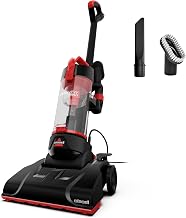
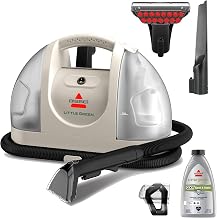
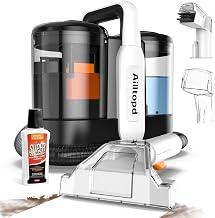
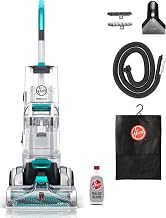
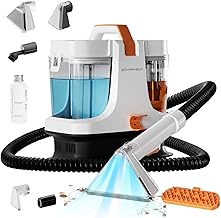
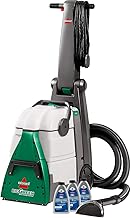
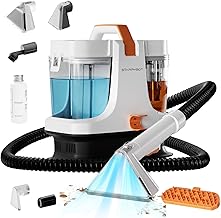
Before comparing specs, decide what problem you’re solving. A full-size upright like the Hoover PowerScrub Deluxe or the BISSELL ProHeat 2X Revolution Pet Pro Plus is built for whole-room work: wide paths, large tanks, and enough brush pressure to lift compacted traffic lanes. A portable extractor such as the BISSELL Little Green or the Starrybot Upholstery Cleaner is the better call if your mess is localized, if you live in an apartment with mostly hard flooring and area rugs, or if you’re cleaning stairs, dining chairs, and car seats. And for the spill you catch in the first minute, a bottle of Resolve Professional Strength Spot and Stain in the utility closet does more good than any machine you have to go get.
Brushes and Suction Do the Real Work
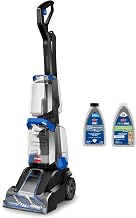
Cleaning happens in two motions: agitation loosens soil from the fiber, and suction pulls it out along with the water. Counter-rotating or spinning brush systems, like Hoover’s SpinScrub row or BISSELL’s Dual DirtLifter Powerbrush, scrub the sides of each fiber rather than just skating across the tips. Suction is what determines whether that loosened soil leaves your home or settles back into the pad. Portables now advertise this directly, and the Starrybot‘s 18Kpa rating is a useful shorthand for how aggressively a compact unit recovers water. As a rule, a machine that leaves carpet damp rather than soaked is doing the extraction half correctly.
Heat, Dry Time, and Why Over-Wetting Backfires
Warm water dissolves oily soils more effectively than cold, which is why heated systems and features like Hoover’s HeatForce drying earn their keep. Heat also shortens dry time, and dry time is the spec most people ignore until they’re stepping around damp patches at bedtime. Saturating carpet drives moisture into the backing and subfloor, where it can produce musty odors and, over days, mildew. Two or three dry passes after each wet pass costs you thirty extra seconds and cuts drying time significantly. Open a window, run a fan, and aim for carpet that’s dry to the touch within a few hours.
The Formula Is Half the Result
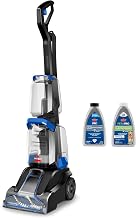
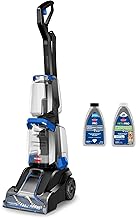
Machines get the attention, but chemistry determines what actually lifts. Oxygen-based formulas, like the OXY solution paired with the BISSELL TurboClean Upright, are strong on organic discoloration from food, drinks, and mud. Enzyme-based pet formulas work differently: they digest the proteins in urine rather than masking them, which is the only reliable way to stop a pet from re-marking the same spot. Match solution to machine when the manufacturer specifies it, as Hoover does with its own line, since foam control and pump compatibility are engineered together. Never substitute dish soap or laundry detergent, which leave a sticky residue that attracts soil faster than before.
Tips
- Vacuum thoroughly first. Wet extraction on dry grit turns loose soil into mud and makes rinsing harder.
- Blot spills, never scrub. Pressing straight down with a white cloth lifts liquid out; circular scrubbing pushes it into the backing and frays fibers.
- Pretreat high-traffic lanes and let the solution dwell three to five minutes before you extract, so it has time to break bonds.
- Empty and rinse the dirty-water tank after every fill. Residue in the recovery path is the main cause of lingering smells in an otherwise healthy machine.
Frequently Asked Questions
How often should carpet be deep cleaned?
Every 12 to 18 months for lightly used rooms, and every six months where there are pets, kids, or an entry path. Many carpet warranties require documented professional-grade cleaning on a set schedule, so check yours before you assume DIY counts.
Is buying a machine cheaper than hiring a service?
If you clean more than once a year, ownership pays off quickly, and the real value is speed of response to accidents. That said, a professional truck-mount extracts more water than any consumer unit, so many people do both: a machine for maintenance, a service every couple of years for a reset.
Will a carpet cleaner work on upholstery?
With the correct tool attachment, yes. The BISSELL Little Green and Starrybot are designed for it, and uprights like the ProHeat 2X and PowerScrub Deluxe include hose-mounted pet and upholstery tools. Always test an inconspicuous patch first, and check the fabric’s cleaning code before introducing water.
Why did the stain come back a day later?
That’s wicking. Residual soil deep in the backing travels upward as moisture evaporates. Re-extract the area with clean water, then weigh a folded towel on top overnight to draw the remainder up into the cloth.
Conclusion
The best carpet cleaner is the one matched to your actual floors and your actual mess: a heated upright with real brush pressure for whole-home carpet, a compact extractor for stairs, upholstery, and car interiors, and a reliable spot treatment kept within arm’s reach for the first sixty seconds after a spill. Get the format right, respect dry time, use the correct formula, and your carpet will read as a deliberate design choice for years longer than it otherwise would.