Key takeaways
- Measure arm height, the lowest table obstruction and the full insertion path before pairing dining chairs and a table. Includes a fit worksheet.
What's inside
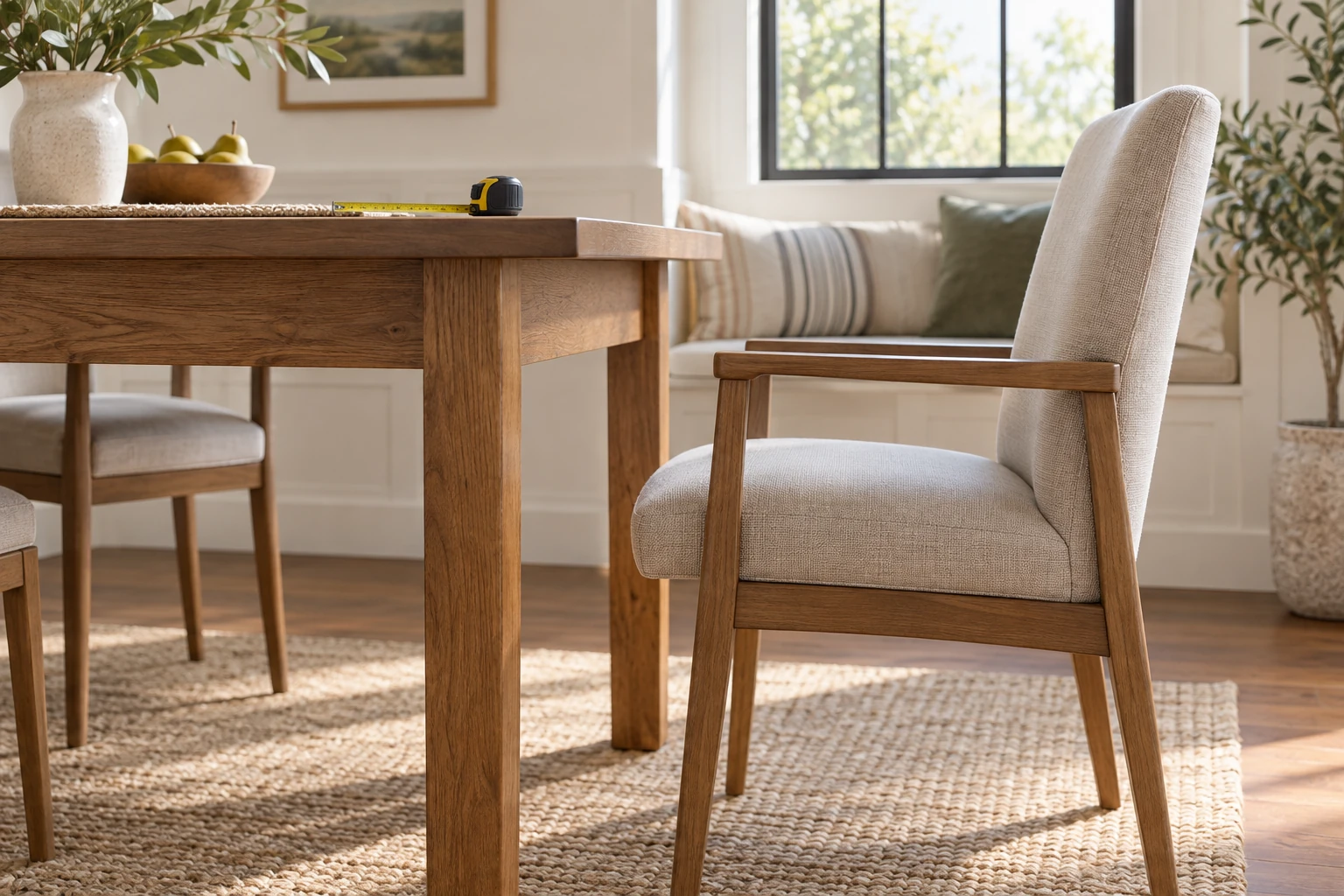
To check whether an armchair tucks under a dining table, compare the chair’s arm height with the lowest obstruction along its actual path. Tabletop height alone is insufficient. The apron, brackets, extension rails and legs may stop the chair before it reaches the position you want.
An apron is the structural band beneath many tabletops. This guide separates arm clearance, width clearance and everyday seating comfort so that one attractive measurement does not stand in for the whole fit check.
Define what you mean by fitting
There are two different goals: comfortable dining while occupied and compact storage while empty. A chair may work for meals yet stop short when you push it inward. Decide whether complete tuck-under storage is essential, and mark the intended empty-chair position on a side-view sketch.
Record the distance you want the chair to travel beneath the table edge. A curved arm may clear at its front tip but rise farther back. The highest point that crosses beneath the table matters, not just the first point to enter.
For a published example, Room & Board’s Soren chair, item 10013284, lists an 18-inch seat height and a 28-inch arm height. Those separate fields demonstrate why a familiar dining-seat height does not establish arm clearance. These are that model’s specifications, not measurements from our own testing.
Measure the table from the floor upward
At the intended seating position, measure from the floor to the bottom of the apron or other obstruction. Check farther inward along the chair’s proposed path. An extension mechanism or bracket can hang lower than the visible outside edge.
Measure the clear width between legs and any narrowing farther under the table. Corner braces can reduce the opening behind a wide front gap. For a pedestal table, examine where the base will meet the chair legs; removing corner legs does not make every chair position unobstructed.
For an extendable table, record the configuration you use every day and repeat the check in the extended configuration if chairs will occupy different positions. Do not operate or adjust its mechanism outside the manufacturer’s instructions.
Use the fit worksheet
| Dimension | How to record it | What it checks |
|---|---|---|
| Arm height | Floor to highest arm point entering under the table | Vertical fit |
| Lowest table obstruction | Floor to apron, rail or bracket along the path | Available vertical opening |
| Chair outside width | Widest arms or frame at the relevant height | Side-to-side fit |
| Table opening width | Narrowest space along the intended path | Leg and brace interference |
| Required insertion | Distance needed for your stored position | Whether partial clearance is enough |
| Room result | Chair projection when stored and occupied | Remaining usable floor area |
Write down the floor condition for both objects. If the chair sits on a rug while the table stands beyond it, measure their installed relationship rather than comparing catalog heights from different floor levels. Added glides or pads can also change the result.
Calculate the difference, then inspect the path
Subtract the relevant arm height from the lowest available table opening. A negative answer means interference at that point. A zero answer means contact, not free movement. A positive answer describes geometric separation, but does not by itself account for measurement uncertainty, soft upholstery or a changing arm profile.
Illustrative example: a table is 30 inches tall overall, but the apron bottom sits 26 inches above the floor. Chair A has 27-inch arms. The calculation is 26 − 27 = −1 inch, so its arms cannot pass that apron even though the tabletop is taller than the chair arms.
Chair B has 25-inch arms, leaving a calculated 1-inch gap at the apron. Now suppose a rail farther inside is only 24½ inches above the floor. Chair B stops there if the arms must travel that far. The first positive calculation did not establish full tuck-under fit.
Verify the actual pair when possible
In a showroom, ask to check the exact chair and table combination with staff assistance. Move the empty chair gently along the intended path without forcing it or rubbing the finish. Note the stopping point and compare it with the stored position you planned.
If buying online, request a dimensioned underside drawing and a side view of the arm profile. A useful question is: “What is the lowest clearance at this seating position for the first [distance] inward from the edge?” That is more specific than asking whether the table fits dining chairs.
Choose the mismatch you can actually live with
If the chair is comfortable but remains partly outside the table, measure that projection in the room plan. It may be acceptable at an end position and awkward along a busy passage. Compare armless side chairs, a different table base or another chair rather than modifying structural rails.
Do not trim the apron, remove brackets or add improvised risers to make an unverified pair fit. Save the successful measurements with the model numbers before ordering. The final decision should establish the desired stored position, a usable occupied position and room to move around both.