Key takeaways
- Closed beats open. Doors and lids are what separate a stylish toy storage unit for living room use from a playroom shelf. Open cubbies display clutter even when organized.
- Capacity is measurable. A 13 × 13 × 13 in cube bin holds roughly 1.3 cubic feet. Most families need 6–12 cubic feet of living-room toy capacity; measure your actual pile in a laundry basket (one standard basket ≈ 2 cu ft).
- Proportions. A storage ottoman or bench should be no longer than two-thirds of your sofa length and within 2 inches of seat height (typically 17–19 in) if it will serve as a table or footrest.
- Kid-safe lids. Under age five, require soft-close or stay-open hinges. A 48 in upholstered lid falling on fingers is the most common injury point on these pieces.
The living room toy storage ideas that actually work share one trait: the storage does a second job. A storage ottoman doubling as your coffee table, a low credenza holding the TV, an end-of-sofa bench rated for adult seating, and two or three lidded baskets will swallow an entire toy collection while reading as ordinary furniture. Below: the dimensions, materials, and weight ratings that matter, plus a simple framework for keeping the room tidy without constant effort.
Our top picks


As an Amazon Associate we earn from qualifying purchases at no extra cost to you. Ratings are shown as listed on Amazon.
What “hidden” toy storage has to do
Before comparing furniture types, run any piece through four checks:
- Closed beats open. Doors and lids are what separate a stylish toy storage unit for living room use from a playroom shelf. Open cubbies display clutter even when organized.
- Capacity is measurable. A 13 × 13 × 13 in cube bin holds roughly 1.3 cubic feet. Most families need 6–12 cubic feet of living-room toy capacity; measure your actual pile in a laundry basket (one standard basket ≈ 2 cu ft).
- Proportions. A storage ottoman or bench should be no longer than two-thirds of your sofa length and within 2 inches of seat height (typically 17–19 in) if it will serve as a table or footrest.
- Kid-safe lids. Under age five, require soft-close or stay-open hinges. A 48 in upholstered lid falling on fingers is the most common injury point on these pieces.
The four furniture types that earn their footprint
Storage ottomans: the best toy storage for living room coffee tables
A rectangular storage ottoman is the single most efficient choice because it replaces a piece of furniture rather than adding one. Look for 36–48 in wide, 18–24 in deep, and 16–19 in high — that height matches sofa seat height so it works as a footrest and coffee table with a tray on top. Interior volume typically runs 4–7 cubic feet, enough for 40–60 small toys. Check the seating weight rating: quality frames hold 250–400 lb, meaning adults can actually sit on it. Leave 14–18 in between ottoman and sofa edge for legroom.
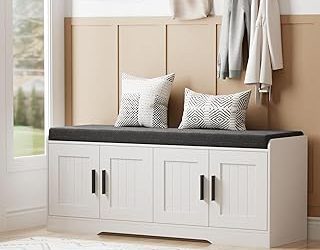
Storage benches: end-of-sofa and under-window workhorses
Benches run 40–60 in long, 15–18 in deep, and 18–20 in high including the lid — sized to tuck at the end of a sectional, under a window, or behind a sofa. A popular budget build is a four-cube shelf laid horizontally (a 1×4 cube unit such as IKEA’s KALLAX measures about 57⅞ in long × 16⅜ in high; add a 2–3 in foam cushion and you land at a proper 18–19 in seat height), with a fabric bin in each cube. Rated seating capacity is usually 300–500 lb across the length.
Credenzas and TV consoles: maximum capacity, zero toy aesthetic
A low credenza under the TV is the most grown-up looking toy storage unit for living room use — paneled, fluted, or cane-front doors hide everything. Media consoles run 47–71 in wide and 24–32 in high; depth is the key spec, with 15–20 in being standard (IKEA’s BESTÅ line is roughly 15¾ in deep, which fits flush in most rooms). Interior volume reaches 8–14 cubic feet — the largest capacity of any option here. Specify soft-close hinges and interior bins so kids can self-serve by category. Always anchor to wall studs: freestanding cabinets 30 in or taller are tip hazards for climbers.
Lidded baskets: decorative toy storage for living room corners
Lidded seagrass, rattan, or woven-rope baskets handle the daily-grab category — the 15–20 toys in active rotation. Useful sizes run 16–20 in diameter and 14–18 in tall (roughly 1.5–2 cu ft each). One basket per category — vehicles, stuffies, dolls — keeps the evening reset under five minutes. Skip rattan at floor level if you have a chewing puppy; felt or cotton-rope bins survive pets better.
Spec comparison at a glance
| Type | Typical footprint | Capacity | Seating/load rating | Typical price (2026) | Best for |
|---|---|---|---|---|---|
| Storage ottoman | 36–48″ W × 18–24″ D × 16–19″ H | 4–7 cu ft | 250–400 lb | $150–$500 | Replaces coffee table; toddlers |
| Storage bench | 40–60″ W × 15–18″ D × 18–20″ H | 3–6 cu ft | 300–500 lb | $120–$400 | Under windows, sofa ends |
| Credenza/console | 47–71″ W × 15–20″ D × 24–32″ H | 8–14 cu ft | Top load 60–100 lb | $250–$900 | Largest collections; modern look |
| Lidded basket | 16–20″ dia × 14–18″ H | 1.5–2 cu ft | Not for seating | $30–$90 | Daily-rotation toys |
| Cube shelf + bins (as bench) | 58″ W × 15″ D × 18–19″ H w/ cushion | 5–6 cu ft | ~220 lb | $100–$200 | Budget builds |
Material and construction trade-offs
| Material | Kid durability | Cleaning | Watch for |
|---|---|---|---|
| Engineered wood (MDF/particleboard) | Scratches and chips; edges swell if wet | Wipes clean easily | Hinge screws loosen in particleboard — re-tighten yearly; wide shelves can sag |
| Solid wood | Dents but survives decades; refinishable | Wipes clean; hides wear as patina | Heavier boxes (often 80–120 lb shipped); costs more |
| Seagrass/rattan | Snags and cracks with rough play | Hard to vacuum inside — use liners | Beautiful, but pet teeth destroy it |
| Performance fabric (ottomans) | Stain- and claw-resistant weaves | Spot-clean or removable covers | Cheap polyester pills within a year; look for 50,000+ double-rub ratings |
| Felt/cotton rope bins | Soft, silent, toddler-safe | Machine-washable (rope) | Slouch and lose shape when overstuffed |
Picks by situation
| Your situation | Best pick | Why |
|---|---|---|
| Small living room (under ~150 sq ft) | 40–48″ storage ottoman as coffee table + one 18″ basket | Adds zero footprint — it replaces the table; toy storage for small living room layouts lives or dies on this swap |
| Baby or toddler under ~4 | Soft-close-hinge ottoman + felt bins | No slam risk, no small hardware, no open shelves to empty in 30 seconds |
| Kids 4–9 with lots of sets (LEGO, playsets) | Credenza with labeled interior bins | Categories stay sorted; kids can self-serve and self-return |
| Pets | Closed credenza or upholstered ottoman | Keeps fur off toys and toys away from teeth; avoid floor-level rattan |
| Renters | Freestanding bench or ottoman under ~60 lb empty | Moves without a truck; nothing to patch on move-out |
| Formal or style-first room | Paneled credenza matching your media console’s wood tone | The most convincing modern toy storage for living room setups — reads as furniture, not storage |
The framework that keeps it tidy
Furniture alone doesn’t keep a shared room clean — a capacity cap does:
- Set a toy quota. Living room toys are limited to what fits inside your chosen pieces, lids fully closed. A credenza plus one basket ≈ 10 cu ft, or roughly 60–80 small toys.
- Sort by category, not tidiness. One bin for building toys, one for pretend, one for wheels, one for stuffies. Kids return toys correctly about as often as adults do when categories are this broad.
- Rotate. Keep half the collection in a closet and swap every 2–3 weeks. Rotation cuts visible volume and renews interest in old toys.
- Zone it. Keep the play zone within ~6 feet of the storage. Retrieval distance is the main reason toys migrate.
- Run a 5-minute evening reset. Everything back in its basket or cabinet before bed — with lidded pieces this is a sweep, not a sort.
- One-in-one-out. New toys entering the living room mean equal volume leaves for the bedroom or playroom.
Assembly and durability realities
Flat-packed credenzas ship in boxes weighing 60–90 lb and need a 30–32 in doorway to maneuver; plan for 60–90 minutes of two-person assembly versus 10–15 minutes attaching ottoman legs. Anchor any cabinet over ~30 in tall to studs — the hardware usually comes in the box, and it’s the single most important step in homes with climbers. What wears first, in order: hinge screws in engineered wood (check yearly), basket bottoms, felt bin handles, then ottoman corner upholstery. Solid wood and quality upholstery with removable covers are the pieces that still look right in year ten.
Frequently asked questions
What are the best toy storage ideas for small living rooms?
In a small living room, storage must replace furniture rather than add to it: a 40–48 in storage ottoman instead of a coffee table, a slim 15–16 in deep credenza under the TV, and one lidded basket beside the sofa arm. In a 10 × 12 ft room, that combination adds roughly 8–10 cubic feet of toy capacity while consuming essentially no extra floor space.
Are storage ottomans safe for toddlers?
Only with a soft-close or stay-open hinge — check that the lid holds at any angle rather than slamming. Upholstered lids are also safer than wooden chest lids for bumps and climbs.
How do I make toy storage look modern or stylish?
Choose closed fronts (panel, slat, or cane doors), repeat one basket style rather than mixing, match wood tones to existing furniture, and keep the palette neutral — the toys inside are the color. Two matching baskets flanking a credenza reads as intentional design; five mismatched bins reads as a daycare.