Key takeaways
- Walkway: 30 in is comfortable; 24 in is the workable minimum between a bed and a shelf face.
- Shelf depth: 11–16 in holds bins and books. Deeper than 16 in and small toys disappear behind the front row while the unit eats walkway.
- Reach zones: toddlers self-serve shelves mounted 18–24 in off the floor; reserve anything above 48 in for adult-managed toys.
- Under-bed: measure clearance first — most frames give 7–11 in, and a 6–7 in bin slides with room for casters.
- Door swing: over-door organizers need roughly 2 in of clearance and work best on closet doors, not the door kids slam.
The most effective toy storage ideas for small spaces follow one rule: get toys off the floor entirely. In a bedroom or play area under 120 sq ft — a 10×10 or 10×12 room — wall-mounted rails, under-bed bins, and dual-purpose furniture can reclaim 10–20 sq ft of usable floor that freestanding toy boxes eat. Below are 15 ideas grouped by where they put the storage, each with the footprint and clearance numbers that decide whether it fits your room.
Our top picks
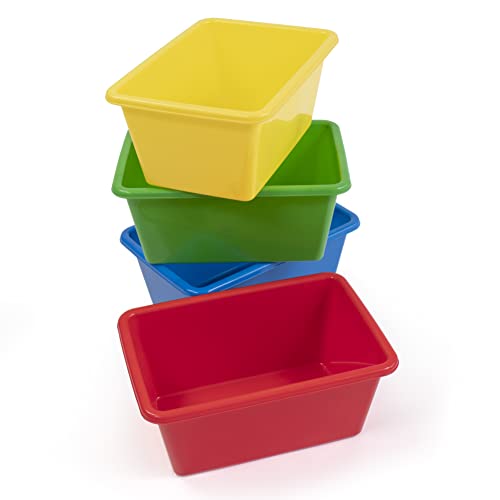
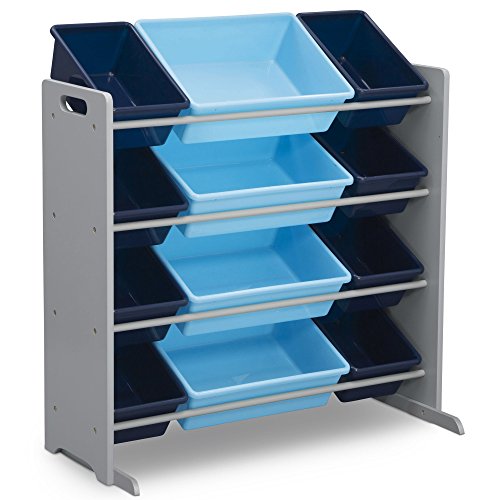


As an Amazon Associate we earn from qualifying purchases at no extra cost to you. Ratings are shown as listed on Amazon.
Measure First: What a Small Room Can Actually Spare
Before buying anything, map the floor. A twin bed (38 x 75 in) already occupies about 20 sq ft of a 100 sq ft room, and a dresser takes another 5–7 sq ft. What remains has to preserve a walkable path, or the room feels broken no matter how organized it is.
- Walkway: 30 in is comfortable; 24 in is the workable minimum between a bed and a shelf face.
- Shelf depth: 11–16 in holds bins and books. Deeper than 16 in and small toys disappear behind the front row while the unit eats walkway.
- Reach zones: toddlers self-serve shelves mounted 18–24 in off the floor; reserve anything above 48 in for adult-managed toys.
- Under-bed: measure clearance first — most frames give 7–11 in, and a 6–7 in bin slides with room for casters.
- Door swing: over-door organizers need roughly 2 in of clearance and work best on closet doors, not the door kids slam.
Wall and Vertical Toy Storage Ideas (0–3 Sq Ft of Floor)
1. Rail-and-Bin Wall System
Wall-mounted bin frames — like IKEA’s TROFAST wall storage, roughly 39 in wide and 12 in deep — hold tilt-out bins with zero floor footprint. Mount the lowest rail at 18–24 in so a toddler reaches it, and stack a second column higher for adult-controlled toys. Hit studs or use 50-lb-rated toggle anchors; a loaded column easily exceeds 40 lb.
2. Vertical Cube Organizer
A 2×4 cube tower (KALLAX-style, about 30 W x 58 H x 15 D in) delivers eight cubes on roughly 3.2 sq ft of floor — the best capacity-per-square-foot of any freestanding option and a top contender for the best toy storage for small spaces overall. Fabric bins in the lower cubes for kids, books or baskets up top. Anchor it: anything taller than it is wide is a tip-over risk around climbers.
3. Picture Ledges for Books and Figures
A ledge only about 5 in deep displays picture books face-out and lines up action figures. Run two or three up the wall at 12–15 in intervals; the total projection stays under 5 in, so they fit even behind a door swing.
4. Over-the-Door Pocket Organizer
A 24-pocket shoe organizer (~64 in long) swallows dolls, cars, and craft supplies — exactly the categories that junk up open bins. Zero floor, usually $15–30, and fully renter-friendly.
5. Corner Net for Plush Toys
Stuffed animals weigh almost nothing, making them the one category safe to store high and loose. A corner hammock hung at 6+ ft uses dead airspace and can empty an entire toy box’s worth of volume.
Under-Bed and Hidden Storage
6. Rolling Under-Bed Bins
Lidded bins 6–7 in tall and 30+ in long (~40 qt) turn the under-bed void — nearly 20 sq ft under a twin — into drawer space. Wheels glide on hard floors; on carpet, pick bins with wide runners or add felt pads. Best for sets and rotation toys rather than daily favorites.
7. Daybed or Captain’s Bed with Drawers
For toy storage ideas for small bedrooms specifically, a daybed with built-in drawers (like IKEA’s BRIMNES, ~41 x 81 in, or about 23 sq ft) pays for its footprint by deleting a separate 5 sq ft dresser. The drawers sit low enough for kids to self-serve.
8. Storage Ottoman
A ~30 x 15 x 15 in ottoman hides 40–60 liters of toys and doubles as seating (a 15–18 in seat height matches standard chairs). In a shared living room this is the fix for toy drift — it reads as furniture, not a toy box. Pay for soft-close hinges; cheap ones pinch fingers.
9. The Closet “Toy Garage”
Move daily clothes into a dresser and put a narrow drawer tower (16–24 in wide) on the closet floor. Toys behind a closed door vanish visually, and closet interiors are the most underused square footage in a small bedroom.
Dual-Purpose Furniture
10. Fold-Down Wall Play Table
A wall-mounted drop-leaf table extends 24–28 in for LEGO and art, then folds back to 4–6 in deep. Pair it with ledges above for a play zone with zero permanent footprint.
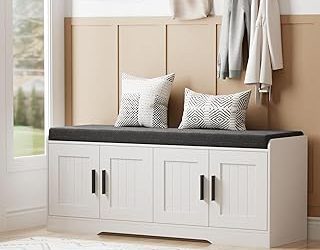
11. Cubby Bench at the Foot of the Bed
A 36–48 in bench with two or three cubbies underneath provides seating, a reading perch, and bin storage in a ~5 sq ft footprint — replacing what would otherwise be a bench plus a shelf.
12. Loft Bed with Storage Underneath
For kids 6 and up in rooms with 8-ft ceilings, a loft bed frees the entire ~20 sq ft beneath it for a toy shelf, bins, or a play nook. Check head clearance: you want roughly 30 in between the mattress top and the ceiling.
Cheap and DIY Toy Storage Ideas for Small Spaces
13. Milk-Crate Cubby Wall
Plastic milk crates bolted to studs in a staggered grid cost about $5–8 each, hold 20+ lb per crate, and double as carry bins — a kid unclips a crate, plays, and clips it back. Among DIY toy storage ideas for small spaces, this is the cheapest that still scales.
14. Under-Bed Drawers from Old Dresser Drawers
Salvaged drawers plus four caster wheels (~$10 in hardware) become under-bed drawers sized to your exact clearance. Add cup pulls so kids can tug them out — a genuinely cheap toy storage idea for small spaces that costs under $20 total.
15. Repurposed Racks for Tiny Toys
Wall-mounted spice racks (~$15 for a set) hold cars and figures, and a magnetic knife strip displays die-cast vehicles on the wall. Both mount inside a closet door — invisible storage with zero footprint.
The Best Toy Storage for Small Spaces, by Situation
The right pick depends less on the room size than on who lives there:
| Your situation | Best pick | Floor footprint | Watch out for |
|---|---|---|---|
| Renter, can’t drill walls | Over-door organizer + under-bed bins + cube tower | 0–3 sq ft | Tall shelves still need anchors — get landlord approval |
| Toddler under 3 | Low rail-and-bin wall unit + soft bins | 0 sq ft | No unanchored tall furniture; skip heavy lidded bins |
| Two kids, one 10×10 room | Vertical cube tower with color-coded bins + under-bed drawers | ~4 sq ft | Label bins by kid, not toy type, to end disputes |
| Toys spilling into the living room | Storage ottoman + cubby bench | 2–5 sq ft | Choose closed storage — open bins read as clutter |
| Heavy small-parts household (LEGO) | Shallow under-bed bins + fold-down table | 0 sq ft | Deep bins bury pieces; keep fill under 4 in deep |
| Budget under $50 | Milk crates + dollar-store bins + door pockets | ~2 sq ft | Anchor crates; cheap casters fail on carpet |
Materials, Weight Limits, and What Wears Out First
Toy storage takes harder abuse than most furniture — bins get dragged, shelves get climbed. Here’s how common options hold up:
| Material | Realistic load | Cleaning | First thing to fail |
|---|---|---|---|
| Engineered wood cubes (MDF/particleboard) | ~25–30 lb per cube | Wipes clean; swells if wet | Cam locks loosen after 2–3 moves; shelves sag under books |
| Solid pine or poplar | 40–60 lb per shelf | Wipes clean; dents but doesn’t sag | Finish scratches; noticeably heavier to move |
| Powder-coated steel | 100+ lb per shelf | Fully washable | Small toys fall through wire gaps — needs shelf liners |
| Clear plastic bins | Stack 3–4 high | Washable; contents visible | Lid tabs crack; cheap casters pop off |
| Fabric/felt cube bins | ~10–15 lb | Spot-clean only | Handles tear first; sides slump without a stiffener board |
On assembly and moving: flat-pack cube towers arrive in 40–70 lb boxes that clear a standard 30-in doorway flat but often can’t turn a hallway corner once built — assemble in the room where it will live. Expect 45–90 minutes for a cube organizer. Budget units under ~$60 use thinner board and shelf pins that start wobbling around year two, while solid-wood versions survive three or more moves intact.
FAQ
How deep should toy shelves be in a small room?
11–13 in covers bins and picture books; go to 16 in only for bulky items. Beyond that, toys get lost at the back and the unit steals walkway width.
How do I organize toys in a small bedroom shared by siblings?
Split one vertical cube tower with color-coded bins, give each child an under-bed drawer, and rotate so only about a third of the toys are out at once. Shared floor space stays clear because storage claims zero of it.
Open bins or closed cabinets?
Open bins for daily-rotation toys in the kid zone — children put away what they can see. Closed storage for living areas and anything with tiny parts you don’t want photographed on your sofa.
What’s the cheapest setup that actually works?
Roughly $40–60 total: an over-door organizer ($15–25), two or three wall-mounted crates with dollar-store bins, and one under-bed bin. That covers small pieces, daily toys, and overflow without spending a square foot of floor.