Best Bread Basket Sets for a Welcoming Dining Table
The best bread basket set for a dining table is usually a pair of washable, medium-size baskets with removable liners: use one for rolls and the other for sliced bread, or bring out just one when space is tight. Before choosing, compare the basket’s usable interior dimensions—not just its outer size—with your serving portions, table space, material care, and whether the liner can be laundered.
Choose by table size and serving routine
A bread basket needs room for food and hands reaching across the table. As a practical planning guide, leave roughly 12 inches of clear space between the basket’s edge and a place setting when possible. On a narrow table, a low, elongated basket can take up less central space than a round one. For buffet-style meals, a larger basket or a set of two lets you separate different breads and replenish them independently.
Our top picks
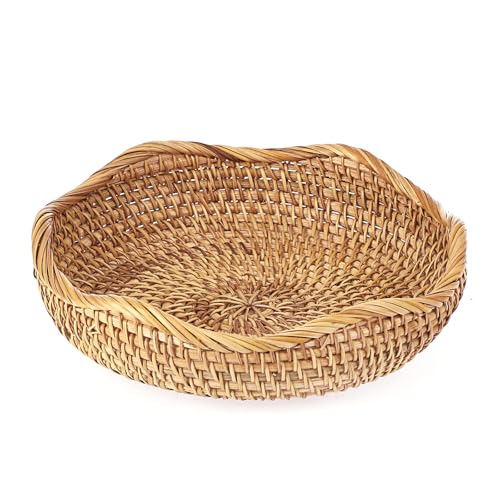 Hipiwe Natural Rattan Tray 8.5" Wicker Key
- Product Size: Diameter: 8.5 inch, Height: 2.2 inch
- Hand Woven Rattan Tray: Make of natural rattan,…
- Multipurpose Organizer Tray: Its naturally color matches well…
 Handwoven Fruit Basket Set of 3
- 【3 Sizes to Fit All Your Storage Needs】…
- 【Handwoven Natural Material】 Made from natural cattail fibers,…
- 【Keep Your Space Tidy & Organized】 Declutter your…
As an Amazon Associate we earn from qualifying purchases at no extra cost to you.
- Small table or everyday meals: Choose one basket about 9–10 inches across, or an oval basket around 10–12 inches long. Check that it does not crowd serving dishes.
- Four to six diners: A basket roughly 10–12 inches across can hold a modest serving of rolls. A two-basket set offers more flexibility if you serve rolls and sliced bread together.
- Large gatherings: Look for two baskets with usable interiors around 10–12 inches across, or a larger oval basket. Separate baskets make it easier to keep gluten-free or seeded bread apart, though dedicated utensils and careful handling are also important.
Capacity varies with bread size and arrangement. A basket’s diameter alone does not tell you whether it will comfortably hold bulky rolls or a neat layer of slices. If the listing gives interior measurements, use those; otherwise, treat its stated outside dimensions as a rough maximum and allow for the basket’s walls and liner.
Dimensions that make a set practical
Measure the available tabletop area before buying. For a centered basket on a rectangular dining table, measure the clear space between place settings or between existing serving dishes. On a round table, check the open center without blocking diners’ reach. A set of two may be more useful than one oversized basket, but only if both can sit on the table without squeezing plates or glasses.
| Serving situation | Useful basket size | What to check |
|---|---|---|
| Two to four people | About 9–10 in. across, or 10–12 in. long | Interior space for a single layer of rolls or slices |
| Four to six people | About 10–12 in. across; consider two baskets | Whether the pair fits between place settings |
| Buffet or larger meal | Two medium baskets or one larger oval basket | Room for guests to serve themselves without shifting dishes |
| Narrow tabletop | Low oval basket, roughly 10–12 in. long | Footprint, wall height, and clearance for reaching across |
These are selection ranges, not guaranteed capacities: basket shape, wall thickness, and bread size all matter. A low wall makes food easy to reach but may not contain loose slices as well. A taller wall can hold more, though it may make the last pieces awkward to take out.
Materials, liners, and cleanup
Material determines the look, but also how much care the basket needs. Natural fibers such as rattan, seagrass, and willow provide a woven, casual appearance. They are generally best for dry, wrapped, or liner-protected bread; damp cleaning and soaking can be unsuitable, so follow the maker’s care instructions. Metal baskets are often easy to wipe down, but can feel less soft and may scratch a tabletop if the base is rough. Fabric or cotton rope baskets are flexible and often washable, but may need shaping after laundering and can show stains.
| Material or feature | Best suited to | Trade-off and care |
|---|---|---|
| Woven natural fiber | Casual or rustic tables; dry bread service | Check for splinters and loose weave; usually spot-clean rather than soak |
| Metal wire | Modern settings and frequent wipe-downs | Inspect seams and feet; use a liner if the finish could mark the table |
| Cotton or other washable fabric | Regular family use and easy laundering | May wrinkle, shrink, or lose shape; check washing and drying instructions |
| Removable liner | Serving crumbs, seeded loaves, or bread with a delicate crust | More convenient when machine-washable; confirm it fits after washing |
A removable liner is most useful when it can be taken out without tugging on the basket and washed according to its label. A fixed liner may look tidy but can trap crumbs along the seams. If the liner is decorative or dry-clean-only, factor that extra care into your routine. For a woven basket, shake out crumbs over a bin and use a dry brush or lightly damp cloth only if the manufacturer permits it. Let the basket dry fully before storing it.
Which type suits your household?
- Small apartment or compact table: Choose one low-profile basket or a nested pair that can be stored together. Measure the footprint and the storage shelf, not just the table.
- Children at the table: Favor a stable, lightweight basket with smooth edges and a washable liner. Avoid loose weaving that can snag small fingers or shed fibers.
- Frequent entertaining: A two-piece set makes it easier to serve different breads and refill one basket while the other stays on the table. Choose liners that can be laundered between gatherings.
- Minimal cleanup: Look for a removable machine-washable liner or a smooth, wipeable body. Avoid intricate weaves if crumbs tend to collect in crevices.
- Rustic or natural table styling: Woven fibers pair well with wood and linen, provided you are comfortable with gentler cleaning and keeping the basket dry.
What to check before buying a set
Product photos can make a basket look more generous than it is. Compare the listed dimensions with a paper outline on your table: mark the basket’s approximate footprint, then check that plates, glasses, and serving dishes still fit. For a pair, draw both outlines and leave space between them for hands to lift each basket.
Also check whether the set includes two identical baskets or different sizes, whether liners are included, and whether the liners are sold separately. If the baskets stack or nest, confirm their heights and whether handles add extra height. A woven piece may arrive slightly compressed or uneven; minor variation is common with handmade or natural-fiber construction, but loose strands, unstable bases, or rough edges are reasons to look for a sturdier option.
The best fit comes down to care as much as style
For most households, a medium two-basket set with removable, washable liners offers the best balance of serving flexibility and cleanup. Choose one basket instead if tabletop space is limited, and choose a wipeable metal or washable fabric style if easy maintenance matters more than a traditional woven look. The right set is the one that fits your clear table space, holds the amount of bread you actually serve, and can be cleaned without turning a simple meal into extra work.