Key takeaways
- Choosing a dining table is one of the most significant furniture decisions you will make. It is not just about aesthetics; it is about selecting the literal stage where your daily life unfolds. From morning coffees and remote work sessions…
What's inside
Choosing a dining table is one of the most significant furniture decisions you will make. It is not just about aesthetics; it is about selecting the literal stage where your daily life unfolds. From morning coffees and remote work sessions to messy toddler art projects and late-night dinner parties, your dining table is subject to constant physical demands.
When shopping, the ultimate crossroads most homeowners face is the battle of materials: wood versus glass. A solid wood table offers a sense of warmth, heavy-duty grounding, and traditional craftsmanship. On the other hand, a glass-topped table offers sleek modernism, light refraction, and clean lines. But when we strip away the styling, the core question remains: how do they stack up in terms of long-term durability?
As an Amazon Associate we earn from qualifying purchases at no extra cost to you. Product prices and availability are accurate as of the date shown and are subject to change.
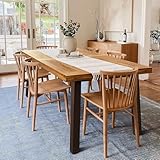


The phrase "durability" means different things depending on your household. For a family with young children, durability means resisting impact from flying toys and resisting sticky fingerprints. For a host who loves dinner parties, it means resisting red wine stains and hot serving dishes. Understanding the structural differences between these materials is the key to making an investment you will not regret.
Quick Verdict
If your primary concern is structural longevity and repairability, a wooden dining table is the clear winner. Solid wood can survive generations because any deep scratches, gouges, or stains can be sanded down and refinished.
However, if your primary concern is everyday surface resilience—specifically immunity to water rings, food stains, and chemical sanitizers—a tempered glass top dining table wins. While glass cannot be repaired if it chips or shatters, it impervious to the liquid and heat damage that routinely ruins wooden finishes.
Side by Side
To help you visualize how these materials match up across everyday categories, here is a direct comparison of wooden dining tables versus glass top dining tables:
| Category | Wooden Dining Table | Glass Top Dining Table |
|---|---|---|
| Comfort & Tactility | Warm to the touch, absorbs sound, softer surface for resting arms. | Cold to the touch, reflects sound, clattery when plates and utensils are set down. |
| Durability (Structural) | Excellent. Can hold immense weight and survives heavy impacts without breaking. | Moderate to High. Tempered glass is strong but can shatter under extreme, concentrated impact. |
| Price Range | $150 (budget veneers/acacia) to $5,000+ (custom hardwood). | $100 (basic tempered glass) to $2,500+ (designer glass/sintered hybrids). |
| Maintenance | Moderate. Requires immediate spill cleanup, periodic oiling/waxing, and coasters. | High (visual). Requires daily wiping to clear fingerprints, dust, and smudges. |
| Space Needed (Visual) | Heavy and dominant. Fills a room and blocks light. | Light and airy. Opens up small rooms by allowing light to pass through. |
| Look & Aesthetic | Rustic, traditional, mid-century modern, or bohemian. Warm and inviting. | Ultra-modern, minimalist, contemporary, or industrial. Sleek and clean. |
| Resale Value | High. Quality wood furniture retains value and can be marketed as vintage or antique. | Low to Moderate. Secondary markets favor wood due to the risk of transport scratches on glass. |
| Best For | Active families, rustic home designs, and those seeking heirloom-quality furniture. | Modern apartments, formal dining rooms, and households focused on easy sanitization. |
Where Wooden Dining Table Wins
The true superpower of a wooden dining table lies in its structural resilience and its ability to be restored. Unlike glass, wood is a forgiving, organic material. If you drop a heavy ceramic mug onto a solid wood table like the Devoko 6 Person Acacia Wood Dining Table for Kitchen,Natural ($169.99), the wood might sustain a small dent, but it will not crack, break, or become unsafe to use. Over time, these minor dents and scratches blend into the wood’s natural grain, forming a warm patina that many homeowners actually prefer.
More importantly, wood is highly repairable. If a solid wood table sustains deep scratches from pet claws or a dark stain from spilled ink, you do not have to throw the table away. With a belt sander, some wood filler, and a fresh coat of polyurethane or varnish, a wooden table can be completely restored to its original glory. This makes wood incredibly durable in terms of decades-long lifespans.
Wood also handles weight distribution exceptionally well. Heavy objects, laptops, and monitors can sit on a sturdy wooden pedestal base—such as the one found on the LITTLE TREE Round Dining Table for 4-6 People, 47 Inches Dining Room Table with Wooden Pedestal Base ($169.99)—without any risk of bowing or sudden structural failure.
Where Glass Top Dining Table Durability Wins
While wood wins the marathon of decades, glass wins the daily sprint of hassle-free surface maintenance. The natural porosity of wood is its Achilles’ heel; spilled liquids, acidic foods, and hot coffee mugs can easily penetrate wood finishes, leaving permanent white rings, dark water stains, or warped spots.
A glass top dining table is entirely non-porous. If a glass of red wine spills and sits on the table overnight, you can wipe it away in the morning with zero staining. There is no need to panic over wet cups, greasy pizza boxes, or spilled nail polish remover. You can clean a glass table with aggressive disinfectants, glass cleaners, or simple soap and water without worrying about stripping away a delicate protective sealant.
Modern glass tables use tempered glass, which is chemically and thermally treated to be up to four to five times stronger than standard glass. When budget-friendly tempered glass tables like the VeemuGlass Dining Tablearo 51.2″ Glass Dining Table for 4 People ($148.99) are manufactured, they are designed to withstand everyday bumps. Furthermore, premium iterations in the market combine glass with advanced materials. For instance, the POVISON 71″ Hobart Modern Dining Table for 6, Glass Sintered Stone Tabletop ($1699) merges the sleek qualities of glass with sintered stone, rendering the surface virtually scratch-proof, heat-proof, and impervious to heavy use.
Cost Over 5 Years
When analyzing the cost of ownership over a five-year period, both materials present different financial paths.
With a wooden dining table, your upfront cost can range anywhere from $150 to $3,000 depending on whether you choose budget acacia, mid-range oak, or premium walnut. Over five years, your maintenance costs will be relatively low but consistent. You may spend $50 on specialized wood cleaners, waxes, or oils. However, if the tabletop suffers severe water damage or deep scratches after four years of heavy use, professional refinishing can cost between $300 and $600. If you are a DIY enthusiast, a hand sander and a can of sealant will cost you about $60.
With a glass top dining table, your upfront cost is often lower for entry-level models, though designer and sintered stone hybrids can command premium prices. Over five years, your maintenance costs are practically zero—just the price of a few bottles of glass cleaner and microfiber cloths ($20 to $30 total). However, glass carries a hidden financial risk: cataclysmic failure. If a heavy object chips the edge of a tempered glass pane, or if an impact causes the tempered glass to shatter into its signature tiny, safe granules, the tabletop cannot be repaired. You must replace the entire sheet of glass, which can cost anywhere from $150 to $800 depending on the size, thickness, and custom cuts required.
Which One for Your Home
As we look at the design trends dominating 2026, the choice between wood and glass comes down to how your household functions on a daily basis. Here is how to decide based on your specific living situation:
Small Apartment
If you live in a compact apartment or a studio, a glass top dining table is almost always the superior choice. Solid wood tables act as visual blocks, absorbing light and making small rooms feel cramped. A glass table, like the rectangular 51.2-inch VeemuGlass model, allows light to pass through and exposes the flooring underneath. This creates the optical illusion of more space, keeping your dining or living area feeling bright, airy, and uncluttered.
Family with Kids and Pets
For households with toddlers, young kids, or active pets, a wooden dining table is the safer and more practical option. Children’s toys, metal cutlery, and pet claws will inevitably scratch glass, and the constant presence of fingerprints and smudges on a glass surface can drive a parent crazy. More importantly, while tempered glass is designed to crumble into dull pieces rather than sharp shards if it breaks, the risk of a catastrophic shatter around children is a stress you do not need. A sturdy wood table can take the abuse, and its rounded edges are much softer on bumping heads.
Rental Property
If you are furnishing a rental property or an Airbnb, go with a high-durability glass or a highly resilient budget wood table. Tenants are notoriously tough on furniture, and they rarely remember to use coasters. A wooden table with a delicate finish will end up covered in white water rings and heat marks within months. A glass table, or a hybrid sintered stone table like the POVISON Hobart, ensures that no matter what tenants spill, the table can be wiped clean and sanitized back to a like-new state for the next guest.
Long-Term Forever Home
If you are looking for a centerpiece for your permanent home—a piece of furniture you plan to pass down to your children—choose solid wood. A high-quality wood table with a classic pedestal or trestle base, such as the LITTLE TREE round table, possesses a timeless character that transcends passing design trends. It can be sanded down, restained to match new home decor, and easily repaired, ensuring it remains the heart of your home for decades.
FAQ
Is a glass dining table more likely to break than a wood one?
Yes, structurally speaking. While tempered glass is highly impact-resistant, it is still glass. A hard blow from a heavy, sharp object (like a cast-iron skillet) can cause tempered glass to shatter instantly. A wooden table will never shatter; at worst, it will sustain a dent or crack that does not compromise the immediate usability of the table.
How do you prevent scratches on a glass dining table?
To protect a glass table from micro-scratches, always use placemats with soft felt backings, fabric coasters, and felt pads under decorative centerpieces. Avoid sliding ceramic plates, rough-bottomed mugs, or metal objects directly across the glass surface. Regular dusting with a clean microfiber cloth also prevents abrasive dust particles from scratching the surface during cleaning.
Does wood or glass hold up better to hot plates and pans?
Glass holds up better to moderate heat than wood finishes, but neither should be subjected to extreme heat directly from the stove. Placing a hot pot directly on a wooden table can scorch the wood or melt the protective polyurethane finish, leaving a permanent white cloud or dark burn. Tempered glass handles heat better, but extreme thermal shock (placing a boiling pot on a cold glass table) can still cause the glass to crack. Always use trivets for both materials.
Which table material is easier to keep clean day-to-day?
It depends on your definition of “clean.” Glass is easier to sanitize because you can use harsh anti-bacterial sprays without damaging the surface, and it will not stain from spills. However, glass shows dust, oil, fingerprints, and water spots almost instantly, requiring daily wiping. Wood does not show fingerprints or dust easily, meaning it looks clean longer, but it requires much more careful, immediate cleanup of spills to prevent permanent damage.