Key takeaways
- 0.75–1 inch deep: Best for crackers, cheese cubes, nuts, and candy.
- 1.25–1.5 inches deep: A practical all-purpose range for vegetables, fruit, and moderate amounts of dip.
- 1.75–2 inches deep: Better for wet foods and transport, although narrow compartments can be difficult to scoop from.
The best divided serving tray for appetizers is a rigid, food-safe tray with compartments at least 1.25 inches deep, enough space for your largest finger foods, and a rim that stays stable when carried from kitchen to table.
The right choice depends less on appearance than on what you serve and how you move it. A tray for crackers and cheese can be shallow and lightweight; a tray for olives, hummus, salsa, or cut fruit needs deeper wells, stronger handles, and better spill control. Use the criteria below to narrow the options by situation.
Our top picks

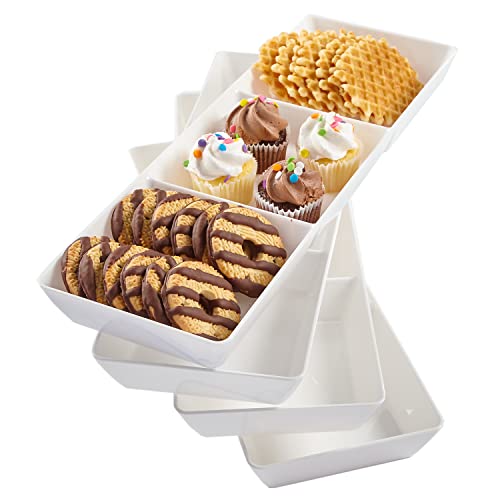

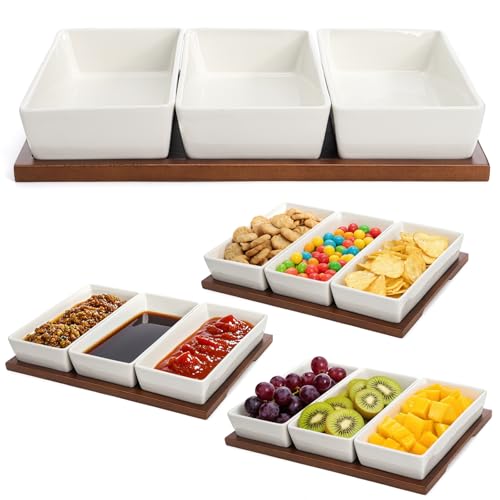
As an Amazon Associate we earn from qualifying purchases at no extra cost to you. Ratings are shown as listed on Amazon.
Quick comparison: which divided tray fits your table?
| Situation | Best tray type | Useful specifications | Why it works |
|---|---|---|---|
| Small apartment or coffee table | Compact plastic or bamboo tray | 12–16 inches wide; 1–1.5-inch compartments | Fits a small surface without crowding drinks or plates |
| Kids, pets, or frequent outdoor use | Melamine or thick polypropylene tray | At least 2 pounds; rounded edges; nonslip underside | Resists light bumps and is easier to replace than glass or ceramic |
| Elegant dinner party | Acacia, walnut, or ceramic divided platter | 16–20 inches wide; 1–2-inch wells | Looks polished and accommodates a larger assortment |
| Dip-heavy appetizers | Deep ceramic or dishwasher-safe plastic tray | Dip wells at least 1.5 inches deep and 3.5 inches wide | Reduces splashing and keeps sauces away from dry foods |
| Transporting food across a room | Handled tray with raised rim | 2.5–3-inch rim; 18–24-inch handles or grip openings | Provides more control when the tray is loaded |
What size divided serving tray should you buy?
Measure the table or counter where the tray will land, not just the space where it will be stored. Leave approximately 4 inches of clear space around the tray for guests to reach in, set down a drink, or lift a serving utensil. On a 30-inch-wide dining table, a tray wider than about 20 inches can quickly become intrusive when plates and glasses are already present.
For two to four people, a tray measuring 12–16 inches long is usually sufficient. Look for three to five compartments, with one larger section for crackers, vegetables, or fruit and smaller sections for nuts, olives, or condiments. For six to eight guests, choose a 16–20-inch tray with four to seven compartments. A larger tray can hold more food, but it also becomes heavier and harder to carry safely.
Consider the food dimensions as well. A 1-inch compartment may hold nuts and berries but will not comfortably contain carrot sticks, mini sandwiches, or stacked chips. For mixed appetizers, prioritize at least one section measuring 5–7 inches across and 1.5 inches deep.
Divider depth matters more than the number of compartments
Many divided trays look generous in photographs but have low partitions that do little to prevent foods from mixing. Shallow dividers are acceptable for dry snacks that stay in place. They are less useful for salsa, ranch dressing, hummus, marinated vegetables, and juicy fruit.
- 0.75–1 inch deep: Best for crackers, cheese cubes, nuts, and candy.
- 1.25–1.5 inches deep: A practical all-purpose range for vegetables, fruit, and moderate amounts of dip.
- 1.75–2 inches deep: Better for wet foods and transport, although narrow compartments can be difficult to scoop from.
Inspect the corners where partitions meet the tray. Rounded, continuous corners are easier to clean than sharp joints that collect oil or crumbs. A divider should also extend close to the outer rim. Gaps or very low sections allow sauces to flow into neighboring compartments when the tray is tilted.
Material trade-offs: safety, weight, and maintenance
| Material | Advantages | Limitations | Cleaning guidance |
|---|---|---|---|
| Food-safe polypropylene or other quality plastic | Lightweight, impact-resistant, often dishwasher-safe | Can scratch, stain, or retain strong odors over time | Choose a dishwasher-safe design with smooth, nonporous wells |
| Melamine | Light, rigid, attractive, resistant to shattering | Usually not suitable for microwave use; can chip at the edges | Hand-washing is often gentler, even when dishwasher use is permitted |
| Ceramic or porcelain | Nonporous, stable, good heat and stain resistance | Heavy and breakable; may chip if stacked carelessly | Dishwasher-safe if labeled; avoid sudden temperature changes |
| Solid wood | Warm appearance, sturdy feel, useful for dry grazing foods | Absorbs moisture and oils; can warp if soaked | Wipe promptly, hand-wash briefly, and dry immediately |
| Glass | Nonporous and easy to inspect for cleanliness | Heavy, slippery, and vulnerable to impact | Use a dishwasher-safe design and handle with two hands |
For material safety, select a tray clearly identified as intended for food contact. Avoid decorative painted surfaces inside compartments unless the manufacturer states that the finish is food-safe. Do not assume that a wooden tray is microwave-safe or that melamine can safely hold very hot food. If you need a tray for warm appetizers, verify its temperature limits rather than relying on its appearance.
Best choices by serving situation
For dips and vegetables
Choose a ceramic or thick plastic tray with one or two deep, wide wells. A round dip bowl built into the tray is preferable to a shallow depression because guests can scoop without dragging dip over the divider. A silicone or rubber base is helpful on smooth countertops, but check that it is securely attached and has no exposed fabric that can absorb spills.
For a charcuterie-style spread
A wooden divided tray or a ceramic platter with broad sections usually works best. Look for at least one compartment wide enough for folded slices of meat and another long section for breadsticks. Wood is attractive but requires prompt cleaning after oily or wet foods; parchment or small removable bowls can reduce staining without eliminating the tray’s visual appeal.
For children and outdoor gatherings
Use a lightweight melamine or impact-resistant plastic tray with rounded corners. Avoid glass and delicate ceramic when the tray will be carried over grass, near a pool, or by children. Raised edges matter more than decorative details: they give fingers a place to steady the tray and help contain crumbs if the tray is bumped.
For carrying food between rooms
Prioritize balance over maximum capacity. A tray with two opposed handles or wide grip openings is easier to control than a smooth platter. Keep heavier items near the center, and do not fill compartments to the top. A fully loaded ceramic tray can exceed 8–12 pounds, which is awkward for one-handed carrying even when the tray itself is sturdy.
Cleaning requirements that are easy to overlook
Look for smooth, sealed surfaces and avoid decorative grooves that run around each compartment. Removable silicone liners can protect wood, but they add another piece to wash and may trap moisture underneath if stored before drying. For dishwasher use, confirm that the tray fits without blocking the spray arm. Large trays often fit only on the lower rack, where heat and water pressure may be higher.
After serving oily foods, rinse the tray before residue dries. For wood, use mild dish soap and a soft sponge rather than soaking it in a sink. Dry it vertically or on its edge so moisture does not remain beneath the tray. Plastic trays that become cloudy, deeply scratched, or persistently odor-filled should be replaced because damaged surfaces are harder to clean thoroughly.
Dimensions to check before ordering
- Footprint: Keep at least 4 inches of usable table clearance around the tray.
- Compartment width: Choose 3.5 inches or more for practical dip wells and 5 inches or more for larger finger foods.
- Divider height: Select 1.25 inches or more if wet and dry foods will share the tray.
- Tray height: Allow roughly 2–3 inches above the table for handles or raised edges.
- Storage: Measure cabinet height and shelf depth; handled trays may not stack neatly.
- Loaded weight: Keep heavy ceramic trays below a comfortable carrying weight, especially when guests will serve themselves.
For most homes, the best divided serving tray for appetizers is a 16–18-inch food-safe plastic, melamine, or ceramic model with four to six sections, at least one deep dip compartment, a raised rim, and rounded interior corners. Choose wood when presentation is the priority and you are willing to hand-wash it; choose plastic or melamine when portability, children, pets, and fast cleanup matter more.