Key takeaways
- Adjustable throttle restriction: lets an adult set a speed appropriate for the practice area.
- Motor cut-off or lanyard: stops power if the rider falls or the adult needs immediate control.
- Hand guards: help protect fingers from branches and levers during low-speed falls.
- Enclosed chain and sprocket areas: reduce snag and pinch hazards.
- Progressive brakes: front and rear braking gives better control than a single weak brake.
- Wide foot pegs and a padded, grippy seat: help the rider stay positioned over uneven ground.
- Adjustable suspension: useful for a growing rider, but only when adjusted to the child’s weight.
Best Kids Dirt Bikes for Safe Outdoor Riding
The best kids dirt bikes are chosen by a child’s inseam, maturity, riding area, and ability to control the bike—not by engine size alone: younger or smaller riders usually need a low-speed electric model, while older children with training and supervision may be ready for a controlled gas-powered trail bike.
Quick picks by riding situation
| Child and situation | Best bike type | Useful target specifications | Why it fits |
|---|---|---|---|
| Approximately ages 3–6, first powered bike | Low-seat electric balance or mini dirt bike | 18–24 inch seat height, 5–10 mph, 20–35 lb bike | Easy to lift, quiet, and less intimidating; best on private, flat ground |
| Approximately ages 6–9, beginner with basic balance | Small electric trail bike | 22–27 inch seat height, adjustable 8–15 mph, 35–55 lb bike | Manageable power with speed modes and modest wheel size |
| Approximately ages 8–12, growing rider | Mid-size electric or 50cc four-stroke | 26–29 inch seat height, 12–25 mph, 50–120 lb bike | More suspension and ground clearance without jumping to adult-bike power |
| Approximately ages 10–14, trained trail rider | Controlled 50cc–110cc trail bike or larger electric model | 27–32 inch seat height, speed limiter, 80–150 lb bike | Suitable only when the rider can stop, turn, and recover from a stall reliably |
These age ranges are starting points, not automatic recommendations. Compare the child’s inseam with the bike’s seat height. A rider should be able to place at least the balls of both feet on the ground while seated, or comfortably step off and support the bike during a stop. A motorcycle that is too tall or heavy is harder to control than one with slightly less power.
Our top picks
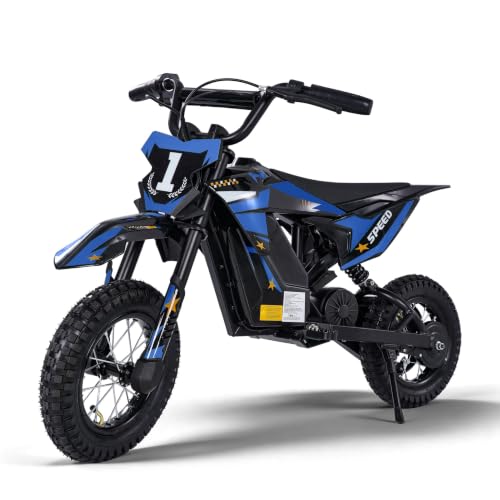


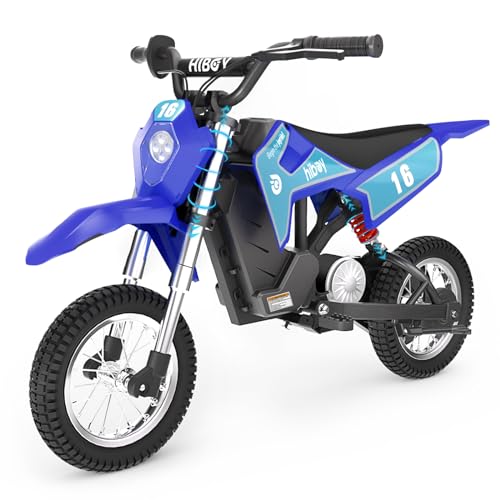
As an Amazon Associate we earn from qualifying purchases at no extra cost to you. Ratings are shown as listed on Amazon.
Electric versus gas: which power type is safer?
Electric dirt bikes
Electric models are often the better first choice because they have no hot exhaust, no fuel storage, and less maintenance. A parent can usually select a lower speed mode, and the motor is quiet enough for instructions to remain audible. Models such as the Razor MX350, Razor MX500, and Razor SX500 are familiar examples of small electric off-road bikes, but their suitability depends on the child’s size and the model’s current specifications.
The trade-off is battery time. A claimed run time may assume intermittent riding on level ground and a light rider. Expect less time on grass, hills, soft soil, or with an older child near the weight limit. A removable battery is useful if the bike must be carried indoors for charging; otherwise, check whether the charger can reach a safe, dry charging location. Never charge a damaged, swollen, or unusually hot battery.
Gas dirt bikes
Gas bikes can provide longer continuous riding because refueling takes minutes, and models such as the Yamaha PW50 and Honda CRF50F have long-standing youth-bike designs. They also introduce fuel, hot engine parts, exhaust, noise, oil changes, chain maintenance, and more complicated starting and stopping procedures.
A 50cc four-stroke is not automatically safe for every child. It can still accelerate quickly enough to cause a crash, particularly on a slope. Use a parent-controlled throttle stop when available, and do not remove the limiter simply because the child wants more speed. Gas bikes should be used only outdoors in well-ventilated areas, never inside a garage or enclosed shed while running.
Match the specifications to the child
Seat height and inseam
Measure the child’s inseam while wearing riding trousers and boots. For a new rider, look for a seat height roughly 2–4 inches above the inseam if the child can confidently balance and step off; a beginner who needs frequent foot support may need a lower model. Do not rely on age labels alone because two children of the same age can differ substantially in height and coordination.
Speed controls
Prioritize a keyed power switch, selectable speed modes, a parent-adjustable throttle limiter, and a reliable mechanical brake. For early practice, 5–10 mph is generally easier to manage than a bike capable of 20 mph or more. A child should progress to higher speeds only after demonstrating controlled starts, stops, turns, and emergency braking on a flat, open surface.
Wheel size and clearance
Small 10- to 12-inch wheels lower the seat and help a short rider reach the ground, but they can drop into ruts and lose stability on rough terrain. Wheels around 14 to 16 inches usually roll over small roots and bumps more smoothly, though they raise the seat and increase the bike’s weight. Ground clearance matters on trails: approximately 4–6 inches may suit smooth grass or packed dirt, while rougher paths need more clearance and adequate suspension travel.
Weight limit
Use the manufacturer’s maximum rider weight, not just the bike’s apparent size. Include boots, helmet, armor, and a small backpack. Staying at least 10–15 pounds below the stated limit leaves useful margin for climbing and braking. If the rider is near the limit, choose a stronger frame and larger brakes rather than increasing speed or battery power.
| Specification | Smaller beginner | Intermediate child | Older or larger youth |
|---|---|---|---|
| Typical seat height | 18–24 inches | 22–29 inches | 27–33 inches |
| Practical training speed | 5–8 mph | 8–15 mph | 12–20 mph initially |
| Useful wheel diameter | 10–12 inches | 12–16 inches | 16–19 inches |
| Recommended bike weight | Under 40 lb | 35–75 lb | 60–120 lb, depending on rider |
| Starting ride duration | 10–20 minutes | 15–30 minutes | 20–40 minutes with breaks |
Safety features worth paying for
- Adjustable throttle restriction: lets an adult set a speed appropriate for the practice area.
- Motor cut-off or lanyard: stops power if the rider falls or the adult needs immediate control.
- Hand guards: help protect fingers from branches and levers during low-speed falls.
- Enclosed chain and sprocket areas: reduce snag and pinch hazards.
- Progressive brakes: front and rear braking gives better control than a single weak brake.
- Wide foot pegs and a padded, grippy seat: help the rider stay positioned over uneven ground.
- Adjustable suspension: useful for a growing rider, but only when adjusted to the child’s weight.
Protective equipment is part of the bike purchase. Use a properly fitted motorcycle helmet with the appropriate certification for your region, eye protection, gloves, long sleeves, long trousers, over-the-ankle boots, and knee and elbow protection. A chest protector is sensible for trail riding. Bicycle helmets and sneakers do not provide equivalent protection for a motorized dirt bike.
Where the bike will actually fit
Measure more than the storage corner. A bike that is 45–60 inches long may require a clear doorway of at least 30 inches, plus turning room. Leave approximately 24 inches of accessible space around the parked bike so a child does not climb over it or catch clothing on the handlebars. For practice, a level 10-by-12-foot area can work for slow starts and stops, but it is too small for high-speed riding, sharp turns, or jumping.
Choose private land with permission, no vehicle traffic, and a clear run-off area. Avoid roads, public parks that prohibit motorized vehicles, steep slopes, ponds, fences, and trails with blind corners. Local laws may restrict youth motorcycles, even on property, so check the rules before riding.
Ownership realities parents often miss
Electric bikes usually need charging after use and periodic checks of tire pressure, brake adjustment, fasteners, and chain tension. Gas models need fuel draining or stabilizing during storage, air-filter cleaning, oil service, and more frequent attention to the chain and clutch components. Tires, brake pads, grips, chains, and batteries are normal wear items.
Consider moving weight before buying. A 30-pound electric bike can be carried by one adult; a 90-pound youth trail bike may need a ramp, two-person lifting, or a hitch carrier. Store fuel-powered bikes upright in a ventilated, secure area and keep both fuel and charging equipment away from children.
Bottom line
For most first-time riders, select the lightest electric dirt bike that provides a comfortable seat height, a parent-controlled low-speed mode, dependable brakes, and a weight rating comfortably above the fully equipped child. Move to a 50cc or 110cc gas trail bike only when the rider has the size, supervision, protective equipment, and skills to manage the additional noise, maintenance, heat, and acceleration.