Key takeaways
- Compare six commercial style gas ranges for home kitchens, from 30-inch propane models to 36-inch pro-style ranges, with specs, fit and safety tips.
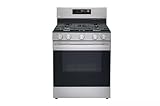
The Empava 30-inch convection range is the best all-around pick here for most households that want a commercial-style gas range without a 36-inch footprint or a restaurant-sized budget of space. It pairs five sealed burners, including an 18,000 BTU power burner, with a 4.55 cubic foot true convection oven in a standard 30-inch width. “Commercial style” (also called pro-style) describes a home range built to look and cook like a restaurant unit: heavy knobs, cast-iron grates, high-output burners and a stainless body. Cooks who want more room should look at the two 36-inch options, while renters and small kitchens have one compact runner-up.
Quick List
- Empava 30-inch convection range – best for a balanced pro-style range in a standard 30-inch slot
- VEVOR 36-inch gas range – best for large oven capacity and six burners at a modest footprint cost
- KUCHT Professional 30-inch propane range – best for propane homes that want a classic pro look
- NXR 36-inch propane range – best for big families and serious home cooks on propane
- 30-inch S Series Professional range – best for shoppers comparing another 30-inch pro-style option (confirm details on the listing)
- Avanti 20-inch compact range – runner-up for tiny kitchens; not truly commercial style
Which One Is Right for You?
| If you… | Choose |
|---|---|
| Have a standard 30-inch opening and want a power burner plus convection | Empava 30-inch |
| Cook for a crowd and have room for a 36-inch range | NXR 36-inch propane or VEVOR 36-inch |
| Run on propane and want a 30-inch pro look | KUCHT Professional 30-inch |
| Want six burners and a large oven without paying for a premium name | VEVOR 36-inch |
| Are cross-shopping 30-inch pro-style ranges and will verify the specs yourself | 30-inch S Series Professional |
| Live in a studio, tiny house or accessory unit | Avanti 20-inch compact |
Width and fuel type decide this category before anything else. A 30-inch range drops into the standard cutout, while a 36-inch model usually means moving cabinets or countertops. Natural gas and propane ranges are not interchangeable without a conversion kit, so settle your fuel first and shop second.
All 6 Picks in Detail
1. Empava 30-Inch Gas Range – Best for a Balanced Pro-Style Range
As an Amazon Associate we earn from qualifying purchases at no extra cost to you.

This is the range to start with if your kitchen has a standard 30-inch slot and you want the pro-style experience: a real searing burner, a convection oven and a stainless finish. The listing names five sealed burners with an 18,000 BTU power burner for searing and fast boils, plus a 4.55 cubic foot oven with true convection, where a fan and a third heating element move heat around the cavity for more even results. The title also says it is convertible between natural gas and propane and CSA certified.
It suits couples and small families who bake, roast and stir-fry in roughly equal measure and who want one range that handles all three without feeling oversized. Households that renovate on a schedule will also like that the 30-inch width avoids cabinet work. If you cook mostly on propane, make sure the conversion hardware is included before you commit, because that detail is not always clear from the title alone.
- 30-inch width, freestanding style (listing also describes slide-in use)
- 5 sealed burners with an 18,000 BTU power burner
- 4.55 cu. ft. oven with true convection
- Convertible between natural gas and LP per the listing title
- Stainless steel finish, CSA certified
Pros:
- Power burner suits searing and large stockpots
- Convection oven helps with sheet-pan roasting and baking
- Fits the standard 30-inch range cutout
Cons:
- Gas conversion hardware and exact depth should be confirmed on the listing
- Oven is smaller than the two 36-inch ranges in this list
Compared with the KUCHT 30-inch, it adds a fifth burner and a larger oven, which is why it leads the list.
2. VEVOR 36-Inch Gas Range – Best for Oven Space and Six Burners

The VEVOR is a freestanding 36-inch stainless range with six sealed cooktop burners, easy-reach racks and a halogen oven light. Manufacturer information for this model describes a 6.0 cubic foot oven with convection modes and burner outputs that reach 18,000 BTU on the strongest burner, though you should confirm the numbers for the exact variant you buy, since the listing name here is shortened. Six burners and a wide oven make it a good fit for holiday cooking and batch meal prep.
It is a sensible choice for a family kitchen where the oven does the heavy lifting: weekly roasts, big casseroles and multiple trays of cookies. Because the brand is newer to cooking appliances, read the warranty terms and confirm how service is handled where you live before you place an order.
- 36-inch width, freestanding stainless steel body
- 6 sealed cooktop burners
- Easy-reach racks and halogen oven light
- Oven capacity around 6.0 cu. ft. per manufacturer information; confirm on listing
- Fuel type (natural gas or propane) should be confirmed before ordering
Pros:
- Large oven handles full-size roasting pans
- Six burners give plenty of simultaneous pot space
- Straightforward feature set without extras you may not need
Cons:
- The 36-inch width may require cabinetry changes
- Brand is newer to ranges, so check warranty and service coverage in your area
Next to the NXR 36-inch, it is the natural-gas-friendly alternative; the NXR is the one to pick if your home runs on propane.
3. KUCHT Professional 30-Inch Propane Range – Best for Propane Homes

KUCHT has built its name on pro-look ranges for residential kitchens, and this 30-inch model is the propane version of its Professional line. The listing calls out a 4.2 cubic foot convection oven, sealed burners and a stainless steel finish. Manufacturer information for the line describes four burners topped by a high-output rocket-style burner, but burner ratings differ between listings for this series, so confirm them on the page you buy from.
Think of it as the pick for a rural or cabin kitchen with a propane tank, or a suburban home with a propane supply, where you want pro-style looks in a standard slot and do not want to fuss with orifices. It is a good fit for people who bake regularly and care more about oven performance than about owning the biggest cooktop.
- 30-inch width, stainless steel
- Propane (LP) model per the listing title
- 4.2 cu. ft. convection oven
- Sealed burners; exact count and BTU ratings: confirm on listing
- Electronic ignition is typical for the line; confirm on listing
Pros:
- Ships as a propane unit, so no conversion work for LP homes
- Classic pro-style looks that suit open kitchens
- Convection oven in a 30-inch frame
Cons:
- Fewer burners than the Empava
- Oven is the smallest of the pro-style ranges here
Compared with the NXR, it trades capacity and width for a smaller footprint that suits a standard cutout.
4. NXR 36-Inch Propane Range – Best for Big Households on Propane

The NXR SC3611LP is a 36-inch pro-style propane range with a 5.5 cubic foot convection oven. Manufacturer information describes a six-burner cooktop on cast-iron grates, with burner ratings spanning roughly 6,000 to 18,000 BTU and a separate high-output oven burner. That spread gives you a proper low simmer and a strong sear on the same cooktop.
This range is aimed at serious home cooks and large households that host often. If you do a lot of braising, canning or multi-dish holiday meals, the extra cooktop width and oven volume pay off quickly. It also makes sense for new-build or remodeled kitchens where a 36-inch opening is planned from the start, since retrofitting one into a 30-inch space is the expensive part.
- 36-inch width, stainless steel
- Propane model (SC3611LP)
- 5.5 cu. ft. convection oven
- Six sealed burners per manufacturer information; confirm on listing
- Heavy cast-iron grates and a re-ignition system per manufacturer information
Pros:
- Wide cooktop with real simmer-to-sear range
- Large oven for roasts and multiple racks
- Delivered ready for propane
Cons:
- Heavy, so plan for two people and a floor that can handle it
- Depth runs deeper than a standard counter, so check your layout
Compared with the VEVOR 36-inch, it is the propane-specific choice with a slightly smaller oven.
5. 30-Inch S Series Professional Gas Range – Best for Comparison Shoppers
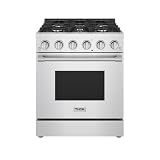
The listing name for this range is short: a 30-inch S Series professional freestanding gas range. Because the title does not state burner count, BTU ratings, oven capacity or fuel type, treat it as a candidate to research rather than a confirmed pick. If the product page confirms sealed burners, a convection oven and the fuel you need, it fits the same slot as the Empava and KUCHT.
It will appeal to shoppers who find the model through a retailer or showroom and want to compare it side by side with better-documented ranges. Before ordering, download the manual from the product page, check the gas type, confirm the number of sealed burners and make sure the oven interior fits your largest pan. If any of those answers is missing, move on to one of the better-documented options.
- 30-inch width, freestanding
- Professional styling per the listing name
- Burner count and output: confirm on listing
- Oven capacity and convection: confirm on listing
- Fuel type and conversion options: confirm on listing
Pros:
- Standard 30-inch width
- Pro-style design intent
Cons:
- Key specs are not stated in the listing name, so verification is on you
- Harder to compare directly against better-documented rivals
Next to the Empava, this one asks you to do more verification, which is why it sits lower in the list.
6. Avanti 20-Inch Compact Gas Range – Runner-Up for Tiny Kitchens (Not Pro-Style)

Be clear about what this is: a 20-inch compact range with four sealed burners and stainless steel finish, not a commercial-style unit. It earns a place in this guide as a runner-up for kitchens too small for any of the others, such as studios, tiny homes and accessory dwellings. Manufacturer information for the Avanti 20-inch family describes a roughly 2.1 cubic foot oven without convection and a mix of burner sizes with a modest top output.
It makes sense as a replacement for an old apartment-size range or as the only range in a tiny house, garage apartment or guest suite. Anyone who actually wants the pro-style experience should look at the 30-inch or 36-inch models above instead, because compact ranges cannot match their heat output or oven size.
- 20-inch width, freestanding
- 4 sealed burners
- Oven around 2.1 cu. ft. per manufacturer information; confirm on listing
- No convection per manufacturer information; confirm on listing
- Stainless steel finish
Pros:
- Fits spaces no pro-style range can
- Simple, familiar controls
Cons:
- No power burner or pro-style performance
- Oven fits small pans only, not a full-size sheet pan or large turkey
Compared with the Empava, it gives up burner power and oven size entirely in exchange for a footprint two-thirds as wide.
Specs Compared
| Model | Width | Fuel | Burners | Oven | Convection |
|---|---|---|---|---|---|
| Empava 30-inch | 30 in | Natural gas / LP convertible | 5 sealed, 18,000 BTU power burner | 4.55 cu. ft. | Yes (true convection) |
| VEVOR 36-inch | 36 in | Confirm on listing | 6 sealed | About 6.0 cu. ft.; confirm on listing | Confirm on listing |
| KUCHT Professional 30-inch | 30 in | Propane | Sealed; count confirm on listing | 4.2 cu. ft. | Yes |
| NXR 36-inch SC3611LP | 36 in | Propane | Confirm on listing (six per manufacturer info) | 5.5 cu. ft. | Yes |
| 30-inch S Series Professional | 30 in | Confirm on listing | Confirm on listing | Confirm on listing | Confirm on listing |
| Avanti 20-inch compact | 20 in | Confirm on listing | 4 sealed | About 2.1 cu. ft.; confirm on listing | No (per manufacturer info) |
How We Chose These
This guide is built from research, not lab work. We started with the range models in the current product set, read each listing title and specification field, and cross-checked the main figures against manufacturer product pages and retailer spec sheets where those were available. We favored ranges that clearly state width, fuel type, oven capacity and burner configuration, because those four facts determine whether a range fits your kitchen and your cooking. Where listings disagreed or left a value out, we say “confirm on listing” rather than guess. One range is included as a compact runner-up because it does not meet the pro-style definition but serves shoppers with very small spaces.
What to Look For
Burner output and layout
Home ranges commonly top out near 15,000 BTU on the strongest burner, while pro-style ranges often reach 18,000 BTU or more. High output matters for searing and bringing large pots to a boil, but it only helps if the range also simmers well. Look for a low-end burner rated near 5,000 to 9,000 BTU or lower, because sauces and melting chocolate need gentle heat. Sealed burners are easier to wipe clean than open burners and keep spills out of the burner box. A mix of one large, two medium and one small burner covers most households; a sixth burner mainly matters if you regularly run four pots at once.
Oven capacity and convection
Oven size is quoted in cubic feet. Around 4 cubic feet is typical for a 30-inch range, and 5 to 6 cubic feet is common for a 36-inch model. What actually matters is whether your biggest pan fits: measure your sheet pans and roasting pan and compare them to the interior width and depth on the spec sheet. True convection uses a fan plus a third heating element, while basic convection uses only a fan. Either speeds up roasting and helps trays brown evenly, though you usually reduce recipe temperatures by about 25 degrees Fahrenheit when you use it.
Width, depth and installation
Standard cutouts are 30 inches wide. A 36-inch range usually requires removing or reworking adjacent cabinetry, so measure the opening and the countertop on both sides. Many pro-style ranges are 27 to 29 inches deep, compared with about 25 inches for a standard range, so they may stick out slightly past the counter edge. Also check height with the backguard, because some pro-style models approach 40 inches and can clash with low shelves or window sills. Always install the anti-tip bracket that comes with a freestanding range.
Fuel, ventilation and safety
Natural gas and propane operate at different pressures: natural gas ranges typically work at about 3.5 inches of water column, while propane runs near 10 inches. A propane range needs a propane regulator and orifices, and a natural gas range needs a conversion kit to switch, so confirm which fuel you have before you buy. Gas connections should be made and leak-checked by a licensed installer, and you should know where your gas shutoff is. High-output burners also need serious ventilation: a common rule of thumb is about 100 cubic feet per minute of hood capacity for every 10,000 BTU of total burner output. Worked example: a range with about 60,000 BTU of combined burners calls for roughly a 600 CFM hood. Install a carbon monoxide alarm and use the hood every time you cook.
Cleaning and day-to-day use
Pro-style ranges look great but ask a bit more of the cook. Cast-iron grates are heavy and need to be lifted off for cleaning, and the continuous grate design lets you slide pots between burners without lifting them. Stainless steel shows fingerprints and splatter, so keep a microfiber cloth and a non-abrasive cleaner handy. Oven cleaning varies: many pro-style ovens are manual-clean rather than self-cleaning, which means lining the bottom with a drip tray and wiping spills while they are fresh. Knobs on heavy models can feel stiff at first, but they are designed to hold a precise flame setting. If you have young children, ask whether the model offers knob covers or a control lock.
Warranty and service. Pro-style ranges from smaller brands vary in how easy it is to get parts and service. Before you buy, check the length of the warranty, whether it covers labor, and whether authorized repair technicians operate in your area. A longer warranty is often worth more to a daily cook than an extra burner.
Questions
What makes a gas range “commercial style”?
The term describes a range with restaurant-inspired design: stainless steel, heavy knobs, cast-iron grates and burners with higher BTU output. It does not mean the range meets commercial kitchen codes, and home pro-style ranges are designed for residential installation.
Do I need a special hood for a pro-style range?
Often yes. High-output burners put out more heat and combustion byproducts, so a stronger hood vented to the outdoors is recommended. Use the BTU-to-CFM rule of thumb and check the range’s installation manual for clearance requirements.
Can I convert a natural gas range to propane?
Many ranges can be converted with a manufacturer-approved kit, but not all. Conversion involves swapping orifices and adjusting regulators, and it should be done by a qualified technician. If you already know you use propane, buying a range shipped as a propane model avoids the step.
Is a 36-inch range worth it over a 30-inch?
It is if you routinely use more than four pots at once or need an oven that fits multiple full-size pans. If you mostly cook for two to four people, a 30-inch range with a power burner is usually enough and avoids cabinet changes.
Is true convection different from regular convection?
True convection adds a third heating element around the fan so the air is heated as it circulates, which tends to produce more even results than a fan alone. Listings do not always say which type a range uses, so confirm on the product page if it matters to you.
Where can I check the exact specs before buying?
Use the manufacturer’s product page and the installation manual, which list cutout dimensions, gas pressure and clearances. Retailer pages sometimes disagree on small details like depth and broiler output, so the manual is the safest reference.
Update History
- October 20, 2026 – Initial publication; product set drawn from current catalog listings.
- Check the product page for current specifications and availability before buying.
Sources
- Manufacturer product and specification pages for Empava, KUCHT, NXR, VEVOR and Avanti ranges
- Retailer listing titles and specification fields
- Gas appliance installation guidance on fuel pressure and ventilation as published in manufacturer manuals