Key takeaways
- Staring at a cramped kitchen counter while trying to chop vegetables, boil pasta, and keep a coffee maker out of the way is a daily frustration for many home cooks. When a full-scale kitchen remodel—which can easily climb past $15,000—is…
What's inside
Staring at a cramped kitchen counter while trying to chop vegetables, boil pasta, and keep a coffee maker out of the way is a daily frustration for many home cooks. When a full-scale kitchen remodel—which can easily climb past $15,000—is out of the question, adding a secondary work surface is the smartest move you can make. But as you browse your options, you will inevitably run into a classic design dilemma: Should you buy a substantial, stationary freestanding kitchen island, or a nimble, prep-focused butcher block rolling cart?
This is not just a question of aesthetics; it is a fundamental choice about how you use your floor space. A freestanding island acts as a permanent anchor, mimicking the look of built-in cabinetry while hiding kitchen clutter behind solid doors. A rolling cart, on the other hand, prioritizes raw utility and motion, serving as a dedicated chopping station that can glide out of the way when guests arrive. As we look at home design trends heading into 2026, the demand for flexible, multi-functional kitchen layouts is at an all-time high, making this decision more critical than ever.
As an Amazon Associate we earn from qualifying purchases at no extra cost to you. Product prices and availability are accurate as of the date shown and are subject to change.


To help you choose the right surface for your culinary style, we have broken down the structural, financial, and practical differences between these two popular kitchen upgrades.
Quick Verdict
If you have at least 12 to 15 square feet of open floor space, want to hide bulky appliances or trash cans, and desire a piece of furniture that looks like an expensive, built-in extension of your cabinetry, choose a freestanding kitchen island.
If your kitchen is narrow, you need a dedicated, heavy-duty surface where you can chop food directly on the wood, and you require the flexibility to roll your workspace out of the high-traffic zone when you are done, choose a butcher block rolling cart.
Side by Side
Before diving into the specific strengths of each option, here is a direct comparison of how they stack up across key performance and practical categories:
| Feature | Freestanding Kitchen Island | Butcher Block Rolling Cart |
|---|---|---|
| Comfort & Ergonomics | Highly stable; usually matches standard 36-inch counter height; comfortable for long prep sessions. | Good height, but can suffer from minor wobbles on uneven floors or when applying heavy pressure. |
| Durability | Excellent. Sturdy frames made of solid wood, MDF, or metal that stay stationary and experience less wear. | High utility, but casters, wheel locks, and joints experience physical strain over time from movement. |
| Price Range | $130 to $600+ (depending on size, materials, and internal storage features). | $50 to $300 (highly affordable, utility-focused designs). |
| Maintenance | Low. Usually features sealed wood, stainless steel, or granite tops that require simple wiping. | Moderate to High. True butcher block tops require regular oiling with food-grade mineral oil to prevent cracking. |
| Space Needed | Requires a dedicated footprint (typically at least 40″ x 20″ with 3 feet of clearance on all sides). | Compact footprint (often 20″ x 15″ to 30″ x 20″); can be tucked into corners or closets. |
| Look & Style | Polished, permanent furniture look; often features closed cabinetry, drawers, and decorative hardware. | Industrial, rustic, or utilitarian; often features open shelving, wire racks, and exposed wheels. |
| Resale Value | Moderate to High. Often sold with the home as a semi-permanent fixture that adds value. | Low. Viewed as a personal appliance or temporary cart; usually moves away with the seller. |
| Best For | Larger kitchens, hiding trash cans, storing heavy appliances, and creating a central social hub. | Tight spaces, serious meal preppers who chop raw ingredients, and renters who move frequently. |
Where Freestanding Kitchen Island Wins
The primary advantage of a freestanding kitchen island is its sheer structural presence and storage volume. Unlike rolling carts, which prioritize lightweight materials for easy gliding, freestanding islands are built to be heavy, solid anchors. They are designed to stay put, which gives them a distinct advantage during intense kitchen tasks like kneading dense bread dough, rolling pastry, or operating heavy stand mixers that would make a wheeled cart rattle and sway.
Storage is another area where the freestanding island completely outclasses the rolling cart. Many islands feature deep, closed cabinets that can hide unsightly garbage bins, recycling centers, or bulky small appliances like air fryers and slow cookers. For instance, models like the ONBRILL 60″ Kitchen Island with Trash Can Storage, Rolling Island Table ($177.64) show how a larger island can seamlessly integrate specialized compartments like pull-out trash storage while still retaining the option of heavy-duty casters if you do need to adjust its position.
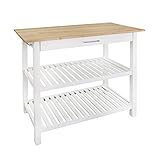
Aesthetically, a freestanding island elevates a room. It bridges the gap between loose kitchen accessories and built-in cabinetry. Options like the Casual Home Kitchen Island with Solid American Hardwood Top, Natural/White, 40″ W (373-91) ($137.75) provide a clean, traditional look with open slatted shelves and a solid wood top that mimics a custom-built farmhouse island. Because they look like permanent furniture, freestanding islands can also serve as a casual breakfast bar or a buffet station when hosting dinner parties.
Where Butcher Block Rolling Cart Wins
While freestanding islands offer grandeur and storage, the butcher block rolling cart wins on raw utility, spatial flexibility, and price. If you work in a galley kitchen or a compact apartment, floor space is a luxury. A rolling cart allows you to have a high-quality prep station exactly when and where you need it, and vanish it into a corner or pantry when the cooking is finished.
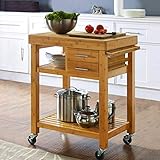
The defining feature of these carts is the top surface. A true wood or bamboo butcher block surface is designed for direct culinary action. While you would never want to scratch or slice directly onto the painted or sealed top of an expensive stationary island, a butcher block top is built to take the abuse of chef’s knives, cleavers, and heavy pounding. The Home Aesthetics Rolling Kitchen Island Cart with Drawers Shelves, Towel Rack, Locking Casters, Butcher Block Food Prepping Cart Trolley on Wheels, Bamboo Wood ($159.95) is an excellent example of this utility, offering a durable bamboo prepping surface alongside easily accessible drawers and towel racks that roll right to your stove side.
Furthermore, rolling carts are incredibly budget-friendly. Because they are designed with lightweight, highly efficient frames—often combining industrial metal with wood accents—they cost a fraction of the price of heavy islands. For those who need pure storage utility without the decorative bells and whistles, options like the Amazon Basics Portable Kitchen 3-Tier Storage Rack on Caster Wheels with Adjustable 2 Shelves, 175 Pound Capacity, 21 x 15 x 36.7 inches ($52.49) offer massive weight capacities and adjustable storage shelves at an incredibly low price point, making them perfect for holding heavy microwaves, toaster ovens, or stacks of cast iron pans.
Cost Over 5 Years
When deciding between these two options, it is helpful to look beyond the initial purchase price and calculate the total cost of ownership over a five-year period. This includes initial purchase costs, assembly, maintenance supplies, and potential replacement parts.
Freestanding Kitchen Island: A high-quality freestanding island typically costs between $130 and $400 upfront. Because these pieces are stationary, they experience very little mechanical wear and tear. The hinges, drawer glides, and cabinet doors are protected from the constant vibrations of rolling across floor transitions. The tops are usually sealed with durable polyurethanes or lacquers, meaning they only require standard kitchen spray and a microfiber cloth to clean. Over five years, your maintenance cost is practically zero, bringing the total five-year cost to roughly the same as your initial purchase price ($130 to $400).
Butcher Block Rolling Cart: A quality rolling cart will cost between $50 and $180 upfront. However, because a butcher block surface is meant for food prep, it is usually unsealed. To prevent the wood or bamboo from drying out, cracking, or absorbing bacteria from raw food juices, you must treat the surface with food-safe mineral oil or beeswax every 1 to 3 months. A bottle of high-quality mineral oil costs about $12 and will last a year. Over five years, you will spend roughly $60 on oil and board conditioners. Additionally, because the cart is constantly in motion, the casters and locking mechanisms may eventually wear down or loosen, potentially requiring a $15 replacement set of heavy-duty rubber wheels. This brings the five-year cost of a rolling cart to the initial price plus roughly $75 in maintenance ($125 to $255 total).
Which One for Your Home
To make your final decision easier, find the scenario below that matches your current living situation and cooking style.
Small Apartment or Galley Kitchen
If you are fighting for every square inch of floor space, the butcher block rolling cart is the undisputed champion. A stationary island will permanently block your path, making it difficult to open oven doors or dishwasher racks. A rolling cart can be parked against a blank wall, wheeled into a closet, or even pushed into the living room to serve as a bar cart when guests arrive.
Family with Kids and Pets
If you have toddlers running around or large dogs with wagging tails, safety and stability are paramount. In this environment, a heavy freestanding kitchen island is the safest choice. Rolling carts, even when the casters are locked, can shake or slide if a child pulls on them, posing a tipping hazard. A heavy, stationary island with a wide base won’t budge, and its closed cabinetry keeps sharp knives, heavy appliances, and trash bins safely out of reach behind childproof locks.
Rental Properties
If you do not own your home, you want furniture that can easily pack up into a moving truck. While large freestanding islands can weigh over 100 pounds and are difficult to disassemble, a compact rolling cart or a lightweight, open-shelf island is highly portable. It provides the extra counter space you need in a poorly designed rental kitchen without becoming a logistical nightmare when your lease ends.
Long-Term Homeowners
If you own your home and want to make a lasting upgrade without the mess of construction, a premium freestanding kitchen island is the way to go. It functions as a permanent design statement, visually anchoring the center of your kitchen. It also adds perceived value to your home, as buyers often view a substantial freestanding island as a key feature of the kitchen’s layout.
FAQ
Can you chop food directly on a freestanding kitchen island?
Generally, no. Most freestanding kitchen islands feature tops that are sealed with protective chemical varnishes, lacquers, or polyurethane coatings. Cutting directly on these surfaces will ruin the finish, expose the wood underneath to moisture, and potentially transfer toxic paint flecks into your food. Unless the manufacturer explicitly states the top is raw, food-safe wood, you should always use a cutting board. Butcher block rolling carts, conversely, are frequently designed with unsealed, food-safe oil finishes specifically meant for direct chopping.
How do I stop a rolling kitchen cart from shaking when I use it?
To minimize shaking, always ensure that all locking casters are fully engaged. If you are prepping on uneven tile floors, even locked wheels can wobble; placing the cart against a wall or the edge of your permanent countertops can help stabilize it. Additionally, load the heaviest items—like cast-iron pans, heavy mixers, or stacks of plates—on the bottom shelf of the cart. This lowers the center of gravity and significantly reduces top-heavy swaying during chopping or mixing.
What is the standard height for these kitchen prep stations?
Standard kitchen countertops in the United States are 36 inches high. Most freestanding kitchen islands and rolling carts are designed to match this height (usually ranging between 35 and 37 inches) so that they align visually with your existing counters. If you are exceptionally tall or short, look for rolling carts with adjustable shelves or customizable caster heights to create a more ergonomic prep station.
Will the wheels on a rolling cart scratch my hardwood floors?
Cheap, hard plastic wheels can absolutely scratch, scuff, or dent hardwood and laminate flooring over time, especially when the cart is loaded with heavy items. If your kitchen has wood floors, look for rolling carts equipped with soft polyurethane, rubber, or nylon casters. It is also important to keep the wheels clean, as grit and small pebbles trapped under a wheel can act like sandpaper when the cart is pushed across the room.