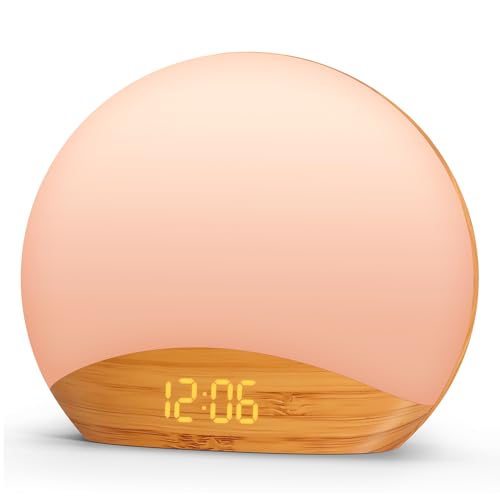
If you struggle to wake up, the best clock depends on why: heavy sleepers do best with a very loud alarm plus a vibrating bed shaker such as the Sonic Alert Sonic Bomb, deep sleepers who want to avoid snoozing may like a puzzle or physical-action clock such as Clocky, and people who dislike a jarring alarm may prefer a sunrise-style wake-up light like the Philips SmartSleep. Most clocks are designed for comfort or reliability, so match the style to your problem rather than chasing the loudest model.
Our top picks



As an Amazon Associate we earn from qualifying purchases at no extra cost to you.
Alarm clocks to wake you up at a glance
| Clock | Best for | Key stated features | Limits |
|---|---|---|---|
| Sonic Alert Sonic Bomb | Very heavy sleepers, hearing loss | The maker lists a very loud alarm, a vibrating bed shaker option and a flashing light | Bulky, not subtle, can disturb a partner |
| Clocky (Nanda Home) | People who hit snooze | The maker describes a clock that rolls off the nightstand and moves when the alarm sounds | Novelty design, can be noisy, needs floor space |
| Philips SmartSleep Wake-Up Light | Gentle wake-ups before the alarm | The maker lists a gradually increasing light, optional sounds and a dimmable display on selected models | May not wake very deep sleepers by light alone |
| Hatch Restore | Routine-driven wake-ups | The maker lists sunrise light, sound options and app-controlled routines | Premium tier, app setup |
| Sony ICF-C1 | Simple clock radio | The maker lists a clock radio with a dimmable display and alarm | Basic alarm, not made for deep sleepers |
| Vibrating wearable alarm (smartwatch or band) | Waking without disturbing a partner | Silent vibration alarms reported by makers and reviewers | Needs charging, may not wake very deep sleepers |
Why some people are hard to wake
Difficulty waking can stem from irregular sleep schedules, not enough sleep, certain medications or a sleep disorder. If you often sleep through multiple alarms, feel extremely tired in the daytime or snore loudly, speak to a doctor rather than relying on a louder clock. A clock is a tool for waking, not a fix for insufficient sleep.
What to look for
Volume and sound type
A louder alarm is not always better, since sudden loud sounds can startle you. Look for adjustable volume, a gradually rising alarm or sounds that suit you. Some clocks offer tones in specific frequencies that makers say are easier for some people with hearing loss to detect. Share a room? Consider vibration or light.
Vibration and light
Bed shakers vibrate under the pillow or mattress, and wake-up lights increase brightness before the alarm time. Heavy sleepers often respond better to vibration, while light-sensitive sleepers may rely on a sunrise effect. Many models combine both with a sound alarm as a backup.
Anti-snooze design
Clocks like Clocky move or require an action to turn off. This can help people who fall back asleep, though it can also be annoying and, if you have mobility issues, may not suit you. Phone apps that require tasks can do something similar but keep a phone in the bedroom.
Reliability and power
For an alarm you must not miss, choose a clock with a battery backup and replace the batteries on schedule. Test the alarm after setting and keep a second alarm as a backup for important mornings.
Partner considerations
A loud alarm wakes everyone in the room. Dual-alarm clocks, vibrating wearables and under-pillow shakers let you wake without disturbing a partner.
Picks by wake-up problem
You sleep through everything
The Sonic Alert Sonic Bomb or similar shaker clocks are built for this. They combine volume, vibration and light, as described by the maker, and are widely cited in reviewer lists for deep sleepers.
You hit snooze constantly
A clock that forces you to move, like Clocky, may help. Reviewers say the novelty is effective for some but unreliable for others, so see if the return policy is flexible.
You hate harsh alarms
A sunrise-style clock such as the Philips SmartSleep or Hatch Restore wakes you with gradual light and soft sounds. Reviewers report that some people find mornings easier, though results vary.
You share a bedroom
A vibrating wearable or bed shaker avoids waking a partner. Make sure the battery is charged and the vibration is strong enough for you.
Budget tiers and trade-offs
| Tier | What you typically get | Trade-off |
|---|---|---|
| Budget | Basic clock radios, loud digital alarms, simple novelty clocks | Basic sound quality and fewer controls |
| Mid-range | Loud clocks with shakers, wake-up lights | Good balance of function and reliability |
| Premium | App-connected sunrise clocks and smart bedside systems | Cost and setup |
Pick X if …
| If you … | Pick |
|---|---|
| Are a deep sleeper | A loud clock with a bed shaker, such as Sonic Alert |
| Hit snooze repeatedly | An anti-snooze clock such as Clocky |
| Want a gentle sunrise | Philips SmartSleep or Hatch Restore |
| Want a reliable basic option | Sony ICF-C1 or a similar clock radio |
| Share a bedroom | A vibrating wearable or bed shaker |
| Have a hearing impairment | A clock with vibration and flashing lights |
Alternatives to consider
- Phone alarm placed across the room: forces you to get up to turn it off, but keeps a phone in the bedroom.
- Two alarms: a quiet first alarm and a louder backup help avoid oversleeping on important mornings.
- Consistent sleep schedule: going to bed and waking at similar times each day often makes waking easier than any gadget.
Safety notes
Bed shakers should be used as the maker directs, and people with pacemakers or implanted devices should check the manual and ask a doctor if any product mentions interference. Keep cords away from the bed and do not cover clocks with bedding. Very loud alarms can be startling, so set the volume to the lowest level that reliably wakes you.
Building a wake-up routine that works
The clock is only part of the answer. Keep a regular wake time, including weekends where possible, because irregular schedules make mornings harder. Place the clock or phone across the room if you tend to switch alarms off half-asleep, and use light exposure soon after waking, such as opening curtains, to signal the start of the day. Avoid stacking many alarms a few minutes apart, since this can fragment sleep without helping you get up. If you use a vibrating shaker, test it the night before so the strength and position are right, and make sure it is secured under the pillow or mattress as the maker describes.
Common mistakes
- Buying the loudest clock when vibration or light would work better for you.
- Relying on a single alarm for an important morning instead of setting a backup.
- Forgetting to replace backup batteries, which can leak or run flat.
- Choosing a novelty clock that you may find irritating after a week.
Frequently Asked Questions
What alarm clock is best for heavy sleepers?
Clocks with a very loud alarm plus vibration, such as the Sonic Alert Sonic Bomb, are commonly chosen. A bed shaker under the pillow or mattress adds another way to wake.
Do anti-snooze alarm clocks work?
They can for people who tend to turn off the alarm half-asleep, since the clock makes you get up. Results vary, and a noisy rolling clock may be a bother if you share a room.
Is a wake-up light enough to wake me?
Not always. Many sleepers find that gradual light eases waking, but deep sleepers usually need a sound or vibration backup, which most models include.
Can a clock help if I am always tired?
A clock can only help you wake at a set time. If you are constantly tired, snore heavily or struggle to stay awake in the day, see a doctor, since sleep problems have many causes.
How loud should an alarm be?
Use the lowest volume that reliably wakes you. Very loud sounds can be startling, and some heavy sleepers find vibration or light more effective than extra volume.
How can I wake without disturbing my partner?
Use a vibrating wearable, a bed shaker or a wake-up light with the volume turned low. Dual alarms also let each person set a separate time.
More from Amazon
Programs that pair well with the guide above. Offers and eligibility are set by Amazon and may change.
Collect the home and kitchen items you want in one registry that guests can shop from.
Create a wedding registrySet up recurring deliveries of everyday items on eligible products. Terms and savings are set by Amazon.
Explore Subscribe & SaveFree shipping on eligible items, Prime Video and more. Eligible new members can start with a free trial.
Start a Prime free trialAudiobooks and podcasts to listen to on the go. Eligible new members can start with a free trial.
Try Audible freeAs an Amazon Associate we earn from qualifying purchases.