For most bathtubs, a suction-cup bath pillow with a quick-drying mesh or foam cover, such as the Gorilla Grip bath pillow or the Epica spa bath pillow, is the practical choice, while people with a deep soaking tub or a freestanding tub may prefer a wider headrest-and-neck design. Bath pillows rely on suction to hold position, so tub surface matters as much as the pillow itself, and anyone with balance problems, neck or spinal conditions, or who feels dizzy in hot water should talk to a doctor before soaking.
Our top picks



As an Amazon Associate we earn from qualifying purchases at no extra cost to you.
Bath pillows at a glance
| Pillow | Best for | Key stated features | Limits |
|---|---|---|---|
| Gorilla Grip bath pillow | Standard acrylic or porcelain tubs, general use | The maker lists a mesh-covered, quick-drying cushion held by suction cups, designed to fit most tub shapes | Suction depends on a smooth, clean surface |
| Epica Spa Bath Pillow | Shoppers wanting a thick neck and head cushion | The maker lists a thick padded design with multiple suction cups and a quick-drying cover | Bulky to store, can slip on textured tub walls |
| Everlasting Comfort bath pillow | Budget to mid-range shoppers wanting a contoured headrest | The maker lists a contoured shape with suction cups and a washable mesh cover | Cover and foam wear sooner with heavy use |
| Inflatable or tub-edge cushions | Travelers, small tubs, short soaks | Inflatable designs fold small; edge cushions hook over the rim | Less cushioning, may leak or slide |
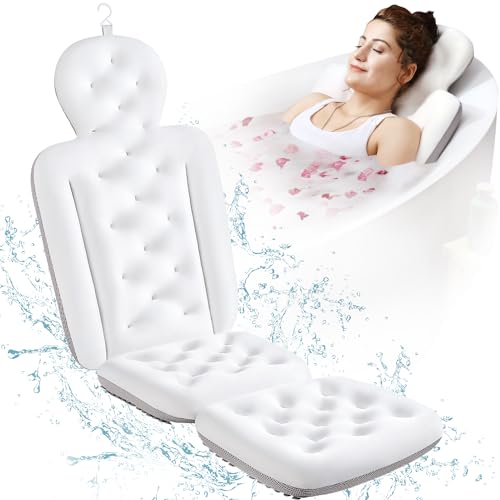
| Wider spa-style or full-back bath cushions | Long soaking tubs and freestanding tubs | Larger surface supporting head, neck and upper back | Needs a compatible, smooth tub wall |
What to look for
Suction cups and tub surface
Suction cups hold best on smooth, non-porous surfaces such as acrylic, fiberglass, porcelain and glazed ceramic. Textured tub floors, matte finishes, anti-slip coatings and some natural stone surfaces can reduce suction or prevent it entirely. Makers usually state this in the instructions, so read the product page before buying. Press the pillow firmly, check the cups before every soak and reposition if you feel it slide. Do not treat suction as a safety support and never lean heavily on it to rise out of the tub.
Materials and drying
Most bath pillows use a mesh, foam or neoprene-style fabric that drains water and dries quickly. Look for a stated antimicrobial or mildew-resistant treatment only if the maker lists one, and still plan to rinse and air-dry the pillow after each use. A pillow that stays wet in a closed bathroom can grow mildew, so hang it on a hook or over the tub edge rather than leaving it stuck to the wall.
Size, thickness and tub fit
Most standard models are made for typical alcove tubs. If you have a deep Japanese-style soaking tub, a freestanding tub with a sloped back or a jetted tub with built-in headrest, measure the area where your head and neck rest and compare it with the maker’s stated dimensions. Thicker pillows give more neck lift, but if too thick they push the chin toward the chest. A thinner or contoured model may suit shorter soakers or smaller frames.
Hot-water safety
Long, hot soaks are not for everyone. People with heart conditions, low blood pressure, pregnancy, or who take certain medications should follow their doctor’s advice on water temperature and soak time. Stand up slowly, and never fall asleep in the tub. A pillow is a comfort item, not a safety device.
Picks by situation
Standard tub, simple setup
The Gorilla Grip style of mesh-cover pillow is a common choice for ordinary tubs. Reviewers often note that it is easy to rinse and hang up to dry, and that suction performance depends on the tub wall being clean and flat.
Extra neck support
The Epica Spa Bath Pillow and similar thick models give more neck lift. Reviewers say these suit people who enjoy a reclined position, though some find the cushion too tall for small tubs.
Small or shared bathrooms
Inflatable pillows and tub-edge cushions fold flat and store in a drawer. They give less cushioning than thick foam models but suit short soaks, travel and rental bathrooms.
Textured or non-standard tub walls
If your tub has a textured surface, a suction pillow may not hold. Look for a rim-hooking or inflatable model, or consider a freestanding cushion that does not rely on suction at all.
Budget tiers
| Tier | What you typically get | Trade-off |
|---|---|---|
| Budget | Basic mesh-cover pillow or inflatable cushion, two to six suction cups | Thinner cushioning, quicker wear and fewer replacement parts |
| Mid-range | Thicker foam, contoured shape, multiple cups, better drying cover | Good balance of comfort and durability |
| Premium | Spa-style full-back or heavily padded designs, firmer suction systems | Larger, more to store, still depends on a smooth tub |
Pick X if …
| If you … | Pick |
|---|---|
| Have a standard smooth tub and want a simple setup | A mesh-cover suction pillow such as Gorilla Grip |
| Want a thicker neck cushion for reclining | Epica Spa Bath Pillow or a similar padded design |
| Want a contoured headrest on a modest budget | Everlasting Comfort or a similar contoured model |
| Travel or have limited storage | An inflatable or folding bath cushion |
| Have a textured or curved tub wall | A rim-hooking or non-suction cushion |
| Take long soaks regularly | A wider spa-style cushion, plus a doctor’s advice on soak time |
Alternatives to consider
- Rolled towel: a simple towel roll behind the neck works for short soaks and is easy to wash.
- Built-in tub headrest or inflatable tub liner: some tubs and spa-style liners have molded headrests, removing the need for suction.
- Bath tray and slip-resistant mat: if your concern is comfort and safety rather than neck support, a slip-resistant mat and grab bar may matter more than a pillow.
Care and cleaning
Rinse the pillow after each use, especially if you use bath salts, oils or bubble bath, which can leave residue that weakens suction and encourages mildew. Hang it to dry fully. Many makers allow a hand wash with mild soap, and some mesh covers are machine washable, but follow the label. Remove and replace cups that crack or lose grip. Wipe the tub wall before attaching the pillow, and do not apply it to a wet, soapy or oily surface.
How to set up a bath pillow
Start with a clean, dry tub wall at the spot where your head and neck will rest. Wipe away soap film or oil, which weakens suction. Press the pillow firmly so every cup makes contact, then lean back gently to check it holds before you settle in. If the pillow drifts down the wall, lift it, wipe the surface and reattach rather than adding more weight to it. Fill the tub to a comfortable depth before reclining, and keep water temperature within the range your doctor or the tub maker advises.
Common mistakes
- Using a suction pillow on a textured or coated tub wall.
- Leaving a wet pillow stuck to the wall between baths, which encourages mildew.
- Choosing a very thick pillow for a small tub, which pushes the head forward.
- Using bath oils that make the pillow and tub surface slippery.
- Treating the pillow as a grab point when getting out of the tub.
Frequently Asked Questions
Do bath pillows stay on the tub wall?
They usually do on smooth, clean surfaces such as acrylic or porcelain, but they can slip on textured or coated tubs. Press the suction cups on firmly and reposition if it moves, and treat the pillow as a comfort item rather than support.
Will a bath pillow fit a freestanding tub?
It depends on the shape of the rim and back. Many suction models are made for flat tub walls, so measure the area and read the maker’s fit notes. Rim-hooking and inflatable cushions can work better on curved freestanding tubs.
How do I stop a bath pillow from getting moldy?
Rinse it after every use and hang it where air can circulate until fully dry. Do not leave it stuck to a wet wall in a closed bathroom, and wash it according to the maker’s care label.
Can I use a bath pillow with a jetted tub?
Some makers say yes, others advise against covering jets or using the pillow with certain tub surfaces. Check the product instructions and the tub manual, and keep the pillow away from jets and drains.
Are bath pillows safe for people with neck or back problems?
They add padding but do not treat or fix any condition. If you have neck, spine or balance issues, ask your doctor or physical therapist whether soaking and a particular position is suitable for you.
How often should I replace a bath pillow?
Replace it when the foam flattens, the cover tears, the cups lose grip or mildew will not wash out. Heavy use and hot water wear materials faster, so cheaper models may need replacing sooner.
More from Amazon
Programs that pair well with the guide above. Offers and eligibility are set by Amazon and may change.
Collect the home and kitchen items you want in one registry that guests can shop from.
Create a wedding registrySet up recurring deliveries of everyday items on eligible products. Terms and savings are set by Amazon.
Explore Subscribe & SaveFree shipping on eligible items, Prime Video and more. Eligible new members can start with a free trial.
Start a Prime free trialAudiobooks and podcasts to listen to on the go. Eligible new members can start with a free trial.
Try Audible freeAs an Amazon Associate we earn from qualifying purchases.