Key takeaways
- Twin: Kids’ rooms and daybeds. Many makers sell twin and twin XL separately.
- Full and queen: Often sold as a combined full/queen quilt, which works in either size but may look short on a deep queen.
- King and California king: Look for an oversized king if the bed has pillow-top layers.
- Throw size: A smaller patchwork throw can add texture to a sofa or the foot of the bed without covering it entirely.
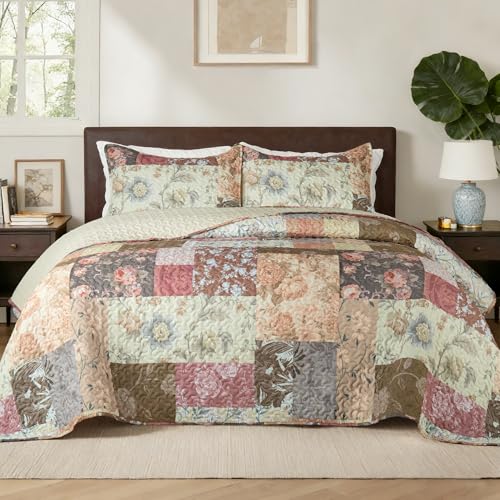
A patchwork quilt suits shoppers who want a handmade-look, layered-texture bedspread for a cottage, farmhouse or eclectic room, while a plain matelassé or solid coverlet suits buyers who want a quieter look. Because “patchwork” covers everything from machine-pieced cotton coverlets to hand-stitched heirloom work, the real decision comes down to construction, fabric, size and how you plan to wash it. Brands such as Pendleton, Levtex, Greenland Home and many small makers sell patchwork-style quilts, and the notes below focus on how to judge them rather than naming a single winner.
Our top picks


As an Amazon Associate we earn from qualifying purchases at no extra cost to you.
Patchwork Quilts at a Glance
| Style | Best for | What to expect | Limits |
|---|---|---|---|
| Machine-pieced cotton patchwork | Everyday bedding and guest rooms | Cotton top and back, polyester or cotton batting, machine quilting | Lighter weight; stitches can loosen with rough use |
| Printed “patchwork look” quilt | Budget decorating | A printed pattern imitates pieced squares on a single piece of fabric | Less texture; no real seams |
| Reversible patchwork with a solid back | Buyers who want two looks | Pieced face and plain or printed reverse | Seam bulk may show on the plain side |
| Hand-stitched or artisan patchwork | Heirloom or statement pieces | Hand quilting, vintage or block-print fabric, often one of a kind | Premium tier; often dry clean or gentle wash only |
| Block-print or kantha-style quilt | Bohemian rooms | Cotton with running stitch and layered fabric | Colors may bleed in early washes |
| Wool or wool-blend patchwork | Cold bedrooms and lodges | Heavier, warmer, sometimes woven blanket-style | Needs careful cleaning |
What Makes a Patchwork Quilt Well Made
Piecing versus printing
True patchwork is made by sewing separate fabric pieces together, which creates seams and a subtle texture. Many budget quilts print a patchwork pattern onto one piece of fabric. Neither is wrong, but the listing language should make clear which you are buying. Look for terms such as “pieced” or “patchwork construction” in the maker’s description, and read close-up photos for seams.
Quilting stitch
The stitching holds the three layers together. Closely spaced quilting lines keep the batting from shifting and bunching in the wash. Wide gaps between stitching can lead to clumping. Channel, grid and echo patterns each affect the look, but the key issue is density.
Fabric and fill
Cotton is the common choice because it breathes and softens with washing. Polyester or microfiber is used in lower-cost quilts and dries faster but feels different against the skin. Batting is often polyester, cotton or a blend. Heavier batting means more warmth and a thicker look, and lighter batting suits layering and warm sleepers.
Binding and edges
A well-finished binding (the edge strip) should be sewn evenly and securely. Edges take the most wear, so a neat double-fold binding is a good sign. Frayed or unfinished edges on a quilt that claims to be pieced suggest less careful construction.
Size and Fit Notes
Quilt sizes follow bed sizes, but makers differ on how much drop (overhang) they allow. A quilt labeled queen often measures around 90 by 90 inches, though dimensions vary by brand, so use the maker’s measurements and compare them to your mattress depth. For a deep mattress or a thick topper, choose the next size up or look for an oversized listing. If you want the quilt to drape fully to the floor, check the stated width and length rather than the size name alone.
- Twin: Kids’ rooms and daybeds. Many makers sell twin and twin XL separately.
- Full and queen: Often sold as a combined full/queen quilt, which works in either size but may look short on a deep queen.
- King and California king: Look for an oversized king if the bed has pillow-top layers.
- Throw size: A smaller patchwork throw can add texture to a sofa or the foot of the bed without covering it entirely.
Matching the Quilt to Your Room
Patchwork patterns carry a lot of visual weight, so the surrounding room matters. Pair a busy multi-color quilt with solid sheets and a simple headboard. If your walls are already patterned, choose a quilt with a muted palette such as cream, sage or faded blues. A neutral patchwork in natural linen or off-white tones gives the layered look without competing with other decor. For a children’s room, brighter color blocks and washable cotton are the practical choice.
Budget Tiers
Budget tier
Budget quilts are often polyester or printed designs with light batting. They suit guest rooms, dorms and seasonal swaps. Expect less texture and a shorter lifespan with frequent washing.
Mid-range
Mid-range patchwork usually uses cotton fabrics, real pieced construction and denser quilting. This is the practical sweet spot for a main bedroom.
Premium
Premium quilts use hand-stitching, artisan block printing or vintage fabrics. They are statement pieces and often need gentler care, so they suit buyers who want a long-term decorative item.
Pick X If You… Decision Table
| If you… | Pick | Why |
|---|---|---|
| Want an everyday washable quilt | Machine-pieced cotton patchwork | Easy care and a real quilted texture |
| Are on a tight budget | A printed patchwork-look quilt | Lowest cost for the pattern |
| Want a quilt that works on both sides | Reversible patchwork | Two looks from one quilt |
| Want a one-of-a-kind piece | Hand-stitched or artisan quilt | Individual character |
| Sleep hot | Light cotton batting | Better breathability |
| Live somewhere cold | Wool or heavier batting | More warmth |
Care Notes
Always follow the care label. Many machine-pieced cotton quilts can be washed on a gentle cycle in cool water with a mild detergent, then dried on low heat or air dried, but hand-stitched and vintage quilts often need hand washing or professional cleaning. Wash new brightly colored or block-printed quilts separately for the first few washes because dyes may bleed. A large front-loading machine without an agitator is gentler than a top-loader with a central agitator, which can twist the quilt and stress seams.
Store the quilt folded in a breathable cotton bag or pillowcase rather than in sealed plastic, which can trap moisture. Air it out occasionally, keep it out of long direct sunlight to limit fading, and fold it along different lines now and then so creases do not set. Do not place a quilt close to a space heater or other heat source.
Common Mistakes
- Buying on photos alone and discovering the pattern is printed, not pieced.
- Ordering the bed size without checking the stated measurements for drop.
- Washing a hand-stitched quilt on a hot cycle.
- Putting a loud quilt in a room that already has strong patterns.
- Expecting a lightweight coverlet to provide winter warmth.
Alternatives
- Matelassé coverlet: Woven texture with a quieter appearance and an easy care profile.
- Solid quilted coverlet: Gives quilting stitches without the multicolor pieced pattern.
- Duvet cover with a patchwork print: A seasonal pattern that goes over your existing insert and washes easily.
Quick Buying Checklist
- Confirm the stated dimensions against your mattress depth and the drop you want on each side.
- Look for the words pieced, patchwork construction or hand-stitched if real seams matter to you.
- Read the care label before purchase so you know whether a machine wash is allowed.
- Compare batting weight with your climate: lighter for warm sleepers, heavier for cold rooms.
- Check the return terms, because color and texture can look different in daylight than in photos.
- Plan matching pillow shams or a coordinating solid sheet set so the pattern has a calm backdrop.
Reviewers of patchwork bedding often mention that scale of the pattern matters: small blocks read as a quiet texture from across the room, while large blocks read as bold graphics. If you are unsure, pick a medium block size in two or three related colors.
Frequently Asked Questions
What is the difference between a quilt and a coverlet?
A quilt generally has a top, a layer of batting and a back stitched together, often with a decorative pieced pattern. A coverlet is usually thinner and lighter, sometimes with just a quilted or woven surface. Quilts add more warmth and visual texture.
Can I use a patchwork quilt as a bedspread all year?
Many people do, especially with lightweight cotton quilts. In cold months you can layer it over a blanket or duvet, and in warm months use it alone. Heavier wool quilts are better in cooler seasons.
How do I know if a patchwork quilt is actually pieced?
Check the maker’s description for words such as pieced, patchwork construction or hand-stitched, and look at close-up photos for seams between fabric blocks. A printed design looks flat and the pattern lines do not have seam ridges.
Will a patchwork quilt fit a deep mattress?
It can, but compare the stated quilt dimensions with your mattress depth plus a drop on each side. If you use a thick topper, consider the next size up or an oversized option.
Can I machine wash a patchwork quilt?
Many machine-made cotton quilts can be washed on a gentle cycle, but you should follow the care label. Hand-stitched, vintage or wool quilts may need hand washing or professional cleaning.
Why does my new quilt shed color?
Some bright or block-printed fabrics release dye in early washes. Wash the quilt alone in cool water for the first few washes, and avoid putting it in with light-colored items until the water runs clear.
More from Amazon
Programs that pair well with the guide above. Offers and eligibility are set by Amazon and may change.
Collect the home and kitchen items you want in one registry that guests can shop from.
Create a wedding registrySet up recurring deliveries of everyday items on eligible products. Terms and savings are set by Amazon.
Explore Subscribe & SaveFree shipping on eligible items, Prime Video and more. Eligible new members can start with a free trial.
Start a Prime free trialAudiobooks and podcasts to listen to on the go. Eligible new members can start with a free trial.
Try Audible freeAs an Amazon Associate we earn from qualifying purchases.