Key takeaways
- Straight and fine: a small turban often suffices; avoid heavy wraps that tug hair when worn for long.
- Wavy and curly: a soft flat towel or a long turban allows the plopping and scrunching routines many curly-hair guides describe.
- Coily and textured: choose generous size and gentle blotting rather than rubbing; avoid tight closures that pull at edges.
- Chemically treated or colour-treated hair: gentler handling is often advised, but follow your stylist’s guidance rather than towel claims.
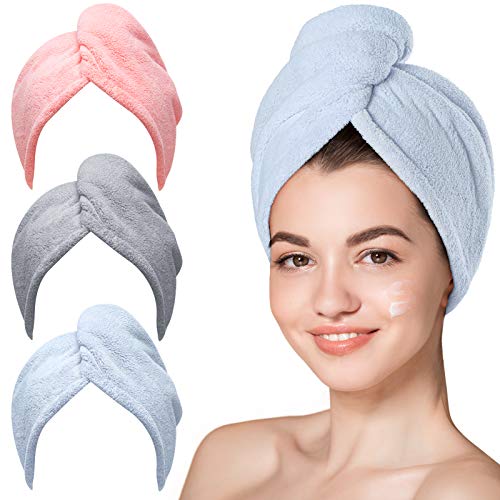
For most people, a hair-specific microfiber towel or turban with a loop or button closure, such as the Aquis Lisse or a Turbie Twist, is the easiest pick for faster drying with less rubbing, while a large flat microfiber towel suits thick or very long hair that needs a wrap with more surface area. Makers say microfiber absorbs water quickly and is gentler than rough terry cloth, and independent beauty and home outlets commonly echo the point about reducing friction. Confirm sizes and fibre blends on each maker page, since they differ between versions.
Our top picks



As an Amazon Associate we earn from qualifying purchases at no extra cost to you.
At a Glance
| Option | Best for | Key stated features | Limits |
|---|---|---|---|
| Aquis Lisse Luxe or Original hair towel | Long or thick hair, frizz-prone styles | Ultra-fine microfiber, designed for patting and wrapping; sizes in several lengths | Premium tier; needs gentle laundering |
| Turbie Twist | Quick wrap, fast turban | Elastic loop and twist design; microfiber blend | Smaller capacity for very thick hair |
| Drybar or similar branded turban towel | Gift or salon-style use | Microfiber turban with button or loop | Quality varies by brand |
| Large flat microfiber towel | Very long, curly or coily hair | Generous surface to scrunch or plop | Needs clips or a tie to hold |
| Plain microfiber cloth set | Budget, curl-plopping | Light, quick drying, easy to wash | Not hair-specific; can feel thin |
Why Microfiber for Hair
Standard terry towels have loops that can catch on strands, and vigorous rubbing can add friction that stylists say contributes to frizz and breakage. Microfiber is made of very fine polyester and polyamide fibres that hold water in the structure and dry quickly. Makers say this lets you blot rather than rub, cuts drying time and can lower the time spent with a blow dryer. Results vary by hair type, and no towel is a treatment for hair or scalp problems; see a dermatologist or trichologist if you have scalp concerns.
What to Look For
Size and shape
Turban-shaped towels are meant to sit on the head hands-free. Chin-length and shoulder-length hair fits most compact turbans, while hair to the waist often needs a longer wrap. Flat towels come in sizes that can double as a body wrap. Match size to hair length and thickness, not just the product name.
Closure
Loop and button closures hold well, elastic bands suit quick wraps, and some towels use a simple twist. If you wear glasses or earrings, a closure that sits flat is more comfortable.
Fibre blend and weave
Many hair towels use polyester and polyamide blends. Finer fibres feel softer and absorb more, and some makers list a gsm or weight. Cheaper cloths can be thin and slip. A soft, tight weave is generally friendlier to hair.
Care
Makers commonly advise washing without fabric softener, because softener can coat fibres and reduce absorbency. Avoid high heat, and wash separately from lint-shedding items such as terry towels. Wash after several uses, and dry fully to prevent odour.
Hair Type Notes
- Straight and fine: a small turban often suffices; avoid heavy wraps that tug hair when worn for long.
- Wavy and curly: a soft flat towel or a long turban allows the plopping and scrunching routines many curly-hair guides describe.
- Coily and textured: choose generous size and gentle blotting rather than rubbing; avoid tight closures that pull at edges.
- Chemically treated or colour-treated hair: gentler handling is often advised, but follow your stylist’s guidance rather than towel claims.
Budget Tiers
Budget
Generic microfiber cloths and basic turbans. These work for casual drying but can be thinner and lose shape sooner.
Mid-range
Turbie Twist and similar named turbans offer reliable fit and a recognisable design.
Premium
Aquis towels are positioned as a higher-end option with finer fibre and multiple sizes, aimed at people who plan to use one every wash.
Pick X If…
| Pick | If you… |
|---|---|
| Aquis Lisse | have long or thick hair and want a dedicated, durable towel |
| Turbie Twist | want a quick, simple wrap on a modest budget |
| Large flat microfiber | have curly or very long hair and prefer plopping |
| Microfiber cloth set | want an inexpensive way to try the method |
| Button-loop turban | wear the towel while doing skincare or getting ready |
Using a Hair Towel Well
Squeeze water from the hair gently before wrapping so the towel does not become saturated. Pat or scrunch rather than rubbing. Leave a turban on for as long as is comfortable, but avoid pulling it tight. If you use heat styling afterwards, a heat protectant is a separate step. If your scalp itches or irritates, remove the towel and consult a professional.
Alternatives
- Cotton T-shirt: a soft, low-cost option that some curly-hair guides mention for plopping.
- Bamboo or cotton turban: softer feel, but typically slower drying than microfiber.
- Air drying with a quick blot: minimal friction, but slower.
How to Choose by Routine
Think about when you will use the towel. If you wrap your hair after every shower and then go about getting dressed, a turban with a secure closure frees your hands. If you prefer to leave the towel on for ten or twenty minutes while you do other things, comfort and weight become important, and a lighter towel is less likely to tug. If you travel, a thinner towel packs smaller, and a set of two lets one dry while you use the other.
Plopping and scrunching
Curl-focused routines often use a large flat microfiber towel or a cotton T-shirt. The towel is placed on a flat surface, hair is tipped forward onto it, then the fabric is wrapped up and secured. Makers of microfiber towels say the fibres absorb moisture without roughing up curl patterns. Results depend on hair texture and products used, so treat these as common techniques rather than guaranteed outcomes.
Before blow-drying
Removing extra water first can shorten the time under a hair dryer. Many stylists suggest blotting until hair is damp rather than dripping, then switching to a comb or brush suited to your hair type. Always use heat tools according to their instructions and keep towels away from hot surfaces.
Common Problems and Fixes
- Towel slips off: choose one with a button or elastic loop, or tuck the end more firmly. Very smooth fabrics can slide on slippery hair.
- Towel feels rough: wash away detergent residue and skip fabric softener, which can leave a coating.
- Lint on dark hair: wash the towel separately and shake it out before use.
- Odour: dry fully between uses. Rotate two towels if you wash hair daily.
- Tight feeling around the forehead: loosen the wrap or choose a larger size.
Buying Checklist
- Measure or estimate hair length and thickness, then pick a size from the maker’s chart.
- Choose a closure that suits your routine.
- Check the fibre blend and the care label.
- Decide whether you want one towel or a pair for rotation.
- Consider colour: darker shades hide product stains better, but may show lint more clearly than mid-tones.
Who Should Skip a Dedicated Hair Towel
If you have short hair that dries in minutes, a regular towel is probably enough, and a dedicated hair towel adds little. If your hair is very fine and tangles easily, a loose wrap may be better than a tight turban. If you have a medical scalp condition, follow your clinician’s advice about drying and hygiene instead of choosing by fabric.
Frequently Asked Questions
Are microfiber hair towels better than cotton?
They tend to dry faster and absorb more water by weight, and many stylists favour gentle blotting with them. Cotton can be fine if you are gentle. The best choice depends on hair type and routine.
Can a microfiber towel stop frizz?
It can reduce friction compared with rough rubbing, which may help some people. It will not change the underlying hair structure or humidity effects. Expect modest improvement rather than a fix.
How long can I leave a hair towel on?
Makers suggest wearing a turban until hair is damp rather than soaking. Long wear can feel heavy and may pull on hair, so remove it when comfortable. Follow product instructions.
How do I wash a microfiber hair towel?
Wash in warm or cool water with mild detergent and without fabric softener. Dry on low heat or air dry. Wash separately from lint-producing fabrics.
What size do I need for long hair?
Choose a long turban or flat towel that can wrap the full length. A small turban can slip with heavy hair. Check the maker’s size chart.
Are these safe for sensitive scalps?
Soft fibres are generally gentle, but individual reactions vary. If you notice irritation, stop use and check with a dermatologist. Wash new towels before the first use.
More from Amazon
Programs that pair well with the guide above. Offers and eligibility are set by Amazon and may change.
Collect the home and kitchen items you want in one registry that guests can shop from.
Create a wedding registrySet up recurring deliveries of everyday items on eligible products. Terms and savings are set by Amazon.
Explore Subscribe & SaveFree shipping on eligible items, Prime Video and more. Eligible new members can start with a free trial.
Start a Prime free trialAudiobooks and podcasts to listen to on the go. Eligible new members can start with a free trial.
Try Audible freeAs an Amazon Associate we earn from qualifying purchases.