Key takeaways
- Match the cushion architecture first: Measure your sofa’s width arm to arm, then note whether the seat cushions are boxed or T-shaped, wrapping around the front of the arms. A T-cushion sofa in a straight-cut cover will never sit flush, no matter how much you tuck.
- Stretch percentage over thread count: High-recovery spandex blends conform to curves and rebound after someone stands up. Low-stretch woven covers look cleaner on boxy, tailored frames but need precise sizing to avoid rippling.
- Decide how much coverage you actually want: One-piece covers install in minutes and suit rentals or seasonal color changes. Multi-piece sets, with separate cushion covers, produce a sharper, more upholstered silhouette and let you launder only what gets dirty.
- Waterproof is a tradeoff, not an upgrade: A membrane-backed cover stops liquid at the surface, which matters with puppies, potty training, or medical needs. It also breathes less. If spills are rare, a dense untreated weave will feel better to sit on.
- Check the anchoring system: Elasticized hems, foam grip rods, and non-slip undersides do the real work of keeping a cover taut. Skip anything relying on tucking alone.
What's inside
A sofa absorbs more of daily life than any other object in a home: weeknight dinners, dog naps, sunscreen, toddlers, guests who don’t ask before sitting down with red wine. The furniture industry’s answer used to be leather or nothing. The result is that a lot of otherwise well-composed rooms are anchored by a couch its owner is quietly afraid of. Slipcovers solved that in theory decades ago, but in practice most buyers have lived through the bad version: a baggy sheet that pooled at the arms, migrated across the seat by Tuesday, and read visibly as damage control.
The current generation is a different product category. Four-way stretch knits, jacquard weaves with laminated backings, and cut-and-sewn T-cushion patterns have made it possible to change a sofa’s color and protect it in one afternoon without the result looking improvised. This guide walks through the fit systems and fabrics worth understanding before you buy, then reviews five covers that hold their shape in real households, from a matte chenille built for oversized sectionals to a fully waterproof stretch jacquard.
As an Amazon Associate we earn from qualifying purchases.


How to Choose a Slipcover for Your Sofa (2026)
- Match the cushion architecture first: Measure your sofa’s width arm to arm, then note whether the seat cushions are boxed or T-shaped, wrapping around the front of the arms. A T-cushion sofa in a straight-cut cover will never sit flush, no matter how much you tuck.
- Stretch percentage over thread count: High-recovery spandex blends conform to curves and rebound after someone stands up. Low-stretch woven covers look cleaner on boxy, tailored frames but need precise sizing to avoid rippling.
- Decide how much coverage you actually want: One-piece covers install in minutes and suit rentals or seasonal color changes. Multi-piece sets, with separate cushion covers, produce a sharper, more upholstered silhouette and let you launder only what gets dirty.
- Waterproof is a tradeoff, not an upgrade: A membrane-backed cover stops liquid at the surface, which matters with puppies, potty training, or medical needs. It also breathes less. If spills are rare, a dense untreated weave will feel better to sit on.
- Check the anchoring system: Elasticized hems, foam grip rods, and non-slip undersides do the real work of keeping a cover taut. Skip anything relying on tucking alone.
The Best Slipcover Sofas of 2026, Reviewed
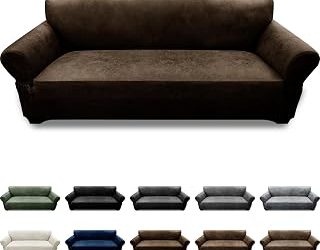
Easy-Going Stretch Couch Cover, Bluestone
A single-piece stretch cover with an elasticated bottom band, this is the most straightforward path to a new color on a three-cushion sofa. The bluestone is a genuinely sophisticated mid-tone that photographs like upholstery rather than a cover, and installation takes under ten minutes with no cushion disassembly.
H.VERSAILTEX Velvet Plush Slipcover, Taupe
The four-piece configuration is what separates this from the budget field: separate cushion covers mean the seat line stays crisp instead of blurring into one continuous drape. The high-stretch velvet has real depth and pile direction, which reads as intentional design on tailored frames up to 90 inches.
VOIR Chenille Sectional Cover, Vintage Toffee
Built at 87 by 150 inches for oversized four-seaters and L-shaped sectionals, this addresses the size gap where most slipcovers quit. The chenille’s matte, slightly nubby hand hides both pet hair and the seams inherent to covering a sectional, and the toffee tone is warm without tipping orange.
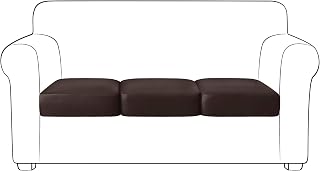
4-Piece T-Cushion Leather Look Slipcover, Brown
Faux-leather covers are a niche worth knowing about: they wipe clean instantly and give a fabric sofa a completely different material identity. The T-cushion cut here is the important detail, since it follows the wrap-around cushion shape most slipcovers ignore.
Easy-Going Waterproof Stretch Jacquard Cover, Cream
This is the choice when protection is the actual brief. A leakproof backing sits behind a stretch jacquard face, so liquid never reaches the frame, and the textured weave keeps a cream colorway from looking clinical.
Frequently Asked Questions
Will a slipcover stay in place on a sofa with loose cushions?
Yes, if the cover uses separate cushion sleeves or foam grip rods tucked into the crevices. One-piece covers on loose-cushion sofas need periodic re-tucking, typically once or twice a week with regular use.
One piece or multiple pieces?
Multi-piece sets look more tailored and wash more conveniently. One-piece covers are faster to install and better for frames with unusual proportions where individual cushion sleeves may not fit.
Can slipcovers go in the dryer?
Cold wash, gentle cycle, and low or no heat is the safe standard. High heat degrades spandex and can compromise waterproof laminates permanently, so air-drying is worth the extra hours.
Do waterproof covers feel like plastic?
Not the current ones. Modern membranes sit behind the visible weave, so the hand feels like fabric. They do run warmer than untreated covers on long sits.
Final Thoughts
For most three-cushion sofas, the H.VERSAILTEX velvet set delivers the most convincing upholstered look for the money, while the Easy-Going Bluestone stretch cover is the easier, faster route if you’re refreshing a rental or testing a color. Oversized and L-shaped layouts should start with the VOIR chenille, which is one of the few covers cut generously enough to fit a genuine four-seat sectional without compromise.