Key takeaways
- Measure the recline, not the sofa: A three-seater at 84 inches wide can still need 30-plus inches behind it to open. Wall-hugger mechanisms compress that to a few inches, which is often the difference between a piece that works in an apartment and one that doesn’t.
- Know your leather grade: Genuine top-grain develops patina and resists cracking; bonded and faux leather look convincing on arrival but wear at the seat edge first. Corduroy, chenille, and performance weaves are the softer alternative and hide crumbs better than any smooth surface.
- Power versus manual: Power recliners let you stop at any angle and usually add adjustable headrests, which matters for tall users. Manual levers cost less, need no outlet, and have fewer parts to fail.
- Check seat depth and density: Anything under 21 inches deep reclines shallowly. High-resilience foam over a sinuous spring or webbed base holds shape far longer than loose polyfill, regardless of what the cover looks like.
- Weigh the extras honestly: Cup holders, arm storage, and USB-C ports are genuinely useful in a media room and largely decorative in a formal living room. Choose the version that suits how the room is actually used.
What's inside
Recliner sofas carry an old reputation: bulky frames, sagging seams, a silhouette that fights everything else in the room. That reputation is finally outdated. The current generation of reclining couches borrows proportions from contemporary seating, tucks its motors into slimmer arms, and hides charging ports where you actually reach for them. The catch is that the category still sells on features rather than craft, so a listing full of USB specs can distract from thin foam, stapled frames, and upholstery that pills within a season.
This guide approaches recliners the way a designer would: starting with scale and materials, then working outward to mechanisms and extras. Below you’ll find current standouts across three formats — full three-seat power sofas, single-seat manual and electric recliners, and one oversized lounge piece for rooms that need softness more than structure. Each pick is assessed on build quality, footprint, and how gracefully it sits inside a considered interior.
As an Amazon Associate we earn from qualifying purchases.


How to Choose a Recliner Couch (2026)
- Measure the recline, not the sofa: A three-seater at 84 inches wide can still need 30-plus inches behind it to open. Wall-hugger mechanisms compress that to a few inches, which is often the difference between a piece that works in an apartment and one that doesn’t.
- Know your leather grade: Genuine top-grain develops patina and resists cracking; bonded and faux leather look convincing on arrival but wear at the seat edge first. Corduroy, chenille, and performance weaves are the softer alternative and hide crumbs better than any smooth surface.
- Power versus manual: Power recliners let you stop at any angle and usually add adjustable headrests, which matters for tall users. Manual levers cost less, need no outlet, and have fewer parts to fail.
- Check seat depth and density: Anything under 21 inches deep reclines shallowly. High-resilience foam over a sinuous spring or webbed base holds shape far longer than loose polyfill, regardless of what the cover looks like.
- Weigh the extras honestly: Cup holders, arm storage, and USB-C ports are genuinely useful in a media room and largely decorative in a formal living room. Choose the version that suits how the room is actually used.
The Best Recliner Couches (2026) Reviewed
Genuine Leather Power Recliner Sofa, 3-Seater (Brown)
This is the most complete package here: real leather across the contact surfaces, dual power motors, concealed cup holders, and a USB port at each end. The warm brown reads more mid-century than man-cave, which makes it unusually easy to place in a room with wood tones already in play.
Watson & Whitely Wall Hugger Power Reclining Sofa (Navy)
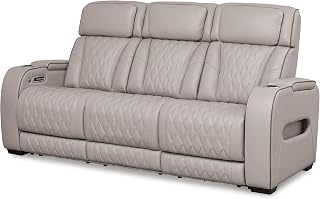
The wall-hugger mechanism is the headline — you can float this within a few inches of the wall and still recline fully, which solves the single biggest planning problem in the category. Adjustable power headrests and USB-C charging round it out, and the navy leather gives the form a tailored, almost club-chair restraint.
Faux Leather Manual Recliner Chair (Brown)
A clean, compact single seat with a straightforward manual mechanism and no cords to route. It’s the practical choice for a bedroom corner or a second reading spot, and the trim arm profile keeps it from crowding a small footprint.
50-Inch Corduroy Chaise Lounge Chair (Dark Grey)
Not a traditional recliner but arguably the most comfortable seat on this list — an oversized boneless lounger in corduroy that arrives fully assembled and converts to a sleeper. Ideal for a media room, sunroom, or anywhere you want deep, informal seating without a visible mechanism.
Leather Recliner Chair with Concealed Cup Holders (Nut Brown)
A classic overstuffed shape with generous arms and a manual recline, finished in a rich nut brown leather. Cup holders stay hidden until needed, so the chair keeps its traditional lines when the room is on display.
Frequently Asked Questions
Do power recliners need to stay plugged in?
Yes, unless the model includes a rechargeable battery pack. Plan an outlet within reach of the sofa’s back or side, and account for cord routing before finalizing the layout.
How much clearance do I need behind a reclining sofa?
Standard mechanisms want 18 to 36 inches. Wall-hugger designs like the Watson & Whitely need roughly three to six inches, which is why they dominate apartment and RV installations.
Is genuine leather worth the premium?
For daily-use seating, yes. Top-grain leather softens over years where faux and bonded surfaces tend to crack or peel at stress points. If budget rules, a performance fabric or corduroy will outlast cheap leather-look vinyl.
Can a recliner work in a small living room?
Absolutely. Pair a single seat — the faux leather manual chair or an electric power recliner with hidden arm storage — with a standard sofa instead of committing the whole wall to a three-seat reclining set.
Final Thoughts
For most rooms, the Watson & Whitely wall hugger is the smartest buy: real leather, powered headrests, and a footprint that respects tight floor plans. If you want warmth and a fuller media setup, the three-seat genuine leather power sofa in brown delivers more feature for the money, and the 50-inch corduroy chaise remains the pick for pure, unstructured comfort.