Key takeaways
- Capacity vs. actual footprint: Pint ratings are measured in warm, saturated lab air, not a 55°F crawl space. Size up rather than down — a 100 to 125 pint unit handling a 1,200 sq. ft. crawl will cycle less and hold setpoint far more reliably than a marginal one running constantly.
- Low-temperature operation and auto defrost: Crawl spaces run cold. Without hot-gas or auto defrost, coils frost over and the machine stops dehumidifying while still drawing power. Treat defrost as mandatory, not a bonus feature.
- Drainage strategy: Most crawl spaces have no floor drain. A built-in condensate pump that lifts 15 feet or more lets you route water to a sump, utility sink, or exterior discharge. Gravity-only drainage requires a slope you may not have.
- Memory restart and unattended reliability: This machine lives somewhere you will not check for months. Memory restart after a power blip, a hygrostat that holds setpoint, and a clear filter access panel matter more than app features.
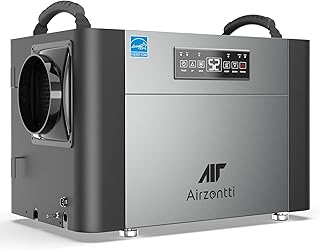
- Chassis and clearance: Measure your access hatch first. Low-profile, ducting-capable housings fit where upright consumer units cannot, and a stackable or hangable frame keeps the unit off a damp vapor barrier.
What's inside
Crawl spaces are the part of the house nobody curates. We agonize over the oak finish, the plaster tone, the exact warmth of the light — and eighteen inches below the subfloor, unconditioned air is sitting at 80% relative humidity, quietly working against every one of those decisions. Cupped floorboards, musty air pushing up through the stack effect, joists that smell like a basement in August: these are rarely material defects. They are moisture problems wearing a design costume.
A crawl space dehumidifier is the least glamorous purchase in a well-built home and one of the most consequential. This guide covers what actually matters in a 2026 unit — real pint capacity at low temperatures, drainage that works without a floor drain, defrost behavior in cold weather — and reviews the models worth putting under your floor.
As an Amazon Associate we earn from qualifying purchases.



How to Choose a Crawl Space Dehumidifier (2026)
- Capacity vs. actual footprint: Pint ratings are measured in warm, saturated lab air, not a 55°F crawl space. Size up rather than down — a 100 to 125 pint unit handling a 1,200 sq. ft. crawl will cycle less and hold setpoint far more reliably than a marginal one running constantly.
- Low-temperature operation and auto defrost: Crawl spaces run cold. Without hot-gas or auto defrost, coils frost over and the machine stops dehumidifying while still drawing power. Treat defrost as mandatory, not a bonus feature.
- Drainage strategy: Most crawl spaces have no floor drain. A built-in condensate pump that lifts 15 feet or more lets you route water to a sump, utility sink, or exterior discharge. Gravity-only drainage requires a slope you may not have.
- Memory restart and unattended reliability: This machine lives somewhere you will not check for months. Memory restart after a power blip, a hygrostat that holds setpoint, and a clear filter access panel matter more than app features.
- Chassis and clearance: Measure your access hatch first. Low-profile, ducting-capable housings fit where upright consumer units cannot, and a stackable or hangable frame keeps the unit off a damp vapor barrier.
The Best Crawl Space Dehumidifiers of 2026, Reviewed
Waykar 125 Pint Crawl Space Dehumidifier
The most sensible balance of capacity, price, and footprint in this group — 125 pints of pull with an integrated pump and hose, rated for spaces up to 6,500 sq. ft. Its compact chassis slides through tight hatches, and the five-year coverage signals real confidence in the compressor.
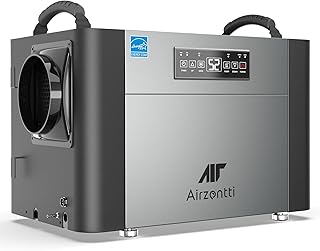
AlorAir Sentinel HD55
The specialist’s choice. AlorAir builds for remediation contractors, and the HD55’s auto defrost and low-grain performance mean it keeps working at temperatures where consumer units stall out. Rated conservatively at 1,200 sq. ft., backed by six years — buy this if the crawl space is cold and permanently damp.
100 Pint Smart Dehumidifier with Built-In Pump
The one to reach for when there is no floor drain and no easy slope: the internal pump lifts condensate up to 16.4 feet, with three drainage configurations and smart humidity control that holds setpoint without babysitting. ENERGY STAR certification keeps the running cost defensible for a unit that operates most of the year.
CADPXS 80 Pints Crawl Space Dehumidifier
Right-sized for crawl spaces under roughly 1,000 sq. ft., with the commercial features intact — auto defrost, memory restart, timer, pump and hose included. A smart way to avoid overpaying for capacity a small, well-sealed crawl will never use.
155 Pint Commercial Dehumidifier with Pump and Drain
Maximum extraction for whole-house crawl spaces, open basements, or active water damage. It is more machine than a tidy encapsulated crawl needs, but for large or chronically wet footprints the extra capacity means shorter run cycles and a genuinely drier structure.
Frequently Asked Questions
What humidity level should I target in a crawl space?
Aim for 50 to 55% relative humidity. Below 50% you fight diminishing returns and can dry out framing unnecessarily; above 60% you invite mold and dust mite activity.
Do I need to encapsulate before adding a dehumidifier?
At minimum, install a sealed vapor barrier over the soil. Without it the unit is dehumidifying the earth, which it will lose. Full encapsulation with sealed vents delivers the best result.
Can I use a regular household dehumidifier down there?
Not well. Consumer units are not built for low temperatures, continuous duty, or high-lift drainage, and most lack the defrost logic a crawl space demands.
How often does the filter need attention?
Check it every three months. Crawl spaces are dusty environments, and a loaded filter cuts airflow and capacity long before anything looks visibly wrong.
Final Thoughts
For most homes, the Waykar 125 Pint is the right call — enough capacity to matter, compact enough to install, priced to make sense. Choose the AlorAir Sentinel HD55 if your crawl space runs cold and stubbornly wet, and the 155 Pint Commercial unit if you are drying a large footprint or recovering from water damage. Any of the three will do more for the rooms above than another coat of paint.