Key takeaways
- Natural oil content: Teak, ipe, and padauk carry resins that repel water from the inside out, which is why they survive without film finishes. Low-oil species depend entirely on a coating, and coatings fail at the edges first.
- Density and hardness: Look for a Janka rating above roughly 1,100 lbf. Denser wood resists denting from chair legs and planters, and holds screws and mortises far longer in humid conditions.
- Joinery over hardware: Mortise-and-tenon or doweled frames flex with seasonal movement. Pieces held together with nothing but bolts through end grain loosen every year and never fully retighten.
- Finish strategy: Decide upfront whether you want silver patina or original color. Sealed and stained pieces need a light refresh every year or two; unsealed teak and eucalyptus simply weather gray while staying structurally sound.
- Sourcing and certification: Plantation-grown teak from Costa Rica or Indonesia and FSC-labeled acacia give you the material properties without the old-growth cost. Vague “hardwood” listings are a signal to keep scrolling.
What's inside
Outdoor furniture fails in slow motion. The first season looks great, the second brings gray patches and a wobble in one leg, and by the third you’re deciding whether to sand, seal, or drag the whole thing to the curb. Most of that arc is decided before you ever buy anything, because the species of wood under the finish dictates how the piece handles moisture, UV, and the freeze-thaw cycle that pulls joinery apart. Marketing copy rarely makes the distinction clear, so shoppers end up comparing photographs instead of materials.
This guide sorts the outdoor woods that actually earn their keep in 2026, from teak and eucalyptus to acacia and dense tropical hardwoods, and pairs each one with a finished piece or board worth buying. You’ll find what to look for in grain, oil content, and joinery, plus honest notes on which options need annual attention and which you can genuinely leave alone.
As an Amazon Associate we earn from qualifying purchases.


How to Choose a Wood For Patio Furniture (2026)
- Natural oil content: Teak, ipe, and padauk carry resins that repel water from the inside out, which is why they survive without film finishes. Low-oil species depend entirely on a coating, and coatings fail at the edges first.
- Density and hardness: Look for a Janka rating above roughly 1,100 lbf. Denser wood resists denting from chair legs and planters, and holds screws and mortises far longer in humid conditions.
- Joinery over hardware: Mortise-and-tenon or doweled frames flex with seasonal movement. Pieces held together with nothing but bolts through end grain loosen every year and never fully retighten.
- Finish strategy: Decide upfront whether you want silver patina or original color. Sealed and stained pieces need a light refresh every year or two; unsealed teak and eucalyptus simply weather gray while staying structurally sound.
- Sourcing and certification: Plantation-grown teak from Costa Rica or Indonesia and FSC-labeled acacia give you the material properties without the old-growth cost. Vague “hardwood” listings are a signal to keep scrolling.
The Best Wood For Patio Furniture (2026)s Reviewed
Ashley Clare View Eucalyptus Outdoor Sofa
Eucalyptus behaves a lot like teak at a friendlier price, and Ashley’s five-step weather-shielded finish addresses its one weakness by sealing out standing moisture. The deep three-person frame and Nuvella upholstery make this the pick for a covered porch where you want lounge comfort rather than dining posture.
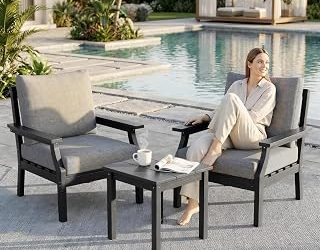
Cambridge Casual Vermont 3-Piece Teak Conversation Set
Solid teak in a small footprint, with two armchairs and a side table that fit balconies and narrow decks where a full dining set overwhelms the space. Left in its natural finish it will shift to soft silver-gray within a year or two, and that patina is purely cosmetic.
Padauk Lumber Board, 3/4″ x 4″
Padauk is the sleeper choice for builders: extremely dense, naturally rot-resistant, and dramatic in color when it arrives. Ideal for replacement slats, tabletop inlays, or a small side table where you want an accent that will outlast the frame around it.
Premium S4S Teak Lumber, 1/2″ x 6″ x 4′
Plantation-grown Costa Rican teak, surfaced on four sides and ready to cut, which saves considerable milling time on repairs and custom builds. Half-inch stock is best for slats, trim, and drawer or door panels rather than structural legs and rails.
Cambridge Casual Maine 4-Foot Teak Garden Bench
A pre-weathered teak bench that skips the awkward transitional phase and arrives already gray. At four feet it reads as a garden accent more than seating for a crowd, and it holds up unsheltered in rain and snow without any annual maintenance ritual.
Frequently Asked Questions
Is teak still worth the premium in 2026?
For unsheltered furniture, yes. Plantation teak has narrowed the price gap considerably, and its oil content means decades of service with zero sealing. For covered spaces, eucalyptus or acacia deliver most of the benefit for less.
Do I have to oil my outdoor wood furniture?
Only if you want to preserve the original honey tone. Teak oil is a cosmetic choice, not a structural one, and over-application can actually encourage mildew growth in shaded, humid spots.
How does acacia compare to teak?
Acacia is comparably hard and considerably cheaper, but it holds more moisture and will check or crack if left in direct sun and rain year-round. Sets like the Devoko 8-piece do best on a covered patio with covers in the off-season.
What about pressure-treated pine or cedar?
Cedar is lightweight and rot-resistant but dents easily and grays quickly. Pressure-treated pine works for structures, not furniture, since the chemical treatment leaves it prone to warping in thin dimensions.
Final Thoughts
If you want furniture you will never think about again, the Cambridge Casual Vermont teak set and the Maine weathered bench are the safest long-term buys in this group. For a covered lounge setup with real cushion comfort, the Ashley Clare View eucalyptus sofa gives you the best value per square foot of seating, and DIY builders should keep the S4S teak stock on hand for repairs.