Key takeaways
- Motor count: Single-motor chairs move the back and footrest together, which forces your whole body to shift at once. Triple-motor models separate the recline, headrest, and lumbar, letting you fine-tune support without disturbing a latched baby.
- Armrest height and padding: This is the most overlooked spec in nursing furniture. Armrests that sit too low leave your shoulders hunched for forty minutes; adjustable or generously cushioned arms keep your elbows supported at breast height.
- Glide versus swivel: A quiet, long-travel glide soothes; a wide swivel (look for 270° or better) lets you reach a side table, nightstand, or crib without standing. Ideally you want both, on a base solid enough not to creak.
- Fabric and certifications: Nursery air quality is worth a spec check. GREENGUARD Gold certification means low chemical emissions, while performance weaves, boucle, and faux leather each trade off differently between softness and spill cleanup.
- Footprint and wall clearance: Measure recline depth, not just the seated dimensions. Power recliners need several inches behind them, and a chair that blocks a closet or door defeats the purpose in a small nursery.
What's inside
The nursery is the one room where furniture gets judged by a stopwatch. A chair that reads beautifully in daylight can turn punishing at 3 a.m., when you’re holding a sleeping newborn, one arm has gone numb, and standing up means risking twenty minutes of hard-won quiet. Most shoppers discover this ranking too late: glide quality, armrest height, and how easily the chair reclines with a baby in your arms matter far more than the silhouette. And because nursing chairs live in the room longest of any nursery piece, they need to graduate gracefully into a reading chair once the bottles are gone.
This guide looks at the current crop of glider recliners built specifically for feeding and settling, from triple-motor power models with independent headrest and lumbar control to a manual overstuffed rocker with heat and massage. We’ve weighed the details that actually change your nights: motor count, armrest adjustability, swivel range, upholstery certifications, and whether the reclining mechanism is quiet enough to keep a sleeping baby asleep. Below, our picks and a short framework for matching a chair to your room and your body.
As an Amazon Associate we earn from qualifying purchases.


How to Choose a Glider Recliner For Nursing (2026)
- Motor count: Single-motor chairs move the back and footrest together, which forces your whole body to shift at once. Triple-motor models separate the recline, headrest, and lumbar, letting you fine-tune support without disturbing a latched baby.
- Armrest height and padding: This is the most overlooked spec in nursing furniture. Armrests that sit too low leave your shoulders hunched for forty minutes; adjustable or generously cushioned arms keep your elbows supported at breast height.
- Glide versus swivel: A quiet, long-travel glide soothes; a wide swivel (look for 270° or better) lets you reach a side table, nightstand, or crib without standing. Ideally you want both, on a base solid enough not to creak.
- Fabric and certifications: Nursery air quality is worth a spec check. GREENGUARD Gold certification means low chemical emissions, while performance weaves, boucle, and faux leather each trade off differently between softness and spill cleanup.
- Footprint and wall clearance: Measure recline depth, not just the seated dimensions. Power recliners need several inches behind them, and a chair that blocks a closet or door defeats the purpose in a small nursery.
The Best Glider Recliner For Nursing (2026)s Reviewed
MAMAZING Lullapod Power Nursery Rocking Chair
The Lullapod’s HugAssist armrest is the standout idea here: it cradles your feeding arm rather than just holding it up, which pays off during long stretches. Add triple-motor adjustment, a 270° swivel, dual charging ports, and built-in storage for burp cloths, and it’s the most thoroughly considered nursery chair on this list.
CHITA Power Swivel Glider Recliner, Linen
CHITA hits the sweet spot between nursery function and living-room looks, with a clean linen body over a solid wood base that doesn’t announce itself as baby gear. The independent power headrest and lumbar support are genuinely useful for taller parents, and GREENGUARD Gold certification handles the air-quality question.
FiveWillowise Power Rocking Nursery Chair, Green
This one is built for the middle of the night: an integrated nightlight, cup holder, and USB port mean you’re not fumbling for a phone or a water bottle in the dark. Adjustable armrests and headrest let you dial in the fit, and the green upholstery is a refreshing break from the usual nursery beige.
Nurture& The Glider Plus
Nurture& designs for the long game, and the boucle finish is the most design-forward option here — this reads as a considered armchair, not a nursery appliance. Adjustable head and lumbar support plus a built-in USB cover the practical side without visual clutter.
Manual Swivel Rocker Recliner with Massage and Heat
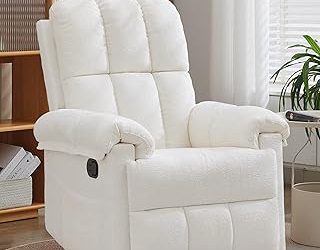
If you’d rather not tether a chair to an outlet, this overstuffed manual rocker delivers deep cushioning, a three-stage backrest, and vibration massage with heat for sore backs and shoulders. Faux leather wipes clean in seconds, which counts for a lot in the spit-up years.
Frequently Asked Questions
Is a power recliner worth it over a manual one?
For nursing, usually yes. Manual recliners require a pull or a body-weight push, which is exactly what wakes a sleeping baby. Power models let you recline and return upright with a fingertip.
Do I need a triple-motor chair?
Not strictly, but it’s the biggest comfort upgrade available. Independent lumbar and headrest control let you support your lower back while keeping your head forward to watch the latch, which single-motor chairs can’t do.
What upholstery holds up best in a nursery?
Performance fabrics and faux leather clean up fastest. Boucle and linen look better in the room long-term but benefit from a washable throw over the seat during the messiest months.
How much space does a nursing glider need?
Plan on roughly 40 inches of depth when fully reclined, plus four to six inches of wall clearance for power models. Check the swivel radius too, so the footrest doesn’t collide with the crib.
Final Thoughts
The MAMAZING Lullapod is our overall pick for nursing specifically, thanks to the HugAssist armrest and thoughtful storage. Choose the CHITA Power Swivel Glider if you want a certified, design-neutral chair that transitions easily into a living space, or Nurture& The Glider Plus if boucle and a more furniture-forward silhouette matter most in your nursery.