Key takeaways
- Frame material: Powder-coated aluminum resists rust outright and stays light enough to move for cleaning. Teak weathers to a silver patina and lasts decades with minimal fuss. Resin wicker over an aluminum core is the value play — just confirm the weave is tight and HDPE, not vinyl, which cracks under UV.
- Cushion construction: Quick-dry foam wrapped in a solution-dyed olefin or polyester cover is the practical benchmark. Removable, washable covers with sturdy zippers matter more than plushness. Cushions thicker than four inches feel better but need real storage space in the off-season.
- Seat depth and scale: Extra-deep seats near 30 inches are genuinely lounge-worthy but eat floor space and can feel cavernous for shorter users. Measure your slab or deck and leave 24 to 30 inches of walkway behind and beside the sectional before committing to an oversized footprint.
- Modularity: Sets that break into independent corner, armless, and ottoman pieces adapt when you rearrange, move, or host. Adjustable backrests and swivel chairs add flexibility that fixed-frame L-shapes can’t match.
- Weather strategy: Decide before you buy whether cushions come indoors or live under a cover. Fire pit tables need clearance and a fuel plan; solar-lit tables skip the wiring but need direct sun to charge.
What's inside
Outdoor sectionals are the most photographed and least understood piece of furniture in the modern backyard. They look effortless in a listing photo, then reality arrives: cushion cores that stay damp for three days after a light rain, aluminum that chalks by the second summer, resin wicker that goes brittle where the sun hits hardest, and an L-shape that turns out to be four inches too long for the patio slab. The failure is rarely the design. It’s the mismatch between how these sets are built and how a real household actually uses them.
This guide looks at the outdoor sectionals earning the strongest owner reviews going into 2026, with attention to the details that determine whether a set still looks good in year three: frame alloy and weave density, cushion fill and cover fabric, seat depth, and how easily the pieces reconfigure. Below you’ll find the current standouts, a short framework for choosing between them, and answers to the questions buyers ask after the box is already open.
As an Amazon Associate we earn from qualifying purchases.



How to Choose an Outdoor Sectional (2026)
- Frame material: Powder-coated aluminum resists rust outright and stays light enough to move for cleaning. Teak weathers to a silver patina and lasts decades with minimal fuss. Resin wicker over an aluminum core is the value play — just confirm the weave is tight and HDPE, not vinyl, which cracks under UV.
- Cushion construction: Quick-dry foam wrapped in a solution-dyed olefin or polyester cover is the practical benchmark. Removable, washable covers with sturdy zippers matter more than plushness. Cushions thicker than four inches feel better but need real storage space in the off-season.
- Seat depth and scale: Extra-deep seats near 30 inches are genuinely lounge-worthy but eat floor space and can feel cavernous for shorter users. Measure your slab or deck and leave 24 to 30 inches of walkway behind and beside the sectional before committing to an oversized footprint.
- Modularity: Sets that break into independent corner, armless, and ottoman pieces adapt when you rearrange, move, or host. Adjustable backrests and swivel chairs add flexibility that fixed-frame L-shapes can’t match.
- Weather strategy: Decide before you buy whether cushions come indoors or live under a cover. Fire pit tables need clearance and a fuel plan; solar-lit tables skip the wiring but need direct sun to charge.
The Best Rated Outdoor Sectionals (2026), Reviewed
HOOOWOOO 13-Piece Wicker Sectional with Fire Pit Table
This is the full-evening setup: an extra-deep L-shaped wicker sofa paired with swivel rocking chairs and a fire pit table, which solves seating and focal point in one purchase. Best suited to genuinely large patios, since 13 pieces need room to breathe.
homary Teak & Aluminum Modular Sofa
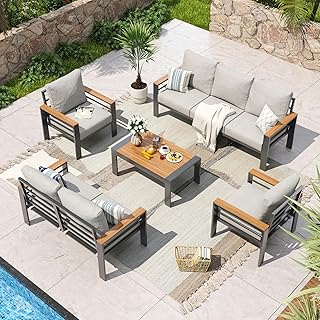
The design-forward choice here, mixing solid teak with an aluminum frame and rating a 2,000-pound total capacity across six seats. Adjustable backrests and five-inch removable cushions make it as comfortable as it is architectural, and teak’s aging patina is a feature rather than wear.
5-Piece Tight Weave Sectional in Beige
The tight weave is the point: denser than typical outdoor wicker, so it holds shape and shrugs off grit. A restrained five-piece footprint and ergonomic seat geometry make this the smartest pick for a mid-sized patio or poolside where sprawl isn’t an option.
Aoxun 7-Seat Aluminum Patio Set
An oversized aluminum sectional with washable thick cushions and a matching coffee table, built for families who don’t want to baby their furniture. Aluminum keeps the weight manageable, and the machine-washable covers are the feature owners cite most.
HOOOWOOO 10-Piece Sectional with Solar Fire Pit Table
A tighter version of the flagship set, trading three pieces for a more workable footprint while keeping the extra-deep seats, wide arms, and swivel chair. The solar-powered table is a real convenience on patios without an outdoor outlet.
Frequently Asked Questions
Is a sectional better than separate outdoor chairs?
For conversation and lounging, yes — sectionals use corners efficiently and read as one intentional piece. Separate chairs win only when you rearrange constantly or need to clear the space often.
How do I stop cushions from developing mildew?
Mildew grows on trapped moisture and organic residue, not on the foam itself. Stand cushions on edge to drain after storms, hose off pollen and dust monthly, and store them dry over winter.
Do I need a cover in winter?
Aluminum and teak frames handle winter outdoors. Cushions and wicker benefit from a breathable, vented cover or indoor storage — sealed tarps trap condensation and cause more damage than exposure.
How much space does an L-shaped sectional need?
Add roughly two feet of clearance to each open side of the published dimensions. Tape the footprint on your deck before ordering; oversized sets are the most common return.
Final Thoughts
For a design-led patio built to last, the homary teak and aluminum modular sofa is the strongest long-term buy. If you want the fire pit and the deep-seat lounge experience without oversizing your space, the HOOOWOOO 10-piece set hits the balance, while the Aoxun 7-seat aluminum sectional remains the most practical choice for busy households that need washable everything.