Key takeaways
- Format follows architecture: Freestanding stoves suit corners, alcoves, and rentals where you can’t cut drywall. Recessed linear units need a stud bay and a plan, but read as built-in millwork once installed.
- Infrared versus fan-forced: Infrared quartz warms objects and bodies directly, so it feels gentler and won’t dry a room out as aggressively. Fan-forced ceramic raises air temperature faster, which suits spaces you occupy in short bursts.
- Flame quality over flame quantity: Look for layered 3D or holographic effects with adjustable brightness and speed. A dim, slow flame reads as expensive; a fast strobing loop reads as plastic, regardless of price.
- Thermostat granularity: A single high/low switch means constant fiddling. Digital thermostats with degree-level control and 8 to 12 hour timers let the unit cycle on its own and keep running costs predictable.
- Honest coverage math: Most 1,500W units handle roughly 400 to 1,000 sq. ft. depending on insulation and ceiling height. Treat manufacturer claims as best-case and size up if the room has large windows.
What's inside
Electric fireplaces have quietly become one of the most useful pieces of furniture in a modern home, and also one of the most confusing to shop for. The category now spans everything from cast-iron-look stoves that sit in a corner like sculpture to 60-inch linear inserts meant to disappear into a plaster wall. Wattage numbers look nearly identical across brands, flame photos are edited within an inch of their lives, and the spec that actually matters for your room, heat distribution, is rarely the one being advertised.
This guide sorts the 2026 field by what each unit is genuinely designed to do: warm a drafty bedroom, anchor a media wall, or add a low-glare focal point to a room that already has enough going on. Below you’ll find the models worth considering, followed by a buying framework and reviews focused on build quality, flame realism, and how each one behaves as an object in a finished space.
As an Amazon Associate we earn from qualifying purchases.



How to Choose a/an Fireplace Heater Electric (2026)
- Format follows architecture: Freestanding stoves suit corners, alcoves, and rentals where you can’t cut drywall. Recessed linear units need a stud bay and a plan, but read as built-in millwork once installed.
- Infrared versus fan-forced: Infrared quartz warms objects and bodies directly, so it feels gentler and won’t dry a room out as aggressively. Fan-forced ceramic raises air temperature faster, which suits spaces you occupy in short bursts.
- Flame quality over flame quantity: Look for layered 3D or holographic effects with adjustable brightness and speed. A dim, slow flame reads as expensive; a fast strobing loop reads as plastic, regardless of price.
- Thermostat granularity: A single high/low switch means constant fiddling. Digital thermostats with degree-level control and 8 to 12 hour timers let the unit cycle on its own and keep running costs predictable.
- Honest coverage math: Most 1,500W units handle roughly 400 to 1,000 sq. ft. depending on insulation and ceiling height. Treat manufacturer claims as best-case and size up if the room has large windows.
The Best Fireplace Heater Electric (2026)s Reviewed
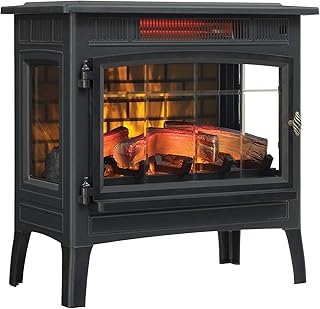
duraflame Freestanding Electric Fireplace Stove Heater
The most convincing of the stove-style units, thanks to a deep 3D flame that layers over a glowing ember bed rather than sitting flat behind glass. Its 1,000 sq. ft. rating is optimistic for open-plan rooms, but in a bedroom or study it’s genuinely warm, and the matte black shell works with almost any palette.
Dr. Infrared DR-991 with Humidifier
The problem-solver of the group: infrared quartz heat plus an integrated humidifier addresses the dry, stuffy feeling that sinks most space heaters in winter. It runs quietly enough for a nursery or home office, and the LED display and remote make it the easiest here to set and forget.
R.W.FLAME 43″ Fireplace Mantel and TV Stand
A rare piece that earns its footprint twice, functioning as a media console with real storage and a fireplace with adjustable LED flame tones. The wooden surround has more presence than typical particleboard consoles, making it the smart pick for apartments where one object has to do three jobs.
ZAFRO 22″ Electric Fireplace Stove
At 22 inches with 5,100 BTU output, this is the small-space specialist, and the flame-only mode is the feature designers actually care about: ambience in July without heat. Dual wattage settings and a built-in thermostat keep it efficient in bedrooms and reading corners.
Tehanld 60″ Ultra-Thin Recessed Fireplace
The most architectural option here, with a slim profile that sits nearly flush once recessed and a choice of log or crystal media to shift between rustic and contemporary. Precise 60–99°F thermostat control, a 12-hour timer, and a child lock make it as practical as it is clean-lined.
Frequently Asked Questions
Are electric fireplaces expensive to run?
At 1,500W, expect roughly 15 to 20 cents per hour at average U.S. rates. Because they heat one room instead of a whole house, they’re often cheaper than raising the central thermostat, especially with a good thermostat cycling the element.
Do I need special wiring?
No. Every unit here runs on a standard 120V outlet. Plug it directly into the wall rather than a power strip or extension cord, and avoid sharing the circuit with other high-draw appliances.
Can a recessed model be installed without a contractor?
It’s achievable for confident DIYers, but you’ll need to frame an opening, confirm clearances, and place an outlet inside the cavity. For finished walls or anything load-bearing, hire a pro.
Which style looks least like a gadget?
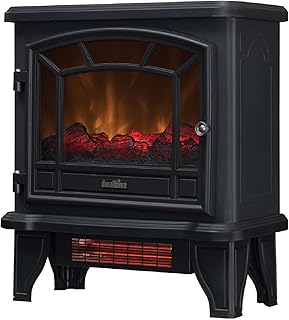
Recessed linear units and mantel-style consoles integrate best because they read as architecture or furniture. If you want a freestanding piece, the duraflame Infrared Quartz stove has a more traditional silhouette that reads as intentional rather than temporary.
Final Thoughts
For most rooms, the duraflame Freestanding Stove Heater offers the best balance of flame realism, warmth, and zero-install flexibility. Choose the Dr. Infrared DR-991 if dry winter air is your real complaint, or the Tehanld 60″ Ultra-Thin if you’re designing the wall around the fireplace rather than the reverse.