Key takeaways
- Tip-over hardware, non-negotiable: Look for an included anti-tip kit and a drawer interlock system that prevents more than one drawer from opening at once. Interlocks matter most around 18 months, when drawers become a climbing frame.
- Top surface and pad fit: Measure your changing pad before you buy. You want at least 18 inches of depth and a flat, unlipped top so the pad sits stable and can be anchored with the included bracket.
- Emissions certification: GREENGUARD Gold means the piece has been screened for chemical emissions, which is worth prioritizing in a small room where an infant sleeps 14 hours a day. Give any new dresser a week to air out regardless.
- Drawer engineering over drawer count: Six deep drawers beat seven shallow ones for bulky items like sleep sacks. Check for full-extension glides, reinforced bottoms, and whether the drawers are open-ended fabric bins or genuine wood boxes.
- Design that graduates: Skip the overtly babyish silhouettes. Tapered solid-wood legs, fluted fronts, and muted oat or driftwood tones read as furniture first and nursery second, which buys you a decade of use instead of three years.
What's inside
A nursery dresser is the hardest-working piece in the room, and most shoppers only realize it after the fact. It has to double as a changing station at 3 a.m., swallow an absurd volume of tiny clothing, hold sleep sacks and swaddles and the backup crib sheets, then quietly transition into a big-kid dresser once the changing pad comes off. That’s three pieces of furniture asked of one, and the flat-pack market is crowded with lookalike boxes that only manage one of the jobs convincingly.
This guide sorts the field by what actually matters in a nursery: tip-over safety and interlocking drawers, low-emission construction, drawer glides that still run smoothly with one arm full of baby, and a top surface sized properly for a contoured changing pad. Below are the nursery dressers worth your money in 2026, plus a short framework for matching one to your room, your crib, and how long you want the piece to last.
As an Amazon Associate we earn from qualifying purchases.


How to Choose a Nursery Dresser (2026)
- Tip-over hardware, non-negotiable: Look for an included anti-tip kit and a drawer interlock system that prevents more than one drawer from opening at once. Interlocks matter most around 18 months, when drawers become a climbing frame.
- Top surface and pad fit: Measure your changing pad before you buy. You want at least 18 inches of depth and a flat, unlipped top so the pad sits stable and can be anchored with the included bracket.
- Emissions certification: GREENGUARD Gold means the piece has been screened for chemical emissions, which is worth prioritizing in a small room where an infant sleeps 14 hours a day. Give any new dresser a week to air out regardless.
- Drawer engineering over drawer count: Six deep drawers beat seven shallow ones for bulky items like sleep sacks. Check for full-extension glides, reinforced bottoms, and whether the drawers are open-ended fabric bins or genuine wood boxes.
- Design that graduates: Skip the overtly babyish silhouettes. Tapered solid-wood legs, fluted fronts, and muted oat or driftwood tones read as furniture first and nursery second, which buys you a decade of use instead of three years.
The Best Nursery Dressers Reviewed (2026)
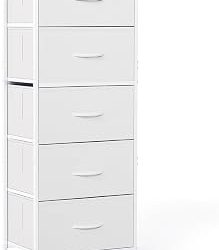
White 6-Drawer Dresser with Solid Wood Legs
The value play here is the raised solid-wood leg base, which lifts the whole piece visually and makes a small nursery feel less bottom-heavy than the standard toe-kick design. Six uniform drawers keep organization simple, and the clean white finish plays nicely against almost any crib wood tone.
Storkcraft Horizon 6-Drawer, Driftwood
Horizon is the one I recommend when the nursery leans warm and organic. The driftwood finish has enough grey in it to avoid the orange cast that plagues budget wood-look laminates, and the interlocking drawer system plus GREENGUARD Gold certification cover the two safety boxes that matter most.
Storkcraft Avalon 6-Drawer Double Dresser
The wide, low double format is the best changing-station geometry available at this price: generous top real estate for a pad plus room for a wipe caddy and lamp, without towering over the room. It’s the right call for nurseries where the dresser sits under a window or on a long wall.
Vabches 7-Drawer Fluted Dresser, Oak
Easily the most design-forward option on this list, with vertical fluting and slim gold pulls that would look at home in a primary bedroom. The seven-drawer layout suits parents who prefer sorting by category, and the oak tone bridges modern and traditional nurseries with no effort.
DaVinci Charlie 6-Drawer Dresser
DaVinci builds to a slightly higher standard of joinery and drawer feel than most nursery-aisle brands, and the Charlie is the quiet, safe, will-not-date pick. Crisp white, restrained hardware, GREENGUARD certified, and stable enough that you’ll keep it long after the changing pad is gone.
Frequently Asked Questions
Do I need a dedicated changing table instead?
Rarely. A properly sized dresser with an anchored contoured pad does the same job and stays useful for years, while a dedicated changing table becomes dead weight around 24 months.
Is six drawers enough for a nursery?
For most families, yes. Newborn clothing is small, so drawer volume matters more than drawer count. Reserve the deepest bottom drawer for sleep sacks, blankets, and the next size up.
How should I anchor the dresser?
Use the included anti-tip straps into a wall stud, not drywall anchors alone. Confirm the strap is taut and re-check it after moving the piece or when your child starts pulling to stand.
Will these work in a kids’ or teen room later?
The oat, driftwood, oak, and plain white finishes here are deliberately neutral, so they migrate into a school-age or guest room without looking like leftover nursery furniture.
Final Thoughts
For most nurseries, the Storkcraft Avalon double dresser is the smartest overall buy, with the widest changing surface and the safety hardware sorted. Choose the DaVinci Charlie if build quality and longevity top your list, or the Vabches fluted oak dresser if you want the room to look designed rather than merely equipped.