Key takeaways
- Hanging vs. freestanding: A hung swing needs a ceiling joist or beam rated for dynamic load, which is roughly three times the static weight. No suitable overhead structure? A swing with its own A-frame stand solves the problem and travels with you to the next house.
- Weight capacity, read honestly: Look for 700 lbs or more on a two-seater. High ratings signal thicker slats and better joinery, not just marketing, and they leave headroom for the motion of two adults settling in at once.
- Wood species and finish: Cedar and cypress resist rot and insects naturally; pine is affordable but wants annual sealing. Powder-coated aluminum sidesteps the maintenance question entirely if your climate is punishing.
- Seat geometry: Deep seats with a contoured or roll-back profile are the difference between perching and lingering. Check backrest height too, especially if you’re tall, and confirm the chains can be shortened to sit the seat 17 to 19 inches off the floor.
- Hardware and extras: Galvanized or stainless chains, springs, and eye bolts prevent rust streaks down your porch ceiling. Built-in cup holders and included cushions sound like fluff until you own a swing without them.
What's inside
Porch swings are one of those rare purchases where the emotional pull runs well ahead of the research. You picture slow evenings and a glass of something cold, then you open a product page and get buried in load ratings, chain hardware, seat depths, and wood species you’ve never heard of. The gap between “I want a swing” and “I want this swing” is where most people stall, and it’s why so many porches end up with a bargain seat that creaks by August.
This guide cuts through it. We’ve focused on the details that actually determine whether a swing lasts a decade or a season: frame construction, real-world weight capacity, hardware quality, and whether you need a ceiling to hang from at all. Below you’ll find our current picks across classic hung wooden swings, freestanding canopy models, and one aluminum-framed option for anyone who’d rather not sand and seal anything, ever.
As an Amazon Associate we earn from qualifying purchases.



How to Choose a Porch Swing (2026)
- Hanging vs. freestanding: A hung swing needs a ceiling joist or beam rated for dynamic load, which is roughly three times the static weight. No suitable overhead structure? A swing with its own A-frame stand solves the problem and travels with you to the next house.
- Weight capacity, read honestly: Look for 700 lbs or more on a two-seater. High ratings signal thicker slats and better joinery, not just marketing, and they leave headroom for the motion of two adults settling in at once.
- Wood species and finish: Cedar and cypress resist rot and insects naturally; pine is affordable but wants annual sealing. Powder-coated aluminum sidesteps the maintenance question entirely if your climate is punishing.
- Seat geometry: Deep seats with a contoured or roll-back profile are the difference between perching and lingering. Check backrest height too, especially if you’re tall, and confirm the chains can be shortened to sit the seat 17 to 19 inches off the floor.
- Hardware and extras: Galvanized or stainless chains, springs, and eye bolts prevent rust streaks down your porch ceiling. Built-in cup holders and included cushions sound like fluff until you own a swing without them.
The Best Porch Swings of 2026, Reviewed
VINGLI 5 FT Heavy Duty Porch Swing with Cushion
The most complete package here for the money: a stout 880-lb-rated wood frame, adjustable chains, and a cushion in the box, which is rarer than it should be at this price. The rustic farmhouse profile reads well against painted clapboard and stained decking alike.
Amish Casual Heavy Duty Porch Swing with Cup Holders
Made in the USA with genuine Amish joinery, and it shows in the roll-back seat, which is the most comfortable shape on this list for long sessions. The 700-lb capacity is conservative for what the frame can actually take, and the cedar stain deepens attractively over the first couple of seasons.
VINGLI XL 5 FT Pro Wooden Porch Swing
The step-up version of VINGLI’s classic: wider stance, integrated cup holders, same 880-lb rating and included hanging hardware. Choose this one if you want a swing that visually anchors a larger porch rather than tucking into a corner.
PURPLE LEAF Outdoor Porch Swing
The design-forward pick, and the only one that needs no woodworking upkeep. A bronze aluminum frame, thick cushions with removable washable covers, a UV-resistant canopy, and integrated solar lights make it function more like an outdoor living room than a porch accessory.
3 Seat Porch Swing with Adjustable Canopy
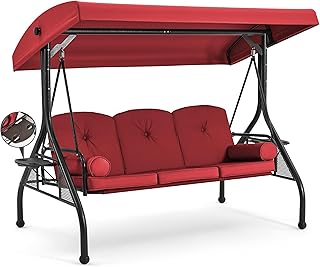
A three-seater glider that converts to a flat swing bed, with its own stand and an adjustable canopy for shifting afternoon sun. The wine red cushioning is bold, so treat it as a deliberate color decision rather than a neutral.
Frequently Asked Questions
How much clearance does a porch swing need?
Allow at least 14 inches behind the swing and three to four feet of swing path in front. Side clearance of 18 inches keeps knuckles and railings apart.
Can my porch ceiling support a swing?
Only if you’re mounting into solid joists or a beam, never into drywall, bead board, or soffit alone. If you can’t locate structural framing with confidence, hire someone or buy a freestanding model.
Do I need to seal a new wooden swing?
Yes, even pre-stained cedar benefits from a coat of exterior sealant before first use, then a refresh every year or two depending on sun and rain exposure.
Should I bring the swing inside for winter?
Cushions, always. The frame can usually stay put under cover, though a breathable cover extends the finish considerably in freeze-thaw climates.
Final Thoughts
For most porches, the VINGLI 5 FT Heavy Duty Swing is the smart default: heavy capacity, cushion included, nothing to overthink. Step up to the Amish Casual if you want American craftsmanship and the best seat on the list, or go with the PURPLE LEAF if you’d rather have a low-maintenance aluminum frame, canopy shade, and solar lighting doing the work for you.