Key takeaways
- Filtration depth: Two-stage carbon handles chlorine taste and sediment, which is enough for most municipal supplies. If your building has older plumbing or you want documented PFAS and lead reduction, step up to four-stage or a unit with UV sterilization. Look for NSF or WQA certification rather than unverified marketing claims.
- Floor versus countertop: Freestanding units suit break rooms and open-plan corners where they read as a fixture. Countertop models make more sense in kitchenettes with existing millwork, tucking under upper cabinets and preserving floor area in tight footprints.
- Hot water recovery: A ten-person team drawing tea and instant coffee will outpace a small tank by mid-morning. Check reservoir capacity and reheat time, and confirm there’s a child safety lock on the hot spout — a requirement in any space with visitors or family days.
- Self-cleaning cycle: Ozone or UV sanitizing loops keep the internal reservoir from developing biofilm between filter changes. In shared environments where nobody owns maintenance, this feature does the work your facilities schedule won’t.
- Material and finish: Stainless steel cabinets resist scuffing from rolling chairs and cleaning carts, and they sit comfortably alongside the brushed metal and matte black hardware most contemporary offices already use. Plastic housings yellow under fluorescent light over a few years.
What's inside
The water cooler is the one appliance in an office that everyone touches and nobody chooses carefully. It usually arrives as an afterthought: a plastic tower in a corner, a stack of five-gallon jugs behind it, and a standing reminder that someone has to lift forty-two pounds onto a spout every Tuesday. In a workspace where the desks were specified, the lighting was considered, and the chairs were tested, that corner is the visual and logistical weak point.
Bottleless dispensers solve it by tapping the existing water line and filtering on demand, which removes the delivery contract, the storage footprint, and the lifting entirely. This guide covers what actually matters when you’re specifying one for a shared space, then walks through five machines that hold up under real office traffic. The focus is on filtration quality, hot-side output, and whether the cabinet looks like furniture or like equipment.
As an Amazon Associate we earn from qualifying purchases.




How to Choose a Bottleless Water Dispenser For Office (2026)
- Filtration depth: Two-stage carbon handles chlorine taste and sediment, which is enough for most municipal supplies. If your building has older plumbing or you want documented PFAS and lead reduction, step up to four-stage or a unit with UV sterilization. Look for NSF or WQA certification rather than unverified marketing claims.
- Floor versus countertop: Freestanding units suit break rooms and open-plan corners where they read as a fixture. Countertop models make more sense in kitchenettes with existing millwork, tucking under upper cabinets and preserving floor area in tight footprints.
- Hot water recovery: A ten-person team drawing tea and instant coffee will outpace a small tank by mid-morning. Check reservoir capacity and reheat time, and confirm there’s a child safety lock on the hot spout — a requirement in any space with visitors or family days.
- Self-cleaning cycle: Ozone or UV sanitizing loops keep the internal reservoir from developing biofilm between filter changes. In shared environments where nobody owns maintenance, this feature does the work your facilities schedule won’t.
- Material and finish: Stainless steel cabinets resist scuffing from rolling chairs and cleaning carts, and they sit comfortably alongside the brushed metal and matte black hardware most contemporary offices already use. Plastic housings yellow under fluorescent light over a few years.
The Best Bottleless Water Dispenser For Office (2026)s Reviewed
Avalon Self-Cleaning Bottleless Water Cooler
This is the safest specification for a mid-size office: three temperatures, a stainless cabinet that photographs well next to any modern break-room palette, and a self-cleaning cycle that keeps the reservoir honest between filter swaps. The NSF-certified filter and UL listing give facilities managers the paperwork they need, and installation taps a standard cold line without a plumber in most cases.
Avalon B8BLK Countertop Touchless Cooler
The countertop answer for kitchenettes with no floor to spare, and the touchless dispensing is a genuine advantage in high-traffic shared spaces. The black finish disappears against dark millwork, and the two-stage filter plus installation kit means it arrives ready to connect rather than requiring a separate parts order.
iSpring DS4S Bottleless Dispenser
Four-stage filtration puts this ahead on water quality, with documented reduction of chlorine, lead, mercury, and PFAS — worth the step up if your building predates 1990 or your team asks pointed questions about what they’re drinking. The silver stainless cabinet, self-cleaning function, and child safety lock make it equally suited to a home studio or a twenty-person floor.
Ultra Instant Hot & Cold Dispenser
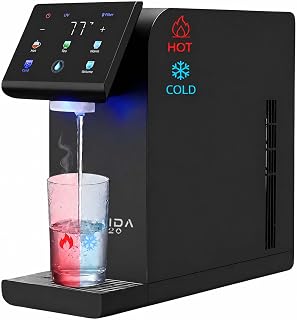
The instant-hot delivery is the differentiator here: no waiting on a tank to recover, which matters when a meeting breaks and six people want tea at once. WQA certification, multi-stage filtration paired with UV sterilization, and genuinely quiet operation make it a strong pick for offices where the unit sits near desks rather than behind a door.
Brio Self-Cleaning Bottleless Cooler
Brio builds for volume, and this point-of-use model is the one to specify when the dispenser will be the only water source for a busy floor. Three temperatures, a UL-approved stainless build, and a self-cleaning cycle put it on par with the Avalon, with a slightly more utilitarian profile that suits back-of-house placement.
Frequently Asked Questions
Do bottleless dispensers require a plumber?
Most connect to an existing cold water line using the included saddle valve or push-fit kit, and a reasonably handy person can complete it in under an hour. Rented spaces with restrictive lease terms or long runs to the nearest supply line are the cases where professional installation is worth the cost.
How often do the filters need changing?
Plan on every six months for a typical office, or every three to four months if you’re on hard water or serving more than twenty people. Set a calendar reminder rather than waiting for taste to degrade.
Is there still a reason to buy a bottled cooler?
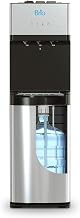
Yes, if you have no accessible water line. The Brio Bottom Loading Water Cooler is the better version of that setup, since the bottom-load design removes the overhead lift and its LED empty-bottle alert prevents the dry-tank surprise.
What does self-cleaning actually do?
It circulates ozone or UV light through the internal reservoir and lines on a timed cycle, suppressing bacterial growth in the standing water. It’s not a substitute for filter changes, but it removes the largest hygiene variable in a machine nobody personally maintains.
Final Thoughts
For most offices, the Avalon Self-Cleaning Bottleless Cooler is the right balance of certification, finish, and capacity — it looks intentional in a considered space and asks very little of you. Choose the iSpring DS4S if filtration depth is the priority and you want PFAS and lead reduction on the spec sheet, or the Avalon B8BLK if your only available surface is a countertop.