Key takeaways
- Frame material: Powder-coated steel is the value option and the first thing to rust at the joints. Extruded aluminum resists corrosion and stays light. Cedar brings warmth and natural rot resistance, but expects a sealant schedule every few seasons.
- Roof system: A double-layer galvanized steel roof vents rising heat and dampens rain noise far better than a single panel. Fabric tops are cooler to install and cheaper to replace, but plan on swapping the canopy every two to four summers.
- Water and snow management: Integrated gutters or channeled posts route runoff away from seating instead of dumping it at the entry. In snow country, look for a stated snow support rating rather than a generic “all-weather” claim.
- Footprint and proportion: Measure the furniture, not the slab. A six-seat dining set needs roughly 12 by 14 feet to allow chairs to push back; a lounge pair fits comfortably under 10 by 12. Leave at least two feet of clearance from the house wall for airflow.
- Enclosure and utilities: Mesh netting rated around 260 GSM blocks insects without turning the space into a greenhouse. Built-in power outlets are worth prioritizing if you intend to add lighting, a fan, or a projector.
What's inside
Gazebo shopping tends to stall at the same place: two listings look nearly identical, one costs three times more, and nothing in the specs explains why. Part of the confusion is vocabulary. “Hardtop” covers everything from a stamped steel panel to a double-layer galvanized roof. “Wind resistant” can mean an engineered anchoring system or simply four stakes in a bag. And a pop-up canopy and a cedar pavilion occupy the same search results even though one lives in your trunk and the other becomes part of the architecture of your yard.
This guide sorts the field by what a gazebo is actually asked to do. Below you will find picks across three tiers: instant shade you can put away, permanent aluminum structures built for weather, and timber-framed pavilions that read as an extension of the house. Each entry notes the frame material, the roof system, and the kind of yard it suits, so you can match the build to your climate and your patio rather than to a photo.
As an Amazon Associate we earn from qualifying purchases.




How to Choose a Gazebo in 2026
- Frame material: Powder-coated steel is the value option and the first thing to rust at the joints. Extruded aluminum resists corrosion and stays light. Cedar brings warmth and natural rot resistance, but expects a sealant schedule every few seasons.
- Roof system: A double-layer galvanized steel roof vents rising heat and dampens rain noise far better than a single panel. Fabric tops are cooler to install and cheaper to replace, but plan on swapping the canopy every two to four summers.
- Water and snow management: Integrated gutters or channeled posts route runoff away from seating instead of dumping it at the entry. In snow country, look for a stated snow support rating rather than a generic “all-weather” claim.
- Footprint and proportion: Measure the furniture, not the slab. A six-seat dining set needs roughly 12 by 14 feet to allow chairs to push back; a lounge pair fits comfortably under 10 by 12. Leave at least two feet of clearance from the house wall for airflow.
- Enclosure and utilities: Mesh netting rated around 260 GSM blocks insects without turning the space into a greenhouse. Built-in power outlets are worth prioritizing if you intend to add lighting, a fan, or a projector.
The Best Gazebo Brands of 2026, Reviewed
PURPLE LEAF 10′ x 14′ Gazebo
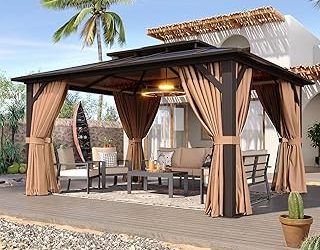
This is the sweet spot for most permanent installs: 4.7-inch posts, a built-in drainage system that carries water down through the frame, and 260 GSM Textilene netting that holds its shape after a season outdoors. The generous 10-by-14 footprint handles a full dining set, and the gray finish stays visually quiet against both brick and siding.
Backyard Discovery Barrington 14′ x 12′ Cedar Pavilion
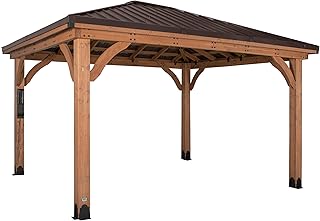
The Barrington is less a gazebo than a small outbuilding, pairing solid cedar posts with a galvanized steel hip roof rated for snow load and wind. The integrated PowerPort is the detail that elevates it, letting you run string lights or a fan without a cord snaking across the lawn.
AirWire 10′ x 12′ Hardtop Aluminum Gazebo
For anyone who wants permanence without maintenance, the aluminum frame simply does not rust, and the double galvanized steel roof handles heat and downpours with equal composure. The dark gray finish, curtains, and netting arrive as a complete package, which keeps the aesthetic coherent instead of cobbled together.
COOS BAY 11′ x 11′ Pop Up Gazebo
The most flexible pick here: 121 square feet of UPF 50+ shade that sets up in minutes and stows for winter. Zip-on mesh netting makes it genuinely usable at dusk, which is where most instant canopies fall short.
Modern Shade 10′ x 12′ Wood Gazebo
A well-judged compromise between cedar warmth and hardtop durability, with a double galvanized steel roof over a timber frame. The yard-dyed curtains and mosquito net hang from built-in hooks, so the enclosure looks intentional rather than improvised.
Frequently Asked Questions
Do I need a concrete pad?
Hardtop and cedar structures anchor best to concrete, pavers, or a properly framed deck. Compacted gravel can work with ground anchors, but soft turf will let posts shift over a few freeze-thaw cycles.
Can a gazebo stay up through winter?
Permanent aluminum and cedar models with stated snow support are designed to, provided you clear heavy accumulation from the roof. Fabric pop-ups should always come down before the first storm.
How long does assembly take?
Budget two people and a full afternoon for a hardtop, and closer to a weekend for a large cedar pavilion. Pop-ups are a ten-minute job for one person.
Hip roof or slope roof?
Hip roofs, like the Barrington’s, shed weather from all four sides and read as more traditional. A slope roof, as on the Arcadia, sits closer to contemporary architecture and works well against a flat house facade.
Final Thoughts
For most yards, the PURPLE LEAF 10′ x 14′ delivers the best balance of drainage engineering, usable space, and price. Choose the AirWire aluminum hardtop if low maintenance outranks everything else, or the Backyard Discovery Barrington when you want cedar and a structure substantial enough to change how the whole backyard feels.