Key takeaways
- Cooling method: Evaporative coolers move humid, cooler air a short distance and drop temperature roughly 5-15°F in dry conditions. Compressor units deliver true refrigerated cooling with measurable BTU output. Only the second type will meaningfully cool a sealed cabin in humid heat.
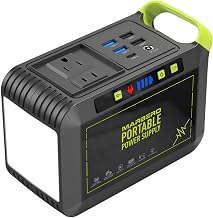
- Power source and draw: Battery-powered personal coolers run a few hours and recharge over USB-C. Anything pulling 300W or more needs a power station, a leisure battery bank, or a hardwired 12V connection. Check the wattage against what your setup can actually sustain overnight.
- Placement and airflow: Personal coolers are directional and need to sit within a couple of feet of you, ideally on a cup holder mount or dash pad. Split systems require exterior space for the condenser, which rules them out for sedans and most SUVs.
- Water tank and refill rhythm: Evaporative models trade tank size for runtime. A 1500ML reservoir can run most of a night; a 350ML cartridge will not. Factor in how often you want to be topping something up in the dark.
- Noise at sleeping speed: Nearly every unit is acceptable on low and intrusive on high. If you plan to sleep beside it, look for models rated under 45dB and test the lowest useful setting before committing to a long trip.
What's inside
A car parked in July becomes a small greenhouse. Interior surfaces routinely climb past 140°F, and factory air conditioning only starts to help once the engine is running and the cabin has had several minutes to purge. For anyone who works from a vehicle, sleeps in a converted van, waits in school pickup lines, or camps in a rooftop tent, that gap between “sitting still” and “actually comfortable” is the whole problem. The market has responded with a confusing spread of devices, from palm-sized evaporative units to genuine 12V split systems, all filed under the same search term.
This guide separates them by what they physically do. Some of these products cool air by evaporating water, which lowers temperature a few degrees and works best in dry climates. Others use a compressor and refrigerant, which is real air conditioning and comes with real installation and power demands. Knowing which category you are shopping in matters more than any spec sheet, so each pick below is labeled honestly, along with the setup it genuinely suits.
As an Amazon Associate we earn from qualifying purchases.


How to Choose a Portable Air Conditioner For Cars (2026)
- Cooling method: Evaporative coolers move humid, cooler air a short distance and drop temperature roughly 5-15°F in dry conditions. Compressor units deliver true refrigerated cooling with measurable BTU output. Only the second type will meaningfully cool a sealed cabin in humid heat.
- Power source and draw: Battery-powered personal coolers run a few hours and recharge over USB-C. Anything pulling 300W or more needs a power station, a leisure battery bank, or a hardwired 12V connection. Check the wattage against what your setup can actually sustain overnight.
- Placement and airflow: Personal coolers are directional and need to sit within a couple of feet of you, ideally on a cup holder mount or dash pad. Split systems require exterior space for the condenser, which rules them out for sedans and most SUVs.
- Water tank and refill rhythm: Evaporative models trade tank size for runtime. A 1500ML reservoir can run most of a night; a 350ML cartridge will not. Factor in how often you want to be topping something up in the dark.
- Noise at sleeping speed: Nearly every unit is acceptable on low and intrusive on high. If you plan to sleep beside it, look for models rated under 45dB and test the lowest useful setting before committing to a long trip.
The Best Portable Air Conditioner For Cars (2026)s Reviewed
2026 New 4-in-1 Portable AC with 1500ML Water Tank
The generous 1500ML reservoir is the standout here, giving it far longer unattended runtime than the compact evaporative crowd, and the three-mode, three-speed layout plus remote makes it easy to adjust from the driver’s seat. Treat the seven-color LED as ambience rather than a feature, and expect a noticeable but modest temperature drop rather than refrigerated air.
FLOWBREEZE 3-in-1 Portable Air Conditioner 5400mAh
Its built-in 5400mAh battery is the practical advantage, letting it run untethered on a dash or console without draining the car’s electrical system. Best suited to single-occupant use at close range, and a strong pick for dry-climate commuters who want cooling before the engine turns over.
Treeligo 12V 10000BTU Truck Split Air Conditioner
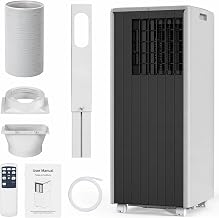
This is the only genuine air conditioner in the group, using a 12V compressor and split design to deliver real cooling capacity to an RV, camper, trailer, or sleeper cab. Installation is a project rather than an unboxing, and you will need adequate battery capacity, but nothing else here comes close for overnight comfort in serious heat.
V1-Pro Travel Air Conditioner with Remote
The 330/400W draw and 60°F-89°F thermostat range place this above the USB-powered field in actual cooling ability, making it a reasonable middle ground for tents, small campers, and parked vehicles running off a power station. Confirm your battery can support sustained 400W before you rely on it for a full night.
Evapolar evaCHILL Personal Evaporative Cooler
The most thoughtfully designed object in this roundup, with a matte cube form and quiet operation that earns its place on a desk as readily as a console. It cools a personal zone of about arm’s length, which is exactly the right expectation to bring to it.
Frequently Asked Questions
Will a portable unit cool my whole car?
Only a compressor-based system will. Evaporative and battery-powered models create a cooler pocket of air around one person, which is genuinely useful in stop-and-go or parked conditions but will not lower the temperature of an entire cabin.
Do these work in humid climates?
Evaporative coolers lose most of their effectiveness above roughly 60% relative humidity, since the air cannot absorb additional moisture. In the Southeast or Gulf Coast, a refrigerant-based unit is the only approach that reliably works.
Can I run one overnight while camping?
Yes, with the right power planning. Battery models like the FLOWBREEZE handle a few hours on their own, while higher-wattage units need a portable power station sized to their draw plus a margin for the tank refills you will inevitably do.
Is a 12V split system worth the installation effort?
For anyone spending consecutive nights in a van, trailer, or truck sleeper, yes. For occasional weekend use in a passenger car, the effort and mounting requirements outweigh the benefit.
Final Thoughts
Match the machine to the honest scope of your problem. The Treeligo 12V split is the only pick that delivers true air conditioning for a camper or sleeper cab, the 4-in-1 with the 1500ML tank offers the best runtime-to-effort ratio for vehicle use, and the Evapolar evaCHILL remains the most refined choice for personal cooling that looks at home on a desk between road trips.