Key takeaways
- Match output to your actual peak: Ratings in L/H, QT/H, and gallons per hour describe continuous production, not a burst. A 10.6 QT/H countertop unit comfortably covers a home bar or a café with steady walk-up traffic; 32–42L/H floor models exist for lines that don’t stop.
- Decide soft serve or hard serve first: Soft serve machines dispense straight from a refrigerated cylinder at roughly -6°C for immediate service. Hard serve and gelato batch freezers produce a denser product you scoop and hold in a separate display freezer, which is a second appliance and a second footprint.
- Read the hopper and cylinder pairing: A 4L hopper feeding a 1.6L cylinder means a small reservoir and frequent top-offs. Dual 6L hoppers cut refill interruptions and, on twin-compressor builds, let you run two bases with genuinely independent temperature control.
- Plan the footprint like cabinetry, not an appliance: Countertop models want 4 to 6 inches of rear and side clearance for airflow, and they’re tall enough to conflict with an upper cabinet run. Floor-standing units read as furniture in an open plan, so the brushed stainless panel and the drip tray line become part of the sightline.
- Weigh the cleaning burden honestly: Pre-cooling holds mix safely overnight and saves a full teardown; auto-clean cycles shorten sanitizing but never replace it. Confirm which parts are dishwasher-safe before you commit to nightly service.
What's inside
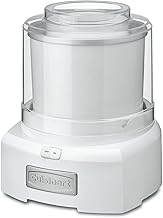
Somewhere between a countertop churner and a full gelateria line sits a category most people never plan for: the commercial soft serve machine that ends up in a home kitchen, a finished basement bar, a pool house, or a small storefront run out of a converted garage. Buyers land here for one of two reasons. Either the 1.5-quart bowl machine finally cracked under a weekend of guests, or the business plan calls for eighty cones a day and the spec sheets have started to blur. Output ratings get quoted in three different units, “commercial” gets applied to everything from a 1000W countertop unit to a 42L/hour floor model, and almost nobody explains what any of it means for the room the machine actually lives in.
This guide sorts the current field by what it demands from your space and your service volume: footprint and clearance, single versus multi-flavor plumbing, hard serve versus soft serve mechanics, and the maintenance cycle you’ll be living with every night. Below, the machines worth considering in 2026, followed by a buying framework and the questions that come up most often once the box is open.
As an Amazon Associate we earn from qualifying purchases.


How to Choose a Commercial Ice Cream Maker Machine (2026)
- Match output to your actual peak: Ratings in L/H, QT/H, and gallons per hour describe continuous production, not a burst. A 10.6 QT/H countertop unit comfortably covers a home bar or a café with steady walk-up traffic; 32–42L/H floor models exist for lines that don’t stop.
- Decide soft serve or hard serve first: Soft serve machines dispense straight from a refrigerated cylinder at roughly -6°C for immediate service. Hard serve and gelato batch freezers produce a denser product you scoop and hold in a separate display freezer, which is a second appliance and a second footprint.
- Read the hopper and cylinder pairing: A 4L hopper feeding a 1.6L cylinder means a small reservoir and frequent top-offs. Dual 6L hoppers cut refill interruptions and, on twin-compressor builds, let you run two bases with genuinely independent temperature control.
- Plan the footprint like cabinetry, not an appliance: Countertop models want 4 to 6 inches of rear and side clearance for airflow, and they’re tall enough to conflict with an upper cabinet run. Floor-standing units read as furniture in an open plan, so the brushed stainless panel and the drip tray line become part of the sightline.
- Weigh the cleaning burden honestly: Pre-cooling holds mix safely overnight and saves a full teardown; auto-clean cycles shorten sanitizing but never replace it. Confirm which parts are dishwasher-safe before you commit to nightly service.
The Best Commercial Ice Cream Maker Machines (2026) Reviewed
GSEICE 32–42L/H Floor Standing Soft Serve Machine
Two compressors and a true independent left/right system mean one side can hold at serving temperature while the other rests or runs a different base, which is the single biggest reliability upgrade in this roundup. At 32–42L/H it’s overbuilt for entertaining and correctly sized for a shop, and the floor-standing stainless body sits cleanly at the end of a counter run rather than crowding it.
VEVOR 20–28L/H 2200W 3-Flavor Freestanding
Dual 6L hoppers plus a twist gives you three dispensing options from two bases, and the puffing pump adds overrun for that light, structured texture cheaper machines can’t produce. The low-mix alert and pre-cooling are the features that make daily service manageable rather than watchful.
VEVOR 10.6 QT/H Countertop Soft Serve
The most livable option for a home kitchen or a compact bar: 1000W, a 4L hopper, 1.6L cylinder, and a footprint that doesn’t dominate a run of counter. Auto clean and pre-cooling keep the nightly routine short, and single-flavor operation is a fair trade for the space saved.
VEVOR 1400W Hard Serve Ice Cream Maker
A batch freezer rather than a dispenser, producing dense, scoopable ice cream at 20 gph with an LED display and auto shut-off timer that keeps overrun consistent between runs. Choose it if you want a firmer product and already have display freezer capacity.
1400W Hard Ice Cream and Gelato Machine
Three to four gallons per hour of gelato-style product from a straightforward 110V build, with an auto clean cycle and LED panel handling most of the guesswork. It’s the sensible entry point for anyone testing a small-batch flavor program before scaling.
Frequently Asked Questions
Can I run a commercial machine on a standard household circuit?
Most 1000W to 1400W units run on a standard 110–115V outlet, but they should not share a circuit with other high-draw appliances. Higher-wattage freestanding models often need a dedicated line, so confirm the amperage draw against your panel before delivery.
How much clearance does one of these actually need?
Plan on 4 to 6 inches at the rear and sides for condenser airflow, plus vertical space above countertop models for hopper access. Boxing a unit into a tight alcove is the fastest route to compressor strain.
Do I have to break the machine down every night?
Not with pre-cooling. Machines that hold mix safely overnight typically need a full teardown and sanitize every few days rather than daily, though local health codes govern if you’re selling.
Is soft serve or hard serve better for a home setup?
Soft serve, in most cases. It’s ready on demand, needs no secondary freezer, and countertop units are far easier to integrate into a residential kitchen.
Final Thoughts
For genuine commercial volume, the GSEICE floor-standing unit’s twin-compressor design is the one that earns its footprint. The VEVOR 3-flavor 2200W machine is the smarter buy for a dessert bar or ambitious home setup that wants variety without two appliances, while the VEVOR 10.6 QT/H countertop model remains the best fit for anyone who needs real soft serve capability and has one stretch of counter to give it.