Key takeaways
- Base engineering over feature count: A swivel plate carrying a rocking cradle carrying a recline frame is a lot of stacked movement. Look for a wide steel base, a stated weight capacity, and reviews that mention the chair after six months rather than on arrival day. Feature lists are easy to print; a quiet, wobble-free base is not.
- Measure the swivel arc, not just the chair: Depth matters when reclined, but the swivel radius is what will clip your side table. Tape out the full circle the armrests travel through before you commit, and add clearance behind for the backrest at full extension unless the model is specifically wall-hugging.
- Power versus manual is a placement decision: Power gives you infinite positioning and independent headrest control, but it needs an outlet within cord reach and adds a failure point. Manual push-back mechanisms are simpler, cheaper, and fine if you have the core strength to work them. Neither is objectively better.
- Match upholstery to the room’s traffic: Chenille reads soft and hides seam lines, making it the more forgiving choice for family rooms. Genuine leather costs more and needs conditioning, but it wipes clean and develops patina instead of pilling. Overstuffed polyester sits in the middle and photographs well.
- Treat heat and massage as bonuses, not reasons: Most built-in massage in this price band is vibration rather than true kneading rollers, and the heating element is typically a single lumbar pad. Both are genuinely pleasant. Neither should override a poor frame or an awkward footprint.
What's inside
Recliners used to be the piece of furniture you positioned with your back to the room and hoped nobody mentioned. That has changed. The current generation of rocking swivel recliners borrows silhouette cues from mid-century lounge chairs and upholstery from the sofa category, which means you can finally put one in a sightline without wincing. The catch is that the listings have multiplied faster than the quality has. Scroll for ten minutes and you will see a dozen chairs that look nearly identical, each one stacking heat, vibration, USB ports, and a cup holder onto a base that may or may not survive two years of daily use.
The complication with this category specifically is that you are buying three mechanisms in one seat: a swivel plate, a rocker cradle, and a recline mechanism, all sharing the same load path. Cheap builds reveal themselves at the joints between those systems, not in the fabric. This guide breaks down what actually matters when you are comparing models, then walks through the strongest options available right now across power and manual, standard and big-and-tall, fabric and leather.
As an Amazon Associate we earn from qualifying purchases.


How to Choose a Rocking Swivel Recliner (2026)
- Base engineering over feature count: A swivel plate carrying a rocking cradle carrying a recline frame is a lot of stacked movement. Look for a wide steel base, a stated weight capacity, and reviews that mention the chair after six months rather than on arrival day. Feature lists are easy to print; a quiet, wobble-free base is not.
- Measure the swivel arc, not just the chair: Depth matters when reclined, but the swivel radius is what will clip your side table. Tape out the full circle the armrests travel through before you commit, and add clearance behind for the backrest at full extension unless the model is specifically wall-hugging.
- Power versus manual is a placement decision: Power gives you infinite positioning and independent headrest control, but it needs an outlet within cord reach and adds a failure point. Manual push-back mechanisms are simpler, cheaper, and fine if you have the core strength to work them. Neither is objectively better.
- Match upholstery to the room’s traffic: Chenille reads soft and hides seam lines, making it the more forgiving choice for family rooms. Genuine leather costs more and needs conditioning, but it wipes clean and develops patina instead of pilling. Overstuffed polyester sits in the middle and photographs well.
- Treat heat and massage as bonuses, not reasons: Most built-in massage in this price band is vibration rather than true kneading rollers, and the heating element is typically a single lumbar pad. Both are genuinely pleasant. Neither should override a poor frame or an awkward footprint.
The Best Rocking Swivel Recliners (2026), Reviewed
Power Oversized Swivel Rocker Recliner with Dual Motor and Heat Massage
The dual-motor setup is the real headline here: adjusting the headrest independently of the footrest is what separates a genuine lounge position from a chair that only ever half-fits you. Ambient LED trim, USB-C charging, and armrest storage make it the most complete option if you want one seat to handle reading, screen time, and naps.
Oversized Power Swivel Rocker Recliner for Big and Tall
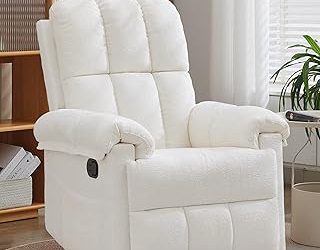
Rated to 375 pounds with an extra-wide overstuffed seat, this is the pick when standard recliners feel like a compromise rather than a chair. The chenille upholstery is the quiet strength: it softens the visual bulk of a large frame far better than smooth polyester does.
Massage Swivel Rocker Recliner with Heat and Vibration
A manual mechanism keeps the price and the complexity down while still delivering heated lumbar support and vibration through the seat back. The grey soft-fabric finish is genuinely neutral, which makes it the easiest model here to slot into a room you have already decorated.
Manual Swivel Rocker Recliner with Massage, Heat and 360° Rotation
Full 360-degree rotation paired with a smooth glide makes this a strong crossover between living room seating and nursery duty. The sofa-style proportions read more like a small loveseat than a traditional recliner, which helps if you want the comfort without the recliner look.
Korser 360° Swivel Rocker Recliner with Cup Holder
Korser has clearly aimed this at long sessions rather than occasional use: heating, massage, a well-placed cup holder, and a dark grey fabric that forgives daily traffic. The manual recline is straightforward and quiet, which matters more in a bedroom or nursery than any powered feature.
Frequently Asked Questions
Can a rocking swivel recliner go against a wall?
Not flush, in most cases. The rocking cradle needs travel room behind it and the backrest moves rearward on recline, so plan for four to eight inches of clearance unless the manufacturer specifically describes the model as wall-hugging.
Are these chairs suitable for a nursery?
Several are marketed for exactly that, and the combination of a controlled glide and a swivel base is genuinely useful during night feeds. Prioritize quiet operation and a manual mechanism you can work one-handed, and keep the recline path clear of the crib.
Does the built-in massage actually do anything?
It provides vibration through the seat and back, which many people find relaxing for tired legs and lower-back tension. Set expectations accordingly: this is not equivalent to a dedicated massage chair with roller tracks.
How much assembly should I expect?
Most models in this category ship in two or three sections that lock together, typically 20 to 40 minutes with no specialist tools. The boxes are heavy, so arrange a second pair of hands for the move rather than the build.
Final Thoughts
If you want the most capable seat in the category, the dual-motor Power Oversized Swivel Rocker with adjustable headrest and heat massage is the one worth stretching for, since independent headrest control is the feature you will notice every single day. Larger frames should go straight to the Big and Tall chenille model for its 375-pound rating and genuinely wide seat, while anyone who prefers a simple mechanism and a room-friendly finish will be well served by the Korser 360° swivel recliner.