Key takeaways
- Material behavior over material name: Powder-coated aluminum resists rust outright and stays light; steel is stiffer but depends entirely on coating integrity at joints. Acacia brings genuine warmth but wants annual oiling. HIPS and other engineered polymers ignore moisture completely and need almost nothing from you.
- Drainage and surface geometry: Slatted or perforated tops let rain pass through instead of forming standing puddles that leave mineral rings. Solid tops are easier to wipe and better for drinks, but look for a slight crown or edge relief so water runs off rather than sitting.
- Height and scale against your seating: Most outdoor sofas put seat height around 15 to 17 inches. A table between 16 and 19 inches tall reads correctly; anything shorter disappears. Leave roughly 14 to 18 inches of clearance between the table edge and seat front for comfortable legroom.
- Wind resistance versus portability: Exposed balconies and rooftops need mass or a low center of gravity. Ultralight aluminum is easy to rearrange but can shift in storms, so plan on bringing it in or weighting it seasonally.
- Assembly and hardware quality: Check whether fasteners are stainless or coated. Cheap zinc hardware is the first thing to rust, and streaking down a leg makes an otherwise sound table look neglected. Most tables in this category assemble in 15 to 30 minutes.
What's inside
Outdoor coffee tables live a harder life than almost anything else in the home. They sit through freeze-thaw cycles, get soaked by sprinklers, hold sweating glasses in August, and absorb the kind of UV exposure that turns cheap finishes chalky in a single season. The result is a market full of pieces that photograph beautifully and fail by year two: powder coat that bubbles at the welds, tabletops that pool water instead of shedding it, and frames light enough to skate across a deck in a gust.
This guide narrows the field to six tables that hold up structurally and still look intentional next to real furniture. We looked at frame material and joinery, drainage behavior, weight relative to wind, how each finish ages, and whether the proportions actually work alongside standard-depth outdoor seating. Below you’ll find a short buying framework followed by individual assessments, so you can match a table to your specific balcony, deck, or garden setting rather than guessing from a product photo.
As an Amazon Associate we earn from qualifying purchases.


How to Choose a Outdoor Coffee Table (2026)
- Material behavior over material name: Powder-coated aluminum resists rust outright and stays light; steel is stiffer but depends entirely on coating integrity at joints. Acacia brings genuine warmth but wants annual oiling. HIPS and other engineered polymers ignore moisture completely and need almost nothing from you.
- Drainage and surface geometry: Slatted or perforated tops let rain pass through instead of forming standing puddles that leave mineral rings. Solid tops are easier to wipe and better for drinks, but look for a slight crown or edge relief so water runs off rather than sitting.
- Height and scale against your seating: Most outdoor sofas put seat height around 15 to 17 inches. A table between 16 and 19 inches tall reads correctly; anything shorter disappears. Leave roughly 14 to 18 inches of clearance between the table edge and seat front for comfortable legroom.
- Wind resistance versus portability: Exposed balconies and rooftops need mass or a low center of gravity. Ultralight aluminum is easy to rearrange but can shift in storms, so plan on bringing it in or weighting it seasonally.
- Assembly and hardware quality: Check whether fasteners are stainless or coated. Cheap zinc hardware is the first thing to rust, and streaking down a leg makes an otherwise sound table look neglected. Most tables in this category assemble in 15 to 30 minutes.
The Best Outdoor Coffee Tables (2026) Reviewed
Solaste Aluminum Outdoor Coffee Table
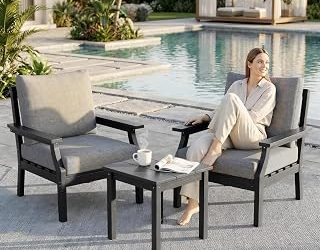
The most balanced pick here: rust-proof aluminum construction in a restrained dark grey that reads as architectural rather than utilitarian, with a rectangular footprint that sits cleanly in front of two- and three-seat sofas. It’s light enough to reposition single-handed, which also means securing it on exposed balconies during heavy weather.
Christopher Knight Home Carlisle Acacia Wood Coffee Table
The choice when you want warmth instead of hardware-store neutrality. Sandblasted acacia over a rustic metal base gives real grain and tactile depth, and the two-material contrast carries a patio that’s otherwise all cushions and neutral fabric. Budget an annual coat of teak or penetrating oil if you want to hold the color rather than let it silver.
Garvee All-Weather Aluminum Patio Table
Garvee splits the difference intelligently: an aluminum frame and top with a convincing wood-look print, so you get the visual warmth of timber with none of the resealing, splintering, or moisture absorption. The realism holds up at conversational distance, which is where the table actually gets seen.
Stoog All-Weather HIPS Coffee Table
The lowest-maintenance option on the list. HIPS is dimensionally stable, genuinely waterproof, and won’t rust at all, and the teak-toned modern rectangle suits poolside placement where chlorine and constant splashing would degrade wood or attack a coated frame.
33.4″ Rectangle Weather-Resistant Patio Coffee Table
A compact heavy-duty metal frame at 33.4 by 17.3 inches, sized specifically for balconies and narrow porches where full-scale tables crowd the walkway. The brown finish is warmer than most metal offerings, and the reinforced frame feels considerably more substantial than the footprint suggests.
Frequently Asked Questions
Do outdoor coffee tables need to be covered in winter?
Aluminum and HIPS tables tolerate winter uncovered without meaningful damage. Steel-framed and wood tables benefit from a breathable cover or indoor storage, since repeated freeze-thaw cycles work moisture into coating chips and wood end grain.
What size should I get for a small balcony?
Look for something in the 30 to 36 inch length range and under 20 inches deep. Tables in that range, like the 33.4-inch rectangle above, preserve a walking path while still holding a tray, a laptop, and a couple of drinks.
Will a metal table get too hot to touch?
Dark powder-coated surfaces in direct summer sun will get uncomfortably warm, though not damaging. Slatted designs shed heat faster than solid tops, and partial shade or an umbrella resolves the issue entirely.
Can these tables be used indoors?
Yes, and several transition well. Aluminum and HIPS pieces work in sunrooms, entryways, and finished basements where moisture is a concern. Just add felt pads under the feet to protect hardwood or tile.
Final Thoughts
For most patios, the Solaste aluminum table is the safest all-around investment: corrosion-proof, correctly proportioned, and visually quiet enough to work with whatever seating you already own. Choose the Christopher Knight Carlisle if you want genuine acacia warmth and don’t mind an annual oiling, or the Stoog HIPS table if you’d rather buy once and never think about maintenance again.