Key takeaways
- Weight rating with headroom: Buy at least 100 pounds above your actual weight. Capacity ratings describe static load, not the dynamic force of dropping into a seat, and that margin is what keeps the frame square after three years of daily use.
- Seat width and depth together: Look for 25 inches minimum between the arms, paired with a seat depth of 21 inches or more. Width alone doesn’t help if your thighs overhang the front rail.
- Footrest extension: This is the most common failure point for tall users. Extended or dual-panel footrests keep your calves supported instead of letting your heels hang, which is where circulation problems and knee strain start.
- Frame material over upholstery: Kiln-dried hardwood or welded steel with reinforced joinery outlasts particleboard regardless of how good the fabric looks. Ask what the frame is before you ask what color it comes in.
- Wall clearance and mechanism type: Manual recliners need six to eight inches behind them; power models often recline in less space but require an outlet. Measure your room before you commit to either.
What's inside
Most recliners are designed around an imaginary average body, and anyone over six feet or two hundred fifty pounds knows exactly how that story ends. The seat bottoms out within a year, the footrest stops short of the ankles, and the frame develops a nervous creak every time the mechanism engages. Standard chairs typically top out around a 250 to 300 pound capacity with a 20-inch seat, which leaves broad shoulders wedged between wing arms and knees dangling off the front edge. Comfort becomes a negotiation rather than a given.
This guide looks at recliners engineered for genuinely larger bodies: 400 to 500 pound weight ratings, seat widths in the 25 to 27 inch range, hardwood or steel frames, and footrests long enough to support a size 14 foot. I’ve weighed manual versus power mechanisms, evaluated how each chair reads in a real room rather than a showroom, and flagged which models earn their footprint. Below are the picks worth your attention in 2026, followed by the specifications that actually predict longevity.
As an Amazon Associate we earn from qualifying purchases.


How to Choose a Recliner For Big Men (2026)
- Weight rating with headroom: Buy at least 100 pounds above your actual weight. Capacity ratings describe static load, not the dynamic force of dropping into a seat, and that margin is what keeps the frame square after three years of daily use.
- Seat width and depth together: Look for 25 inches minimum between the arms, paired with a seat depth of 21 inches or more. Width alone doesn’t help if your thighs overhang the front rail.
- Footrest extension: This is the most common failure point for tall users. Extended or dual-panel footrests keep your calves supported instead of letting your heels hang, which is where circulation problems and knee strain start.
- Frame material over upholstery: Kiln-dried hardwood or welded steel with reinforced joinery outlasts particleboard regardless of how good the fabric looks. Ask what the frame is before you ask what color it comes in.
- Wall clearance and mechanism type: Manual recliners need six to eight inches behind them; power models often recline in less space but require an outlet. Measure your room before you commit to either.
The Best Recliner For Big Men (2026)s Reviewed
JIKFRIMA Big Man 500lbs Power Lift Recliner
The 500-pound rating is the highest in this group, and the lay-flat range plus extended footrest makes it the only pick here that works as a genuine sleep chair for a taller frame. Heat and massage are pleasant extras, but the real argument is the lift function, which makes standing up a controlled motion rather than a shove.
MCombo 27″ Oversized Power Recliner PR677
At 27 inches across the seat this is the widest option listed, and the zero-gravity position at 155 degrees redistributes pressure off the lower back in a way standard recline angles don’t. The anti-tip design matters more than it sounds on a chair this large, and the USB ports save you an extension cord.
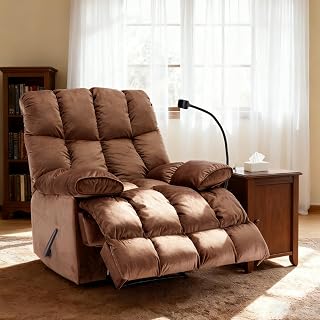
Euthymia Chenille Heavy Duty Recliner, Dark Brown
Chenille is the sleeper upholstery choice for big-and-tall seating: it has enough texture to hide wear patterns and enough give to avoid the vinyl-slick feeling of faux leather. The dark brown reads warmer and less institutional than most 400-pound-rated chairs, which tend toward beige.
Euthymia Velvet Oversized Recliner, Brown
Same 400-pound platform and extra-wide seat as its chenille sibling, but the velvet gives it a softer, more considered presence — closer to a lounge chair than a piece of medical furniture. A strong choice for a home theater or bedroom where you’d rather the chair not announce its capacity.
Manual Oversized Recliner with Phone Holder
The manual mechanism is the point here: fewer components to fail, no outlet required, and it works in an RV or a room without convenient power. Rated to 400 pounds with a phone holder built in, it’s the pragmatic budget entry that doesn’t cut the frame short to get there.
Frequently Asked Questions
What seat width counts as a big man recliner?
Twenty-five inches or wider between the arms. Anything under 23 inches will feel confining to most men over 250 pounds, even if the weight rating looks adequate on paper.
Is power or manual better for heavier users?
Power reduces the physical effort of engaging the mechanism and puts less stress on the linkage, which tends to extend frame life. Manual costs less and has fewer failure points, so it’s the better pick if you don’t need lift assistance.
How much space do I need behind the chair?
Plan on six to eight inches for most manual recliners and three to four for wall-hugger power models. Always measure from the back of the chair at full recline, not from its upright footprint.
Do these chairs work for tall as well as heavy users?
Only if the footrest extends. Check the seat-to-footrest total length; anyone over 6’2″ should look for extended or triple-panel footrests specifically, since a wide seat alone won’t support your legs.
Final Thoughts
If capacity and mobility support are your priorities, the JIKFRIMA 500lbs power lift recliner is the most capable chair on this list. The MCombo PR677 is the better everyday choice for its 27-inch seat and zero-gravity positioning, while the Euthymia chenille model gives you a durable 400-pound platform that still looks like furniture you chose rather than furniture you settled for.