Key takeaways
- Roof venting: A double or tiered roof with an open gap at the peak lets pressure bleed out instead of building underneath. This single feature does more for wind survival than any other, and it is why vented hardtops consistently outperform flat single-layer canopies.
- Post thickness and material: Look for published dimensions, not adjectives. Posts in the 4.6 to 4.7 inch range in cedar or heavy-gauge powder-coated aluminum give you real torsional stiffness; anything under about 2 inches is a patio umbrella with extra steps.
- Anchoring system: Concrete anchor bolts beat stakes, stakes beat sandbags, and sandbags beat nothing. Check what ships in the box and budget for proper masonry or ground anchors if the pad allows it, since most warranty language assumes correct anchoring.
- Canopy material and GSM: For soft-top models, higher fabric weight resists tearing at the grommets where stress concentrates. Around 260 GSM textilene or better holds up; light polyester frays at the seams within a season or two of real exposure.
- Removable panels: Netting, curtains, and privacy screens are the first things to catch wind. Choose a design where they zip off in minutes so you can strip the structure down to its frame before a storm arrives.
What's inside
Wind is the variable most gazebo shoppers underestimate. A shade structure can look impeccable in a product photo and still fold like a paper crane the first time a summer squall rolls through. The failure points are predictable: hollow legs with thin gauge steel, fabric canopies that act as sails because there is nowhere for pressure to escape, and hardware that relies on the structure’s own weight instead of a real connection to the ground. If your yard sits on a ridge, near open water, or in a corridor between houses that funnels gusts, the specification sheet matters far more than the styling.
This guide looks at gazebos through a wind-load lens first and a design lens second, because the two are not actually in conflict. Vented double roofs, thicker posts, galvanized steel panels, and proper anchoring have all become standard on the better mid-market models, which means you no longer have to choose between a structure that survives October and one you actually want to look at. Below you will find the picks worth considering in 2026, plus the criteria that separate a genuinely wind-rated shelter from a canopy with optimistic marketing copy.
As an Amazon Associate we earn from qualifying purchases.


How to Choose a Gazebo For High Winds (2026)
- Roof venting: A double or tiered roof with an open gap at the peak lets pressure bleed out instead of building underneath. This single feature does more for wind survival than any other, and it is why vented hardtops consistently outperform flat single-layer canopies.
- Post thickness and material: Look for published dimensions, not adjectives. Posts in the 4.6 to 4.7 inch range in cedar or heavy-gauge powder-coated aluminum give you real torsional stiffness; anything under about 2 inches is a patio umbrella with extra steps.
- Anchoring system: Concrete anchor bolts beat stakes, stakes beat sandbags, and sandbags beat nothing. Check what ships in the box and budget for proper masonry or ground anchors if the pad allows it, since most warranty language assumes correct anchoring.
- Canopy material and GSM: For soft-top models, higher fabric weight resists tearing at the grommets where stress concentrates. Around 260 GSM textilene or better holds up; light polyester frays at the seams within a season or two of real exposure.
- Removable panels: Netting, curtains, and privacy screens are the first things to catch wind. Choose a design where they zip off in minutes so you can strip the structure down to its frame before a storm arrives.
The Best Gazebo For High Winds (2026)s Reviewed
Modern Shade Wood Grill Gazebo 12′ x 16′
The most structurally serious option here, pairing 4.6 inch cedar posts with a sloped galvanized steel roof that sheds both snow load and gust pressure. At 12 by 16 feet it is a permanent architectural gesture rather than seasonal furniture, and the warm timber reads far softer against planting than aluminum does.
PURPLE LEAF Outdoor Gazebo 12′ x 14′ Double Roof
PURPLE LEAF has quietly become the reference point for wind-conscious soft tops, and the 4.7 inch posts, integrated drainage, and vented upper canopy explain why. The 260 GSM textilene netting is heavy enough to stay put in a breeze, and the rustproof finish holds its color in coastal air.
10′ x 12′ Hardtop Gazebo with Galvanized Steel Double Roof
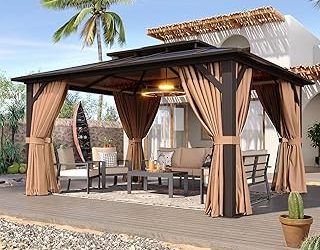
A smart middle path if you want metal overhead without committing to a full timber pavilion. The double-layer galvanized roof vents properly, the heavy-duty steel frame resists racking, and the included nettings and curtains detach when weather turns.
Aoxun 12×10 Gazebo Metal Frame Canopy
Well-judged value for a mid-sized patio, with a double-roof profile that relieves uplift and a gray palette that disappears into modern hardscape. Anchor it into concrete rather than relying on the supplied stakes and it becomes a genuinely dependable three-season structure.
COOS BAY 11×11 Pop Up Gazebo
The right answer when portability is non-negotiable, offering 121 square feet of UPF 50+ coverage that packs down in minutes. Treat it as a fair-weather shelter you take down ahead of storms, not a fixed installation, and it earns its place.
Frequently Asked Questions
What wind speed can a gazebo actually handle?
Properly anchored hardtops and cedar pavilions typically tolerate sustained winds in the 40 to 55 mph range, while pop-up canopies should come down well before 25 mph. Manufacturer figures assume correct installation, so anchoring quality effectively sets your real ceiling.
Do double roofs make a meaningful difference?
Yes. The gap between layers gives rising pressure an exit path, which reduces uplift on the frame and fasteners. It is the clearest engineering distinction between wind-ready models and basic canopies.
Should I anchor into concrete, pavers, or soil?
Concrete with expansion anchors is the strongest option, followed by long ground augers in compacted soil. Loose pavers offer little resistance because the whole assembly can shift as a unit.
Can I leave the netting and curtains up year-round?
It is better not to. Fabric panels increase surface area and stress the frame, so remove them before high-wind events and over winter to extend the life of both the panels and the structure.
Final Thoughts
For a genuinely storm-worthy installation, the Modern Shade 12′ x 16′ cedar gazebo is the strongest structure in this group, with the PURPLE LEAF 12′ x 14′ double roof close behind as the best balance of engineering and design flexibility. If you want galvanized steel overhead at a friendlier footprint and budget, the 10′ x 12′ hardtop pavilion is the pick that makes the fewest compromises.