Key takeaways
- Confirm it heats air, not water: Freestanding patio towers in the 40,000–50,000 BTU range warm people directly through radiant heat. Units rated 100,000 BTU and up are almost always pool and spa heaters that circulate water through a heat exchanger, and they will do nothing for a seating area.
- Size to your layout, not your square footage: A 45,000 BTU tower comfortably covers a conversation circle roughly 15 to 18 feet across in still air. Open, breezy patios cut that radius sharply, so plan on two smaller units rather than one large one when the space is exposed.
- Check the gas connection and hose length: Natural gas heaters need a fixed supply line, and a short whip limits where the heater can stand. A 24-foot hose gives you real placement freedom; anything shorter often means paying a plumber to move the stub-out.
- Insist on anti-tilt and thermocouple shutoff: Anti-tilt cuts fuel the moment the heater is knocked off level, and a thermocouple stops gas flow if the flame dies. Look for CSA or CE certification as confirmation those systems were actually tested.
- Think about how it moves and stores: Wheels, adjustable height, and a weighted base decide whether the heater gets used or gets shoved into a corner. Telescoping models that drop to about 55 inches store far more easily through the off-season.
What's inside
Outdoor rooms have quietly become the most-used square footage in a lot of homes, and the thing that decides whether yours works in November is heat. Electric infrared strips run out of reach fast, and propane bottles mean tracking fill levels, hauling tanks, and losing output right as the tank gets cold. A natural gas heater plugs into the line you already pay for, holds steady BTU output, and never asks you to drive to a hardware store on a Saturday night. The catch is that “natural gas heater” is a broad category, and searching it turns up a confusing mix of freestanding patio towers and pool-and-spa boilers that share almost nothing beyond the fuel.
This guide sorts that out. Below you’ll find the natural gas units worth considering for 2026, with a clear note on which ones are actual patio heaters you stand next to and which are hydronic heaters built to warm water in a pool or spa. We cover BTU sizing for open-air spaces, the safety hardware that matters, installation realities, and where each unit genuinely fits so you don’t end up with a pool boiler on your deck or an undersized tower in a windy courtyard.
As an Amazon Associate we earn from qualifying purchases.


How to Choose a Natural Gas Patio Heater (2026)
- Confirm it heats air, not water: Freestanding patio towers in the 40,000–50,000 BTU range warm people directly through radiant heat. Units rated 100,000 BTU and up are almost always pool and spa heaters that circulate water through a heat exchanger, and they will do nothing for a seating area.
- Size to your layout, not your square footage: A 45,000 BTU tower comfortably covers a conversation circle roughly 15 to 18 feet across in still air. Open, breezy patios cut that radius sharply, so plan on two smaller units rather than one large one when the space is exposed.
- Check the gas connection and hose length: Natural gas heaters need a fixed supply line, and a short whip limits where the heater can stand. A 24-foot hose gives you real placement freedom; anything shorter often means paying a plumber to move the stub-out.
- Insist on anti-tilt and thermocouple shutoff: Anti-tilt cuts fuel the moment the heater is knocked off level, and a thermocouple stops gas flow if the flame dies. Look for CSA or CE certification as confirmation those systems were actually tested.
- Think about how it moves and stores: Wheels, adjustable height, and a weighted base decide whether the heater gets used or gets shoved into a corner. Telescoping models that drop to about 55 inches store far more easily through the off-season.
The Best Natural Gas Patio Heater (2026)s Reviewed
Golden Flame XL-Series 45,000 BTU Patio Heater
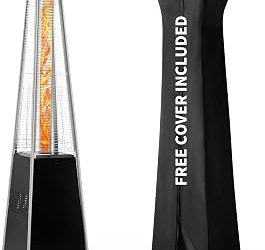
This is the reference point for a residential natural gas tower: 89 inches tall, push-button ignition, anti-tilt shutoff, and wheels so one person can reposition it. The hammered silver and pewter finish reads as intentional furniture rather than restaurant equipment, which matters on a patio you actually decorate.
Adjustable-Height Natural Gas Patio Heater with 24-Foot Hose
The long hose is the standout feature here, letting you place heat where seating is instead of where the gas stub happens to sit, and the 55-to-78-inch adjustable column makes shoulder-season use and winter storage both easier. CE and CSA certification covers the safety fundamentals.
JXiQ 400K BTU Natural Gas Heater with Copper Exchanger
Worth being direct: this is a high-output pool and spa heater, not a patio tower. The copper heat exchanger and 400,000 BTU rating are aimed at bringing large bodies of water up to temperature quickly, and it belongs on a professionally installed equipment pad.
Raypak PR156AENC 150,000 BTU Natural Gas Heater
Raypak’s 150,000 BTU unit is a well-regarded spa and small-pool heater with a strong service parts network, which is the real reason installers keep specifying it. Choose it for a hot tub or plunge pool, not for warming a seating area.
Pentair EC-462024 125K BTU Natural Gas Heater
Another hydronic option, sold at a lower price because the warranty coverage is limited compared to Pentair’s standard channel. It’s a reasonable value for a spa or compact pool if you’re comfortable with reduced warranty protection and using a licensed installer.
Frequently Asked Questions
Can I convert a propane patio heater to natural gas?
Only with a manufacturer-approved conversion kit, and many models don’t offer one. The orifice and regulator differ because natural gas runs at lower pressure, so improvising is genuinely unsafe. Buy a unit built for natural gas from the start.
How many BTUs do I need for my patio?
For a typical residential seating area, 40,000 to 50,000 BTU per heater is the sweet spot. Covered patios hold heat better and need less; open decks with wind exposure often need a second unit rather than a bigger one.
Do these require professional installation?
The heater itself usually assembles with basic tools, but tapping into your gas line should be done by a licensed plumber or gas fitter. Many jurisdictions also require a permit for a new outdoor gas connection.
Can natural gas patio heaters be used under a covered porch?
Some can, but only with the clearances the manufacturer specifies, typically several feet of overhead and side clearance. Never operate one in an enclosed space or garage, since combustion byproducts need open air to disperse.
Final Thoughts
For an actual patio, the Golden Flame XL-Series is the pick that balances output, safety hardware, and a finish that suits a well-designed outdoor room, while the adjustable-height model with the 24-foot hose is the smarter buy when your gas stub-out is nowhere near your seating. If your project is heating water rather than people, the Raypak PR156AENC is the more dependable long-term choice thanks to its parts availability and installer support.