Key takeaways
- Measure the seating group, not the room: Tape out your rug footprint on the floor and confirm it extends past the front legs of every sofa and chair in the arrangement. If your seating spans 11 feet, a 9×12 is the honest answer.
- Leave a consistent border: Aim for 12 to 18 inches of exposed floor between the rug edge and your walls. Wall-to-wall coverage kills the sense of depth; a stingy 4-inch gap looks like a mistake.
- Match pile to traffic: Low-pile rugs handle chair legs, robot vacuums, and doorway clearance far better than plush constructions. Save high pile for bedrooms where softness underfoot matters more than durability.
- Decide washable versus woven early: Machine-washable rugs are transformative with toddlers and shedding pets, but they trade some density and hand-feel. Traditional powerloomed rugs hide soil well and last longer, though spills require spot treatment.
- Budget for a pad: Non-slip backing helps, but a separate rug pad adds cushion, protects hardwood, and stops edge curl on lightweight rugs. It’s a small line item that meaningfully improves how the rug feels.
What's inside
Undersized rugs are the single most common misstep in living room design, and it’s rarely a matter of taste. A 5×7 floating in the middle of a 14-foot room reads as an afterthought, visually shrinking the space and leaving sofa legs stranded on bare floor. The fix is almost always scale: a rug large enough to sit under the front legs of your seating, anchoring the conversation area rather than apologizing for it. For most living rooms, that means 8×10 or 9×12, not the 5×8 that feels safer in the shopping cart.
This guide breaks down how to size a living room rug with confidence, then reviews six large-format options worth considering in 2026. You’ll find washable low-pile picks for households with pets and kids, plus a pair of traditional powerloomed designs from SAFAVIEH for rooms that want more visual weight. Each recommendation notes who it suits and where it compromises, so you can match the rug to how you actually live.
As an Amazon Associate we earn from qualifying purchases.




How to Choose a Rug Size For Living Room (2026)
- Measure the seating group, not the room: Tape out your rug footprint on the floor and confirm it extends past the front legs of every sofa and chair in the arrangement. If your seating spans 11 feet, a 9×12 is the honest answer.
- Leave a consistent border: Aim for 12 to 18 inches of exposed floor between the rug edge and your walls. Wall-to-wall coverage kills the sense of depth; a stingy 4-inch gap looks like a mistake.
- Match pile to traffic: Low-pile rugs handle chair legs, robot vacuums, and doorway clearance far better than plush constructions. Save high pile for bedrooms where softness underfoot matters more than durability.
- Decide washable versus woven early: Machine-washable rugs are transformative with toddlers and shedding pets, but they trade some density and hand-feel. Traditional powerloomed rugs hide soil well and last longer, though spills require spot treatment.
- Budget for a pad: Non-slip backing helps, but a separate rug pad adds cushion, protects hardwood, and stops edge curl on lightweight rugs. It’s a small line item that meaningfully improves how the rug feels.
The Best Rug Size For Living Room (2026)s Reviewed
8×10 Washable Modern Abstract Rug, Blue Grey
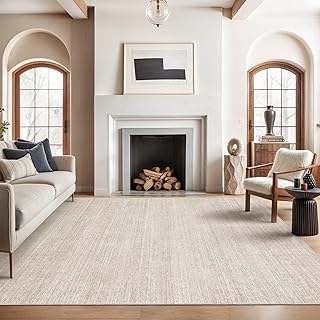
This is the sweet spot for a standard 12×14 living room: large enough to catch the front legs of a full sectional, thin enough to slide under an existing sofa without lifting furniture. The water-repellent low pile and non-slip backing make it a genuinely practical choice for open-plan rooms where the dining area bleeds into the seating zone.
9×12 Non-Slip Washable Rug, Beige
If your seating group runs long or you’re working with a great room, the extra three feet here does real work, pulling a sofa, two chairs, and a coffee table into one legible zone. It’s notably thin and lightweight, which makes laundering feasible for one person but means a rug pad is close to mandatory.
SAFAVIEH Evoke 9×12, Ivory & Taupe
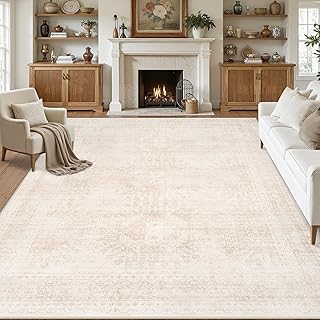
The distressed pattern is the quiet workhorse of this list: enough visual texture to disguise everyday traffic, neutral enough to survive a sofa swap. SAFAVIEH’s powerloomed construction gives it more presence and density than the washable options, and the ivory-taupe palette suits transitional and warm-minimal rooms equally well.
SAFAVIEH Lyndhurst 9×12, Red & Black
For rooms that need an anchor rather than a backdrop, this traditional oriental design delivers saturated color and intricate detail that reads as intentional against modern furniture. The dense pile is forgiving of foot traffic and non-shedding, making it a strong pick for formal living rooms and high-use family spaces alike.
8×10 Vintage Boho Washable Rug, Beige
A softer, more lived-in alternative to flat neutrals, with faded medallion detailing that grounds layered, collected interiors. The low pile sits comfortably under a coffee table or dining set, and washability makes it a reasonable choice for nurseries and home offices where accidents are routine.
Frequently Asked Questions
Is 8×10 big enough for a living room?
For rooms up to roughly 12×15 feet with a standard sofa and two chairs, yes. Once your seating group exceeds about 10 feet across, or the room runs past 15 feet, step up to 9×12 to keep furniture legs on the rug.
Should all furniture sit on the rug?
Not necessarily. Full placement is the most polished look, but the front-legs-on approach is the practical standard and works well in most rooms. What you want to avoid is furniture entirely off the rug, which severs the visual connection.
Are washable rugs durable enough for daily use?
Modern washable rugs with TPE backing hold up well to normal living room traffic and are excellent for pet households. They’re thinner than woven rugs, so pair them with a pad, and check your washer capacity before committing to a 9×12.
How much floor should show around the rug?
Twelve to eighteen inches on each side is the reliable range. In smaller rooms you can tighten to eight inches; in large open spaces, a wider margin helps define the seating zone as its own room within a room.
Final Thoughts
For most living rooms, start with the 8×10 washable abstract in blue grey, which balances scale, practicality, and price for a standard layout. If your room is larger or your seating group is long, the 9×12 non-slip beige option scales up without adding bulk, while the SAFAVIEH Evoke 9×12 is the pick when you want the density and longevity of a traditional woven rug.