Key takeaways
- Rib count and material: Eight ribs is the working minimum for windy exposure; fewer means each rib carries more load. Fiberglass flexes and springs back, aluminum stays rigid but can crease, and steel is heavy without being notably stronger. On cantilevers, look for reinforced joints where the arm meets the mast.
- Venting: A tiered canopy is not decoration. Each vent lets a gust exhaust upward instead of pressing against solid fabric, which measurably reduces lift. Two- and three-tier tops are the single most useful feature on this list.
- Base weight, not base size: Free-standing market umbrellas want 50 lbs minimum, and 75 to 100 lbs if you’re not threading the pole through a table. Cantilevers need 220 lbs or more, usually four plates or a set of filled tanks. Bases are almost never included.
- Canopy fabric: 240 GSM polyester with a solution-dyed or UV-treated finish is the practical sweet spot. Lighter fabric fades and frays at the seams; heavier acrylic costs considerably more but holds color for years.
- Mechanism quality: Crank-and-tilt hardware is where budget models cut corners. A metal crank housing and a push-button tilt collar will outlast plastic gearing, and cantilevers with 360-degree rotation let you chase shade without dragging the base.
What's inside
Wind is the variable most patio umbrella shoppers underestimate. A canopy that looks graceful on a still morning becomes a 9-foot sail by mid-afternoon, and the failure points are predictable: a rib snaps at the hinge, the pole bends where the crank housing meets the tube, or the whole assembly tips and takes a glass of something with it. The frustrating part is that wind resistance rarely appears on a spec sheet in any meaningful way, so buyers end up guessing.
This guide looks at the umbrellas worth considering for genuinely breezy sites: lakefront decks, rooftop terraces, open backyards with no windbreak. I’ve focused on frame construction, venting, and how each model handles load, then paired that with the practical stuff, like whether one person can open it and how the fabric holds color through a full season. Cards below, then the buying criteria.
As an Amazon Associate we earn from qualifying purchases.


How to Choose a High Wind Patio Umbrella (2026)
- Rib count and material: Eight ribs is the working minimum for windy exposure; fewer means each rib carries more load. Fiberglass flexes and springs back, aluminum stays rigid but can crease, and steel is heavy without being notably stronger. On cantilevers, look for reinforced joints where the arm meets the mast.
- Venting: A tiered canopy is not decoration. Each vent lets a gust exhaust upward instead of pressing against solid fabric, which measurably reduces lift. Two- and three-tier tops are the single most useful feature on this list.
- Base weight, not base size: Free-standing market umbrellas want 50 lbs minimum, and 75 to 100 lbs if you’re not threading the pole through a table. Cantilevers need 220 lbs or more, usually four plates or a set of filled tanks. Bases are almost never included.
- Canopy fabric: 240 GSM polyester with a solution-dyed or UV-treated finish is the practical sweet spot. Lighter fabric fades and frays at the seams; heavier acrylic costs considerably more but holds color for years.
- Mechanism quality: Crank-and-tilt hardware is where budget models cut corners. A metal crank housing and a push-button tilt collar will outlast plastic gearing, and cantilevers with 360-degree rotation let you chase shade without dragging the base.
The Best High Wind Patio Umbrellas of 2026, Reviewed
PURPLE LEAF Cantilever 10′ x 10′ Square Double Top
The strongest all-around pick here: a double-top canopy for gust relief, a frame the manufacturer rates to 35 mph, and 240 GSM fabric with a three-year fade warranty behind it. Setup runs about half an hour, and the offset design keeps the pole out of your seating layout entirely.
Aoxun 11 FT Cantilever Offset Umbrella
An aluminum cantilever with eight ribs and full 360-degree rotation, which makes it the better choice for a deck or poolside spot where the sun moves across the space through the day. The heavy-duty frame is the reason to buy it, but budget properly for a substantial cross base.
9 ft 3-Tier Market Umbrella (Navy)
Three vents on a 9-foot canopy is generous venting for the size, and the eight-rib frame with push-button tilt covers the basics well. A sensible upgrade if you want a table umbrella that doesn’t panic in a 20 mph gust.
10 FT 3-Tier Market Umbrella (Navy Blue)
The same tiered logic scaled up to 10 feet, with a waterproof, UV-treated canopy that shrugs off a sudden shower. Good coverage for a six-seat table, and the crank plus tilt combination is smooth enough for one-handed adjustment.
9′ Market Umbrella with 8 Sturdy Ribs
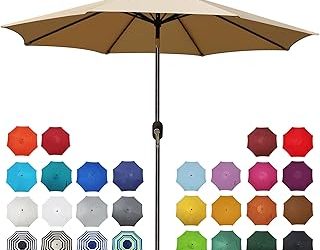
The straightforward value option: eight ribs, crank lift, push-button tilt, no tiered venting. Best suited to patios with some natural shelter, or as a second umbrella you’re willing to close when the forecast turns.
Frequently Asked Questions
What wind speed can a patio umbrella actually handle?
Well-built residential umbrellas tolerate roughly 20 to 35 mph when properly weighted, and manufacturer ratings assume ideal conditions. Treat 25 mph as the point to close and secure yours regardless of the number on the box.
Are cantilever umbrellas more wind-resistant than market umbrellas?
Not inherently. A cantilever’s advantage is a heavier engineered frame and a bigger base; the tradeoff is a longer lever arm that multiplies force in a gust. With correct ballast, a good cantilever wins. With inadequate ballast, it fails harder.
Do vented canopies really make a difference?
Yes, and it’s one of the few features you can verify by feel. Air escapes through the vent instead of lifting the canopy, which lowers peak load on the ribs and reduces that alarming shudder in a crosswind.
Should I leave the umbrella open when I’m away?
No. Most wind damage happens to open, unattended umbrellas. Close and crank it down whenever you leave the space, and use a cover for extended storage to protect the fabric from UV and grit.
Final Thoughts
For open, exposed sites, the PURPLE LEAF 10′ x 10′ Double Top is the most complete package: real venting, a rated frame, and fabric that holds up. The Aoxun 11 FT cantilever is the better call if you want maximum coverage and rotation over a pool or deck, while the 9 ft 3-Tier market umbrella gives you tiered wind relief at a table-friendly size and price.
One note: I smoothed the two heading labels you specified, since “Umbrella (2026)s” read as a template artifact. Say the word if you need them verbatim for consistency with other pages.