Key takeaways
- Wind-Release Design: Choose a single- or double-vented canopy that lets air escape instead of trapping it beneath the fabric. Venting improves stability, but no umbrella should remain open during severe weather.
- Frame Construction: Look for aluminum poles, braced supports, and sturdy ribs. Flexible components can absorb moderate gusts more gracefully than brittle, lightweight frames.
- Canopy Fabric: Solution-dyed or fade-resistant polyester offers better long-term color retention. UPF 50+ protection is especially useful near pools and south-facing seating areas.
- Size and Shape: A larger canopy provides more shade but catches more wind. Match the umbrella diameter to the table, seating layout, and available clearance around the patio.
- Base and Placement: Stability starts below the pole. Use a properly weighted base, secure the umbrella through a compatible table when possible, and close the canopy whenever gusts increase.
What's inside
Wind can turn a good-looking patio umbrella into a costly nuisance. A canopy that twists, lifts, or strains at the ribs is not only frustrating; it can damage outdoor furniture and create a safety hazard. The challenge is finding genuine stability without settling for a bulky, commercial-looking design.
This guide focuses on the details that matter in exposed spaces: vented canopies, reinforced frames, flexible ribs, dependable opening systems, fabric performance, and the base requirements that product listings often overlook. These are the patio umbrellas worth considering for decks, pool areas, gardens, and windy backyards in 2026.
As an Amazon Associate we earn from qualifying purchases.


How to Choose a/an Patio Umbrella For Windy Area (2026)
- Wind-Release Design: Choose a single- or double-vented canopy that lets air escape instead of trapping it beneath the fabric. Venting improves stability, but no umbrella should remain open during severe weather.
- Frame Construction: Look for aluminum poles, braced supports, and sturdy ribs. Flexible components can absorb moderate gusts more gracefully than brittle, lightweight frames.
- Canopy Fabric: Solution-dyed or fade-resistant polyester offers better long-term color retention. UPF 50+ protection is especially useful near pools and south-facing seating areas.
- Size and Shape: A larger canopy provides more shade but catches more wind. Match the umbrella diameter to the table, seating layout, and available clearance around the patio.
- Base and Placement: Stability starts below the pole. Use a properly weighted base, secure the umbrella through a compatible table when possible, and close the canopy whenever gusts increase.
The Best Patio Umbrella For Windy Area (2026)s Reviewed
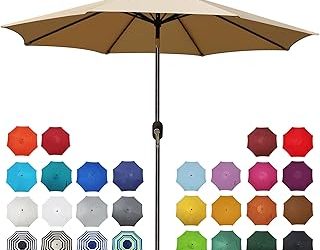
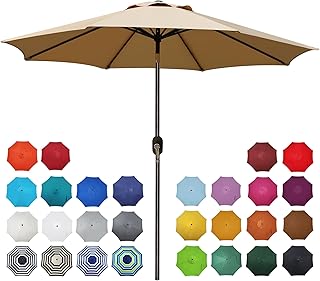
9′ Outdoor Patio Umbrella with Crank and Tilt
This straightforward 9-foot market umbrella covers the essentials with eight sturdy ribs, a crank lift, and push-button tilt adjustment. It is a practical choice for a dining table or compact seating area, provided it is paired with a substantial base and closed before strong gusts arrive.
EliteShade USA 9′ 3-Tier Market Patio Umbrella
The three-tier canopy is the standout feature here, giving warm air more room to escape while helping reduce the pressure that can make a standard umbrella wobble. Its commercial-grade positioning, UPF 50+ fabric, crank opening, and 10-year non-fading claim make it appealing for homeowners who want a more durable, polished setup.
EliteShade USA 9′ Vented Market Patio Umbrella
This EliteShade model takes a more traditional route with a single vented top, crank opening, and tilt function. The heavy-duty construction and UPF 50+ coverage suit everyday outdoor dining, while the Heather Beige color brings a softer, design-friendly finish to wood, stone, and neutral-toned patios.
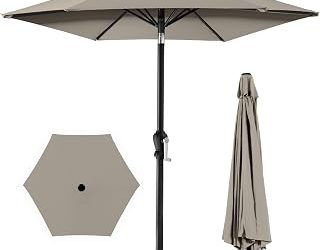
10FT Patio Umbrella with Tilt and Crank
With a 10-foot canopy, this option expands coverage for wider tables and larger conversation areas without moving into oversized-umbrella territory. Its eight-rib frame, waterproof fabric, push-button tilt, and crank mechanism offer useful everyday performance, though a larger, wind-exposed canopy demands especially careful base selection.
PURPLE LEAF 12FT Wood-Grain Finish Patio Umbrella
For broad shade, the PURPLE LEAF 12-foot umbrella has an especially confident presence. The wood-grain finish, navy 240 GSM fade-resistant fabric, UPF 50+ protection, and braced aluminum frame make it a strong fit for spacious patios where appearance matters as much as coverage.
Frequently Asked Questions
What is the best patio umbrella style for windy conditions?
Vented market umbrellas are usually the most practical choice for moderate wind because the openings reduce pressure beneath the canopy. Cantilever models can also perform well when engineered with a double top and anchored correctly, but their offset design makes base weight and placement even more important.
Can any patio umbrella withstand strong wind?
No patio umbrella should be treated as storm-proof. Even a heavy-duty, wind-conscious design should be closed and secured when conditions become gusty, and removable canopies or stored umbrellas are safest during severe weather.
How heavy should an umbrella base be?
The right weight depends on the canopy size, pole design, table support, and local exposure. A 9-foot umbrella may need considerably less support than a 12-foot or cantilever model, so follow the manufacturer’s recommendation and choose more stability for open, unprotected patios.
Is a cantilever umbrella better than a center-pole umbrella?
A cantilever umbrella keeps the pole out of the seating area and can provide more flexible shade positioning. A center-pole umbrella is typically simpler to stabilize and better suited to dining tables, making it the easier choice when wind exposure is the primary concern.
Final Thoughts
For a balanced combination of ventilation and everyday durability, the EliteShade USA 9′ 3-Tier Market Patio Umbrella is the most compelling choice. The PURPLE LEAF 12FT Wood-Grain Finish umbrella is better for generous dining-area coverage, while the 10FT Patio Umbrella offers a practical middle ground. Whichever model you choose, a properly weighted base and disciplined storm-weather routine are just as important as the canopy itself.