Key takeaways
- Seat depth first: Look for 18 to 20 inches. Anything deeper and the front edge presses your calves, cutting circulation and tilting your pelvis backward. This single measurement matters more than overall chair width or height.
- Seat-to-floor height: Aim for 17 to 18 inches so your feet rest flat with knees at roughly 90 degrees. Higher seats leave you dangling, which throws your weight onto your tailbone instead of your thighs.
- Extended footrest length: Petite-specific models often add 4 to 5 inches of footrest travel. Counterintuitive, but shorter users need proportionally more coverage because the ottoman starts further from their heels.
- Lumbar placement: The backrest’s built-in curve should meet the small of your back, not your ribcage. Adjustable power headrests help here, letting you fine-tune head position independently of the recline angle.
- Motor count: Single motors move backrest and footrest together. Dual and triple motor setups unlock infinite positions, including true lay-flat and zero-gravity, which is where short users get the most relief.
What's inside
Most recliners are engineered around a 5’10” frame. If you’re 5’4″ or under, that means a seat pan that pushes your knees forward, a backrest whose lumbar curve lands somewhere between your shoulder blades, and a footrest that stops short of your heels. The result is the same every time: you perch instead of settle, your feet dangle, and after twenty minutes your lower back is doing the work the chair was supposed to do. It isn’t a comfort preference problem. It’s a dimensional mismatch.
This guide focuses on recliners built to petite proportions rather than scaled-down versions of standard models. We looked at seat depth, seat-to-floor height, backrest geometry, and footrest extension, plus the practical extras that matter when a chair becomes a daily station: lift assistance, heat, massage, and charging within arm’s reach. Below are six chairs worth considering in 2026, with notes on who each one actually fits.
As an Amazon Associate we earn from qualifying purchases.


How to Choose a Recliner For Short Person (2026)
- Seat depth first: Look for 18 to 20 inches. Anything deeper and the front edge presses your calves, cutting circulation and tilting your pelvis backward. This single measurement matters more than overall chair width or height.
- Seat-to-floor height: Aim for 17 to 18 inches so your feet rest flat with knees at roughly 90 degrees. Higher seats leave you dangling, which throws your weight onto your tailbone instead of your thighs.
- Extended footrest length: Petite-specific models often add 4 to 5 inches of footrest travel. Counterintuitive, but shorter users need proportionally more coverage because the ottoman starts further from their heels.
- Lumbar placement: The backrest’s built-in curve should meet the small of your back, not your ribcage. Adjustable power headrests help here, letting you fine-tune head position independently of the recline angle.
- Motor count: Single motors move backrest and footrest together. Dual and triple motor setups unlock infinite positions, including true lay-flat and zero-gravity, which is where short users get the most relief.
The Best Recliners For Short People (2026) Reviewed
MCombo 3 Motor Small Power Lift Recliner 7631
Three independent motors give you full control over back, legs, and headrest, so you can build a position that fits your torso length instead of accepting a preset. The petite-scaled seat pairs with a 4.7-inch extended footrest, and the lift function makes standing up genuinely effortless. Fabric upholstery keeps it visually light in smaller rooms.
MCombo Dual Motor Lift Recliner 7893
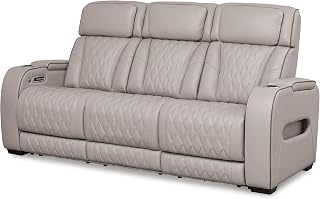
The zero-gravity setting is the reason to pick this one: legs elevate above heart level, which takes pressure off the lumbar spine in a way standard recline angles can’t match. Breathable faux leather in cream white reads as a considered design choice rather than a mobility device, which matters if the chair lives in your main living space.
MCombo Triple Motor Fabric Recliner 7661
A medium-frame chair with petite-friendly seating geometry, this is the sweet spot for anyone between 5’2″ and 5’6″ who finds small-size models slightly tight. The navy blue fabric holds up well against daily wear, and the adjustable headrest lets shorter users avoid the forward neck push common to fixed-back designs.
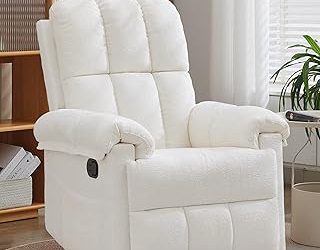
Sweetcrispy Massage Recliner Chair
No lift mechanism here, which keeps the footprint tighter and the price lower. It’s the right call if you’re mobile and simply want a properly proportioned seat with real lumbar support. The manual recline and slim profile suit apartments, studios, and bedroom corners where a bulkier chair would dominate.
MCombo Small Lift Recliner 7408
Purpose-built for petite users, with both USB-A and Type-C charging so you’re not hunting for adapters. FSC and OEKO-TEX certifications back up the materials, and the extended footrest covers the full leg without requiring the chair to grow taller. A sensible everyday pick.
Frequently Asked Questions
What seat height works best if I’m under 5’4″?
Between 17 and 18 inches from floor to seat cushion. Measure from the floor to the back of your knee while seated in a dining chair and match that number. Your feet should rest flat without straining.
Do I need a lift recliner if I’m not elderly?
Not necessarily, but lift function helps anyone with knee, hip, or back issues, regardless of age. It also raises the effective seat height on demand, which shorter users sometimes find useful when transitioning to standing.
Is heat and massage worth the extra cost?
Heat has real value for lower-back stiffness, particularly in the lumbar zone. Massage is more subjective. Try the chair’s intensity range if possible, since vibration motors sized for larger frames can feel overwhelming in a petite chair.
How much clearance do I need behind the chair?
Most lay-flat models need 4 to 12 inches from the wall depending on the mechanism. Check the specific model’s wall clearance spec before committing to a tight corner placement.
Final Thoughts
For most short users, the MCombo 7631 delivers the best balance of petite sizing and three-motor adjustability, while the 7893 earns its place if zero-gravity positioning and a cleaner aesthetic matter to you. If you don’t need lift assistance, the Sweetcrispy handles small-space comfort at a lower cost without compromising on lumbar support.