Key takeaways
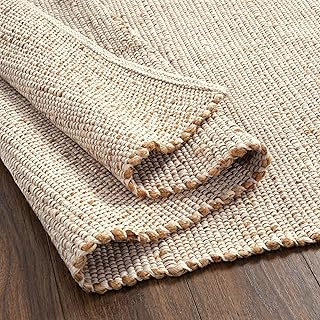
- Weave type: Braided jute gives you rope-like dimension and a chunky, cabin-adjacent look. Flatwoven and boucle weaves sit lower, slide under doors and furniture legs more easily, and read as more contemporary in an open-plan space.
- Fiber blend: Pure jute is the most textural and the most affordable. Blends soften the equation meaningfully — cotton adds pliability and a smoother hand, while a wool component brings resilience and helps the rug spring back under furniture indentations.
- Pile height: Anything under roughly three-quarters of an inch will vacuum easily and let doors clear. Higher-loft braids feel more substantial underfoot but trap crumbs and pet hair in the grooves.
- Shedding expectations: All natural jute sheds initially. Tighter weaves and rugs with a bound or stitched border shed less and stop sooner, which matters if the rug is going on hardwood rather than over carpet.
- Size and layout: Front legs of the sofa on the rug is the minimum for a room to feel intentional. For most living rooms that means 8×10 rather than 5×7 — measure before you fall for a price.
What's inside
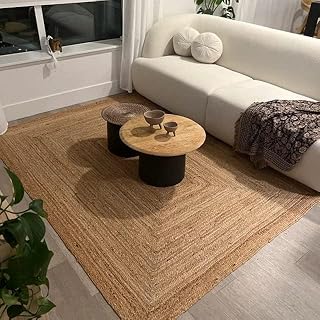
Jute has quietly become the workhorse of the neutral living room. It reads as texture rather than pattern, it grounds a sofa without competing with it, and it photographs beautifully in every styled interior you’ve saved. The gap between that image and the reality of ordering one online is where most people get stuck: some jute arrives stiff enough to feel like doormat coir, some sheds fibers across the floor for weeks, and some looks nothing like the warm oatmeal tone in the listing photo. Weave structure, fiber blend, and pile height account for almost all of that variation, and none of it is obvious from a thumbnail.
This guide narrows the field to the jute rugs worth putting under a real living room — one with foot traffic, coffee tables, and possibly a dog. Below you’ll find our current picks, followed by the five specifications that actually predict whether you’ll like a jute rug after six months, honest notes on each option, and answers to the questions that come up most often once the rug is unrolled.
As an Amazon Associate we earn from qualifying purchases.


How to Choose a Jute Rug For Living Room (2026)
- Weave type: Braided jute gives you rope-like dimension and a chunky, cabin-adjacent look. Flatwoven and boucle weaves sit lower, slide under doors and furniture legs more easily, and read as more contemporary in an open-plan space.
- Fiber blend: Pure jute is the most textural and the most affordable. Blends soften the equation meaningfully — cotton adds pliability and a smoother hand, while a wool component brings resilience and helps the rug spring back under furniture indentations.
- Pile height: Anything under roughly three-quarters of an inch will vacuum easily and let doors clear. Higher-loft braids feel more substantial underfoot but trap crumbs and pet hair in the grooves.
- Shedding expectations: All natural jute sheds initially. Tighter weaves and rugs with a bound or stitched border shed less and stop sooner, which matters if the rug is going on hardwood rather than over carpet.
- Size and layout: Front legs of the sofa on the rug is the minimum for a room to feel intentional. For most living rooms that means 8×10 rather than 5×7 — measure before you fall for a price.
The Best Jute Rug For Living Room (2026)s Reviewed
nuLOOM Ashli Natural Solid Handwoven, 8′ x 10′
The most versatile pick here, and the one we’d recommend to someone furnishing a first apartment or a rental. Its handwoven solid construction keeps the surface calm and the tone genuinely neutral, so it works equally well under a linen sectional or a mid-century leather sofa.
SAFAVIEH Natural Fiber Handmade Tassel Jute, 6′ x 9′
Safavieh’s Natural Fiber line has earned its reputation on durability, and the tassel detailing here softens what can otherwise be a very utilitarian material. The 6×9 footprint suits narrower rooms and high-traffic paths where a full 8×10 would crowd the walls.
Natural Jute & Wool Mini Check with 4″ Border, 8′ x 10′
The smartest construction on this list: the wool content adds bounce and stain resilience that pure jute can’t match, and the mini-check gives you subtle visual movement instead of a flat field. At roughly a half-inch pile with a defined border, it’s the pick for a room that needs texture but also needs to look finished.
GRUHUM Jute Cotton Reversible, 5′ x 8′
The 70/30 jute-cotton blend is noticeably kinder to bare feet than straight jute, and the reversible build means you can flip it once a favorite traffic lane starts to show. A strong choice for smaller sitting rooms, reading corners, or anyone who’s been put off by how coarse jute can feel.
KEMA Jute Braided Reversible, 5′ x 7′
A rustic, hand-braided look with real dimension, and the reversible design effectively doubles its lifespan. Best treated as a layering piece or an accent under a chair grouping rather than the sole anchor of a large living room.
Frequently Asked Questions
How much does a jute rug shed?
Expect visible fiber for the first two to four weeks, concentrated near the edges. Vacuum with the beater bar off or on a bare-floor setting, and shedding should taper off substantially. It never quite reaches zero, but it stops being noticeable.
Is jute comfortable enough for a living room?
On its own, pure jute is firm and slightly abrasive. If comfort is a priority, choose a cotton or wool blend and add a felt rug pad — the pad does more for underfoot feel than any difference between brands.
Can jute handle pets and spills?
Pets, generally yes; the texture hides paw traffic well. Liquid is the real limitation, since jute absorbs moisture and can develop watermarks or brown discoloration. Blot immediately, never saturate, and skip jute for dining zones where wine is a regular guest.
Do I need a rug pad?
Yes. A pad prevents the rug from creeping on hardwood, cushions the weave against grit that grinds fibers down from below, and protects your floor finish. It’s the cheapest way to extend a natural-fiber rug’s life.
Final Thoughts
For most living rooms, the nuLOOM Ashli is the safest bet on tone and scale, while the jute-and-wool mini-check is the upgrade worth paying for if you want the rug to stay resilient under real furniture. If coarse texture has been your hesitation, start with the GRUHUM jute-cotton blend and add a felt pad — that combination converts more jute skeptics than anything else on this list.