Key takeaways
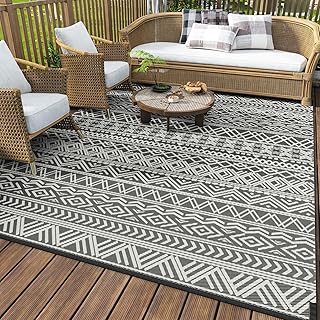
- Polypropylene for softness: Machine-woven polypropylene reads closest to an indoor rug underfoot, resists fading, and takes a hose-down without matting. It’s the default choice for covered patios and three-season porches where comfort matters as much as durability.
- Recycled plastic straw for wet zones: Flat woven polypropylene straw mats shed water instantly and dry in minutes. If your space gets direct rain, poolside splash, or morning dew, this is the category that won’t go musty on you.
- Skip natural fiber outdoors: Real jute, sisal, and seagrass absorb moisture, stain permanently, and eventually mildew. Look for synthetic rugs engineered to mimic that texture instead — you get the linen-adjacent look without the rot.
- Check drainage and backing: Open-weave constructions and backing-free flatweaves let air move underneath. Rubber-backed rugs trap water against wood and composite decking, which causes discoloration and, over time, real damage.
- Size up, then anchor: Measure your furniture footprint, not the patio. Front legs of seating should sit on the rug at minimum. Add a low-profile pad or weighted corners if you’re in a windy spot.
What's inside
Outdoor rugs live a harder life than anything else in the home. A single season on a west-facing patio means UV bleaching, sprinkler overspray, pollen, spilled rosé, and the slow grind of patio furniture legs. Most shoppers pick by pattern first and discover material second, usually the moment a rug starts holding water underneath and leaving a dark shadow on the decking. The fabric is the actual product here. Everything else is decoration.
This guide breaks down the three materials worth your money in 2026 — polypropylene flatweaves, recycled plastic straw mats, and jute-look synthetics — and where each one genuinely belongs. Below you’ll find the specific rugs I’d put on a covered porch versus an exposed deck, plus what to check before you commit to a size.
As an Amazon Associate we earn from qualifying purchases.



How to Choose a Material For An Outdoor Rug (2026)
- Polypropylene for softness: Machine-woven polypropylene reads closest to an indoor rug underfoot, resists fading, and takes a hose-down without matting. It’s the default choice for covered patios and three-season porches where comfort matters as much as durability.
- Recycled plastic straw for wet zones: Flat woven polypropylene straw mats shed water instantly and dry in minutes. If your space gets direct rain, poolside splash, or morning dew, this is the category that won’t go musty on you.
- Skip natural fiber outdoors: Real jute, sisal, and seagrass absorb moisture, stain permanently, and eventually mildew. Look for synthetic rugs engineered to mimic that texture instead — you get the linen-adjacent look without the rot.
- Check drainage and backing: Open-weave constructions and backing-free flatweaves let air move underneath. Rubber-backed rugs trap water against wood and composite decking, which causes discoloration and, over time, real damage.
- Size up, then anchor: Measure your furniture footprint, not the patio. Front legs of seating should sit on the rug at minimum. Add a low-profile pad or weighted corners if you’re in a windy spot.
The Best Material For An Outdoor Rug (2026)s Reviewed
Unique Loom Casual Heathered Indoor/Outdoor Flatweave
This heathered light gray and ivory flatweave is the most versatile pick here — the tonal variation hides dust and paw prints far better than a flat solid, and the low pile means it slides cleanly under a bistro table. At roughly 4×6, it’s sized for balconies, entry landings, and reading nooks rather than full dining sets.
JONATHAN Y Estrella Boho Medallion, Navy/Gray
The textured weave gives this navy medallion real dimension in daylight, which is where most printed outdoor rugs fall apart visually. In 8×10 it comfortably grounds a four-seat conversation set, and the non-shedding construction earns its high-traffic and pet-friendly billing.
JONATHAN Y Ourika Moroccan Geometric, Orange/Cream
Warmer and more graphic than the Estrella, this orange-and-cream Moroccan pattern is the right call for shaded patios that need lifting. Same easy-clean textured weave, same 8×10 footprint — the choice between the two is purely about whether your palette runs cool or warm.
Mykonos Reversible Recycled Plastic Mat, Gray & White
Made from 100% recycled plastic and genuinely crease-free out of the box, this is the one I’d put on an uncovered deck or beside a pool. It’s reversible, weather- and UV-resistant, and hoses off completely — practical rather than plush, which is exactly the assignment.
MontVoo Waterproof Plastic Straw Outdoor Rug, Boho Grey
The most travel-friendly option: light, foldable, and reversible for two looks from one rug. At 5×8 it suits RV awnings, camping setups, and small balconies where you want something you can shake out and stow in seconds.
Frequently Asked Questions
Can I leave an outdoor rug out all winter?
Synthetic rugs will survive it, but they’ll look better longer if you don’t. Snow load and freeze-thaw cycles push grit deep into the weave. Roll and store yours somewhere dry once the season turns.
Will an outdoor rug damage my deck?
Only if water can’t escape. Choose an unbacked flatweave or open plastic straw construction, lift the rug periodically to let the boards dry, and avoid rubber backing on wood and composite entirely.
How do I clean one?
Sweep or shake first, then rinse with a hose and mild dish soap. Use a soft brush on stains, rinse thoroughly, and dry flat. Skip pressure washers, which can fray flatweave edges.
Do outdoor rugs work indoors?
They’re excellent in mudrooms, kitchens, and basements. The tradeoff is a firmer hand than wool or viscose, so they suit high-traffic utility spaces better than bedrooms.
Final Thoughts
For most covered patios, the JONATHAN Y Estrella in navy and gray delivers the best balance of texture, scale, and cleanability. If your space takes weather head-on, the Mykonos recycled plastic mat is the more sensible investment, and the Unique Loom heathered flatweave remains the easiest choice for smaller balconies and landings.