Key takeaways
- Verified weight capacity: Look for a stated rating of 400 pounds or more, and treat it as a working ceiling rather than a target. Chairs rated well above your weight age far more gracefully, because the mechanism and welds are operating inside their comfortable range instead of at the edge of it.
- Seat width and depth: Anything under 22 inches of usable seat width will feel confining for a broad frame. Models in the 26 to 28 inch range let your hips settle without pressure from the arm posts, and a deeper seat pan keeps your thighs supported instead of dangling at the front edge.
- Footrest extension: Tall users lose the benefit of a recliner when their heels hang past the ottoman. Extended or supplemental footrests, often listed as an added four to five inches, make the difference between real leg support and a chair that only fits you when you sit upright.
- Manual versus power lift: Manual mechanisms are simpler, cheaper, and have fewer failure points. Power lift models matter if standing up unassisted is difficult, and dual or triple motor systems let you position the back and legs independently rather than locking them into a single sweep.
- Foam density and frame material: High-density foam over a hardwood or reinforced steel frame resists the compression that turns a new chair into a sagging one. Chenille and heavy-weave fabrics also handle friction better than thin faux leather, which tends to crack first at the seat seam.
What's inside
Most recliners are engineered for an imaginary average body, and anyone over 250 pounds knows exactly how that math fails. Seat cushions bottom out within a season, side rails creak under lateral load, and a 20-inch seat width forces shoulders into a permanent shrug. The frustrating part is that the spec that matters most, actual structural capacity, is often buried beneath marketing language about plushness and “generous proportions.”
This guide looks at recliners built around real load ratings, wider seat decks, and frames that hold their geometry over years of use. We weighed capacity claims against construction details, compared manual and power lift mechanisms, and noted which models genuinely accommodate taller frames rather than simply adding upholstery. Below are the picks worth your attention, followed by the buying criteria that separate a heavy-duty chair from a heavily padded one.
As an Amazon Associate we earn from qualifying purchases.


How to Choose a Recliner For Heavy Man (2026)
- Verified weight capacity: Look for a stated rating of 400 pounds or more, and treat it as a working ceiling rather than a target. Chairs rated well above your weight age far more gracefully, because the mechanism and welds are operating inside their comfortable range instead of at the edge of it.
- Seat width and depth: Anything under 22 inches of usable seat width will feel confining for a broad frame. Models in the 26 to 28 inch range let your hips settle without pressure from the arm posts, and a deeper seat pan keeps your thighs supported instead of dangling at the front edge.
- Footrest extension: Tall users lose the benefit of a recliner when their heels hang past the ottoman. Extended or supplemental footrests, often listed as an added four to five inches, make the difference between real leg support and a chair that only fits you when you sit upright.
- Manual versus power lift: Manual mechanisms are simpler, cheaper, and have fewer failure points. Power lift models matter if standing up unassisted is difficult, and dual or triple motor systems let you position the back and legs independently rather than locking them into a single sweep.
- Foam density and frame material: High-density foam over a hardwood or reinforced steel frame resists the compression that turns a new chair into a sagging one. Chenille and heavy-weave fabrics also handle friction better than thin faux leather, which tends to crack first at the seat seam.
The Best Recliner For Heavy Man (2026)s Reviewed
Manual Adjustable Oversized Recliner with Phone Holder
A sensible choice if you want capacity without electronics: it carries a 400-pound rating on a manual mechanism, so there is no motor to eventually replace. The extra-large footprint suits living rooms, nurseries, and RVs alike, and the integrated phone holder is a small practical touch that keeps the arm surface clear.
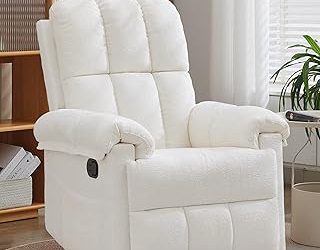
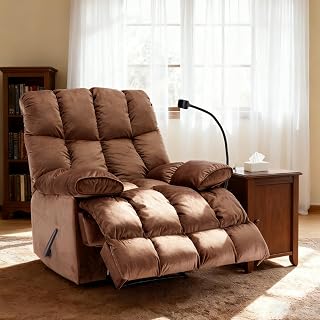
Euthymia Oversized Chenille Recliner
The chenille upholstery is the standout here, offering a textured, warm surface that wears better than budget leatherette and reads as intentional in a furnished room. Rated to 400 pounds with an extra-wide seat, it works as a single-seat sofa in bedrooms and secondary living spaces where a full sectional would overwhelm.
EONIX 3-Motor Power Lift Recliner
Three motors mean the backrest, footrest, and headrest all move independently, which is the closest you get to a genuinely custom position at this price. The extended footrest and lumbar pillow address the two complaints tall and heavy users report most often, and the 400-pound capacity is backed by a lift mechanism that assists standing rather than merely tilting.
FUNECORP Big Man Lay Flat Lift Recliner
At 28 inches wide with a true lay-flat range, this is the pick for anyone who sleeps in their chair or needs a near-horizontal rest position. Dual motors handle the movement, heat and vibration are built in, and the flip-arm storage with USB-C charging keeps essentials within reach without cluttering the side table.
MCombo Power Lift Recliner R7399
A cleaner, more restrained silhouette than most heavy-duty recliners, with a 26-inch seat, 150 degrees of recline, and a 4.7-inch extra footrest for longer legs. FSC-certified materials and straightforward assembly make it an easy recommendation for households that care how furniture looks as much as how it performs.
Frequently Asked Questions
How much weight capacity do I actually need?
Add a comfortable margin above your own weight, ideally 100 pounds or more. Recliners take dynamic loads when you drop into the seat or shift position, and those forces exceed your static weight considerably.
Is a power lift recliner worth the extra cost?
If you have knee, hip, or back limitations, yes. The lift function reduces strain on joints during the most demanding part of sitting, and multi-motor models let you fine-tune support. Otherwise a manual chair delivers the same seating comfort with fewer components to service.
What seat width fits a broad frame?
Measure your hips while seated and add four to six inches. Most users over 275 pounds are comfortable at 24 inches or wider, and 26 to 28 inches feels genuinely roomy rather than merely adequate.
How long should a heavy-duty recliner last?
With high-density foam and a reinforced frame, expect seven to ten years of daily use. Cushion compression is the usual first sign of wear, and it appears far sooner in chairs rated close to your body weight.
Final Thoughts
For most buyers, the EONIX 3-Motor Power Lift is the best balance of capacity, adjustability, and support for taller frames, while the FUNECORP Big Man Lay Flat earns its place if you want a chair that doubles as a bed. If you would rather skip motors entirely, the Euthymia Chenille Recliner delivers the same 400-pound rating with a fabric and profile that actually improves the room it sits in.