Key takeaways
- Reclined depth, not seated depth: Ask for or calculate the depth at full recline, then add four to six inches of clearance behind the chair. A frame that measures 33″ deep upright can extend past 60″ open, which is the number that determines whether your layout survives.
- Swivel radius: A 360° base needs a clear circle, not a clear rectangle. Measure the diagonal of the chair’s widest points and make sure nothing — table leg, floor lamp, crib rail — sits inside that sweep.
- Back height versus your torso: Compact chairs often shorten the back to save visual weight. If you’re over 5’10”, prioritise a high-back or ergonomic-back model so your head and shoulders are actually supported rather than perched.
- Upholstery that suits the room’s traffic: Chenille and polyester blends hide wear and clean up easily, making them sensible for nurseries and daily-use rooms. Velvet delivers more depth and colour saturation but shows pile marks and needs regular brushing.
- Mechanism and assembly reality: Manual push-back recliners are lighter, cheaper, and don’t need an outlet — a real advantage in tight rooms with limited plug access. Powered massage and heat models add comfort but also cable management and weight. Check that the assembled chair fits through your doorway; most ship in two or three pieces for exactly this reason.
What's inside
Square footage is the constraint almost nobody plans for. You measure the wall, you measure the doorway, and then the recliner arrives and swallows the room whole — because the number that actually matters is the fully-reclined footprint, not the boxed dimensions on the listing. Add a swivel base and a rocking arc, and a chair that reads as “compact” on screen can end up crowding a coffee table, blocking a radiator, or refusing to open at all against a wall. Small-space living rooms, nursery corners, RV lounges, and studio reading nooks all run into the same wall, literally.
The good news: the compact rocker-recliner category has matured considerably. Manufacturers now build genuinely small frames with 360° swivel plates, short-throw reclining mechanisms, and high backs that support a full-height adult without the bulk of a traditional wall-hugger. This guide narrows the field to models that stay under control dimensionally while still feeling like real furniture — covering the specs worth checking before you buy, honest notes on each pick, and answers to the questions that come up after the box is opened.
As an Amazon Associate we earn from qualifying purchases.




How to Choose a Rocker Recliner For Small Spaces (2026)
- Reclined depth, not seated depth: Ask for or calculate the depth at full recline, then add four to six inches of clearance behind the chair. A frame that measures 33″ deep upright can extend past 60″ open, which is the number that determines whether your layout survives.
- Swivel radius: A 360° base needs a clear circle, not a clear rectangle. Measure the diagonal of the chair’s widest points and make sure nothing — table leg, floor lamp, crib rail — sits inside that sweep.
- Back height versus your torso: Compact chairs often shorten the back to save visual weight. If you’re over 5’10”, prioritise a high-back or ergonomic-back model so your head and shoulders are actually supported rather than perched.
- Upholstery that suits the room’s traffic: Chenille and polyester blends hide wear and clean up easily, making them sensible for nurseries and daily-use rooms. Velvet delivers more depth and colour saturation but shows pile marks and needs regular brushing.
- Mechanism and assembly reality: Manual push-back recliners are lighter, cheaper, and don’t need an outlet — a real advantage in tight rooms with limited plug access. Powered massage and heat models add comfort but also cable management and weight. Check that the assembled chair fits through your doorway; most ship in two or three pieces for exactly this reason.
The Best Rocker Recliner For Small Spaces (2026)s Reviewed
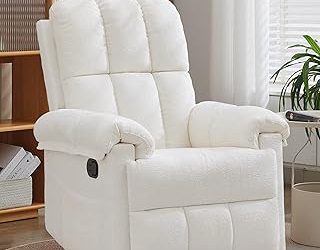
Korser 360° Swivel Rocker Recliner (Upholstered Fabric Glider)
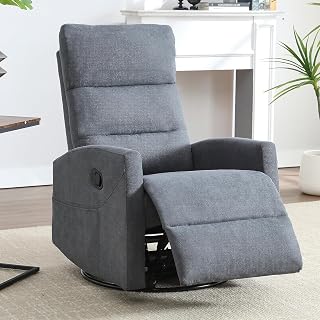
Korser’s fabric glider is the most balanced entry here: a genuinely narrow frame with a smooth swivel plate and a rocking motion that’s quiet enough for a sleeping baby. The upholstery reads soft and contemporary rather than orthopaedic, which matters when the chair sits in a shared living space.
Swivel Rocker Recliner in Dark Grey (Living Room / RV)
Built with tight-space installs in mind, this dark grey model has one of the shorter reclined footprints in the category, making it a sensible choice for RVs, campers, and bonus rooms. The neutral tone also disappears into most existing palettes, which is exactly what you want from a chair that occupies a corner permanently.
360° Swivel Manual Rocking Glider (Polyester, Dark Grey)
A manual mechanism keeps this one light, cable-free, and easy to reposition — a real advantage if your layout is still evolving. The polyester weave is hardwearing and forgiving, and the glider action is smooth enough for long nursing sessions or evening reading.
Small Swivel Rocker Recliner with Massage & Heat (Light Brown)
The most feature-dense option: heat, massage, dedicated lumbar support, and a high ergonomic back inside a compact shell. Worth choosing if you want the chair to do therapeutic work as well as decorative work, though plan for a nearby outlet and a slightly heavier frame.
Korser Swivel Rocker Recliner in Chenille (Beige)
The chenille version leans warmer and more textural than the standard fabric build, and the side pockets earn their keep for remotes, bottles, and books. Beige works well in layered, neutral interiors where a dark chair would sit too heavily.
Frequently Asked Questions
How much clearance does a rocker recliner really need?
Plan for four to six inches behind the chair and a clear swivel circle around it. Even compact models push backward as they recline, and rocking requires a few inches of travel that a wall will otherwise stop.
Are these chairs suitable for tall adults?
Some are. Look specifically for high-back or ergonomic-back descriptions and check the seat-to-headrest measurement. Frames designed purely as nursery gliders often top out around shoulder height for taller users.
Can a swivel rocker recliner go on carpet?
Yes — the base sits on a fixed plate, so pile depth doesn’t affect the swivel or rocking action the way it affects casters. Very thick shag can slightly dampen the rock, but low and medium pile is fine.
Is a velvet upholstery practical in a nursery?
It can be, with maintenance. Velvet resists snagging well but shows pressure marks and needs occasional brushing to keep the pile even. For heavy daily use with spills in play, chenille or polyester is the lower-effort choice.
Final Thoughts
For most small rooms, the Korser 360° Swivel Rocker Recliner in fabric is the safest all-round buy — compact, quiet, and visually light enough to sit anywhere. Choose the dark grey RV-friendly swivel rocker if your footprint is genuinely tight, or the massage-and-heat model in light brown if you want the chair to double as recovery furniture rather than just a place to sit.