Key takeaways
- Overnight runtime: Nosebleeds tend to develop during the long dry stretch between midnight and morning, so prioritize a tank that covers a full sleep cycle without a refill. Roughly 2L handles a small bedroom for about 24 hours, while 3L to 4L suits larger rooms or back-to-back nights.
- Cool mist over warm: Ultrasonic cool mist adds moisture without a heating element, which means lower energy draw, no hot water reservoir, and a safer footprint in a nursery or on a nightstand near a child.
- Measured noise, not vague claims: Look for a published decibel figure in the low-to-mid 20s. Anything at or under about 28dB reads as background hush in a quiet bedroom; higher numbers become the thing you notice at 3 a.m.
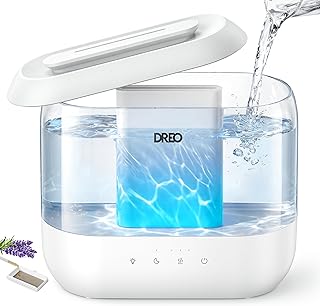
- Top-fill and wide-mouth cleaning: A humidifier you dread cleaning is a humidifier that grows biofilm. Top-fill designs let you pour straight from a pitcher, and a tank opening wide enough for your hand is the single best predictor of long-term hygiene.
- Humidity control and auto shut-off: Aim to hold a room between 40 and 60 percent. Built-in humidistats prevent over-saturation on wood floors and furniture, and auto shut-off protects the unit when the tank runs dry.
What's inside
Winter air has a way of announcing itself. The floors feel colder, the wood trim shifts, and somewhere around week two of running the furnace, you wake up to a nosebleed you didn’t earn. Dry indoor air is usually the culprit: once relative humidity dips below roughly 30 percent, the delicate lining inside the nose loses moisture, cracks, and bleeds. It’s a comfort problem and a home-environment problem at the same time, which is exactly why it belongs in a conversation about how a room is furnished and conditioned rather than just a medicine cabinet.
This guide looks at cool mist humidifiers through a design-forward, practical lens: which ones actually hold enough water to run all night, which stay quiet enough for a bedroom, and which are easy enough to clean that you’ll keep using them past January. Below are the models worth your counter space, plus a short buying framework so you can match tank size, noise level, and humidity control to your room instead of guessing.
As an Amazon Associate we earn from qualifying purchases.




How to Choose a/an Humidifier For Bloody Nose (2026)
- Overnight runtime: Nosebleeds tend to develop during the long dry stretch between midnight and morning, so prioritize a tank that covers a full sleep cycle without a refill. Roughly 2L handles a small bedroom for about 24 hours, while 3L to 4L suits larger rooms or back-to-back nights.
- Cool mist over warm: Ultrasonic cool mist adds moisture without a heating element, which means lower energy draw, no hot water reservoir, and a safer footprint in a nursery or on a nightstand near a child.
- Measured noise, not vague claims: Look for a published decibel figure in the low-to-mid 20s. Anything at or under about 28dB reads as background hush in a quiet bedroom; higher numbers become the thing you notice at 3 a.m.
- Top-fill and wide-mouth cleaning: A humidifier you dread cleaning is a humidifier that grows biofilm. Top-fill designs let you pour straight from a pitcher, and a tank opening wide enough for your hand is the single best predictor of long-term hygiene.
- Humidity control and auto shut-off: Aim to hold a room between 40 and 60 percent. Built-in humidistats prevent over-saturation on wood floors and furniture, and auto shut-off protects the unit when the tank runs dry.
The Best Humidifier For Bloody Nose (2026)s Reviewed
Levoit Top Fill 2.5L
The Levoit is the balanced choice for a standard bedroom: 2.5L and up to 25 hours of runtime at 28dB, with a genuinely easy top-fill opening that makes nightly refills a five-second habit. Auto shut-off and a clean, low-profile silhouette let it sit on a nightstand without visually competing with the rest of the room.
Homvana 3.6L Top-Fill
At 3.6L and a whisper-quiet 23dB, this is the pick for larger bedrooms or anyone who wants to skip refills for several nights. The 2-in-1 diffuser function is a nice bonus for congestion relief, and the grey finish reads more like a considered object than a medical device.
Clarston 2L Cool Mist
Compact, 24dB quiet, and rated for about 25 hours, the Clarston earns its spot with a 360-degree nozzle that lets you aim mist away from a headboard or upholstered surface. The BPA-free tank and soft nightlight make it an easy fit for a nursery or a small guest room.
DREO 4L HM311
If your bedroom is oversized, drafty, or heated aggressively, the 4L HM311 is the workhorse here, delivering up to 36 hours per fill at 28dB. Refilling and cleaning are straightforward for a tank this large, which matters more than spec sheets suggest.
ROSEKM 2.0L Cool Mist
A filterless, no-fuss ultrasonic unit in matte black, this one suits rooms with darker palettes where white plastic feels out of place. The 360-degree nozzle and auto shut-off cover the essentials without adding features you’ll never touch.
Frequently Asked Questions
What humidity level helps prevent dry-air nosebleeds?
Most guidance points to keeping indoor relative humidity between 40 and 60 percent. A cheap hygrometer is worth adding, since rooms vary more than you’d expect from one wall to another.
Where should I place the humidifier?
A few feet from the bed, elevated on a nightstand or low dresser, with mist directed toward open air rather than a wall, curtain, or wood surface. Direct mist on finishes can leave residue or moisture damage over time.
How often does it need cleaning?
Rinse the tank and refill with fresh water daily, and do a deeper clean of the basin roughly weekly. Distilled water reduces the white mineral dust that ultrasonic units can scatter.
Will a humidifier alone solve recurring nosebleeds?
It addresses the dry-air trigger, which is the most common one in heated homes. Frequent, heavy, or hard-to-stop nosebleeds are worth raising with a clinician, since other causes exist.
Final Thoughts
For most bedrooms, the Levoit 2.5L hits the right intersection of runtime, quiet operation, and easy maintenance. Choose the Homvana 3.6L if you want the quietest option with the longest gap between refills, or the DREO 4L HM311 if you’re conditioning a genuinely large, dry room through a full heating season.