Key takeaways
- Verify the clearance number, not the label: “Wall hugger” is a marketing term with no standard behind it. Look for a stated rear clearance in inches, then add an inch of tolerance for baseboards and floor vents before you commit to a wall.
- Power versus manual: Power mechanisms give you infinite stopping points and adjustable headrests, which matters if two people of different heights share the seat. Manual levers cost less, add no wiring constraints, and keep working during a power outage, a real consideration in an RV or off-grid cabin.
- Measure the closed footprint and the seat depth: Overall width in the 55 to 68 inch range covers most loveseats, but deep 22-inch seats can overwhelm a shallow room. If you are placing the piece under a window, check the closed back height against the sill.
- Match upholstery to traffic and light: Genuine leather ages beautifully and wipes clean but shows temperature swings in a parked RV. Velvet reads warmer and softer in styled rooms yet holds pet hair. PU sits in the middle: easy maintenance, lower cost, shorter lifespan under heavy daily use.
- Audit the console features you will actually use: USB-A plus USB-C is now baseline. Cup holders, hidden storage, side pockets, and LED accent lighting are genuinely useful in theater and RV setups, but each one adds bulk between the two seats.
What's inside
Reclining loveseats have a reputation problem in small-footprint interiors, and it is not about comfort. It is geometry. A conventional recliner mechanism swings the seat back through open air, which means the frame has to sit eight to fourteen inches off the wall before anyone can lean back. In a 12-foot bonus room, an RV slide-out, or a narrow media wall flanked by windows, that dead zone rearranges the entire plan: rugs float, side tables get pushed into walkways, and the room reads cluttered even when it is half empty.
Wall hugger recliners solve this by tilting the seat forward and sliding the back down along a compact track, so most models need only three to six inches of clearance. This guide covers the specs that actually determine whether a wall hugger will work in your space, then reviews the strongest loveseat options for 2026 across leather, velvet, and PU, in both manual and power configurations.
As an Amazon Associate we earn from qualifying purchases.


How to Choose a Wall Hugger Recliner Loveseat (2026)
- Verify the clearance number, not the label: “Wall hugger” is a marketing term with no standard behind it. Look for a stated rear clearance in inches, then add an inch of tolerance for baseboards and floor vents before you commit to a wall.
- Power versus manual: Power mechanisms give you infinite stopping points and adjustable headrests, which matters if two people of different heights share the seat. Manual levers cost less, add no wiring constraints, and keep working during a power outage, a real consideration in an RV or off-grid cabin.
- Measure the closed footprint and the seat depth: Overall width in the 55 to 68 inch range covers most loveseats, but deep 22-inch seats can overwhelm a shallow room. If you are placing the piece under a window, check the closed back height against the sill.
- Match upholstery to traffic and light: Genuine leather ages beautifully and wipes clean but shows temperature swings in a parked RV. Velvet reads warmer and softer in styled rooms yet holds pet hair. PU sits in the middle: easy maintenance, lower cost, shorter lifespan under heavy daily use.
- Audit the console features you will actually use: USB-A plus USB-C is now baseline. Cup holders, hidden storage, side pockets, and LED accent lighting are genuinely useful in theater and RV setups, but each one adds bulk between the two seats.
The Best Wall Hugger Recliner Loveseats (2026) Reviewed
55.1″ RV PU Leather Wall Hugger Recliner Loveseat
At 55.1 inches wide with a manual mechanism, this is the most space-efficient pick here, and the USB-A/USB-C station plus center cup holders cover the essentials without a bulky console. PU upholstery keeps the price accessible and cleanup simple, making it a sensible fit for RVs, guest lofts, and gaming rooms where the piece sees moderate rather than nightly use.
RV Loveseat Recliner in Velvet Fabric
The 150-degree recline range is the standout spec, delivering a near-flat lounge position that most compact wall huggers cannot reach. Velvet gives it a softer, more residential presence than the typical RV recliner, so it holds its own in a styled living room while still handling travel duty.
TUNYI Wall Hugger Power Loveseat Recliner
This is the theater-seating specialist: power recline, a full console with USB and a standard outlet, cup holders, side pockets, and LED base lighting for dark-room orientation. The beige colorway keeps a feature-heavy design from looking like equipment, which matters when the piece sits in a shared family space.
Watson & Whitely Genuine Leather Power Recliner Loveseat
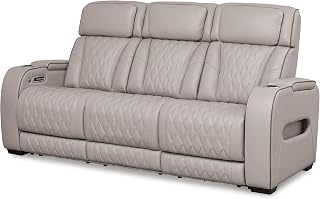
The build quality leader in this group, pairing genuine leather with dual power motors and independently adjustable power headrests, a combination that is rare at loveseat scale. In grey, it functions as a genuine living-room anchor rather than a compromise piece, and the leather will outlast every PU option here.
Oversized Massage Reclining Loveseat
Generous seat proportions and built-in massage make this the comfort-forward choice for anyone treating the loveseat as a primary lounging spot. Storage compartments, cup holders, and USB-A/USB-C ports round it out, though the wider frame demands you confirm your wall run before ordering.
Frequently Asked Questions
How much space do I really need behind a wall hugger loveseat?
Most designs need three to six inches, compared with eight to fourteen for a standard recliner. Confirm the manufacturer’s figure for your specific model and leave an extra inch for baseboard trim and any wall outlets or air returns.
Do wall huggers recline as far as standard recliners?
Slightly less, as a rule. Standard mechanisms typically reach a flatter angle, while wall huggers land in a deep lounge position. Models advertising 150 degrees or more close most of that gap.
Are these suitable for RVs and travel trailers?
Yes, and several here are designed for it. Check the shipping weight against your cargo capacity, plan for floor anchoring or brackets so the piece does not shift in transit, and confirm the closed depth clears your slide-out when retracted.
Is power recline worth the premium?
It is if you want adjustable headrests, precise positioning, or easier operation for anyone with limited grip or shoulder mobility. If your setup lacks convenient power or you want fewer components that can fail, manual remains a solid choice.
Final Thoughts
For a piece that has to look intentional in a main living room, the Watson & Whitely genuine leather power loveseat is the clear investment choice, with real leather and dual power headrests justifying the step up. The TUNYI power loveseat is the better fit for a dedicated media or theater room thanks to its outlet-equipped console and LED lighting, while the 55.1″ PU leather manual model remains the most practical pick for tight RV floor plans and secondary spaces.