Key takeaways
- Wood Species Matters: Cedar naturally resists rot and insect damage without chemical treatment, making it the benchmark for pergola frames. Cheaper pine alternatives require annual sealing and tend to check and split within a couple of years, so the upfront savings often evaporate.
- Wind and Weather Ratings: If you live in an area prone to gusts exceeding 50 mph, look for kits engineered with reinforced corner brackets and explicit high-wind ratings. A pergola that lifts or racks during a storm is a liability, not a feature.
- Roof Design and Shade Control: Slatted trellis roofs offer adjustable shade and work beautifully with climbing plants, while solid or dual-layer metal tops deliver year-round rain protection. Decide whether you want dappled light or full coverage before you commit.
- Footprint and Site Prep: Measure twice, pour concrete anchors once. A 10′ x 12′ pergola fits most suburban patios comfortably, but larger formats like 12′ x 24′ require a level surface and deeper footings — factor in site preparation costs and labor before choosing the biggest option on the list.
- Integrated Features and Expansion: Some kits include built-in PowerPort electrical outlets, storage shelves, or crossbeam hooks for hanging plants and string lights. These extras eliminate the need for aftermarket add-ons and can meaningfully increase how much time you actually spend under your pergola.
What's inside
Shopping for a wood pergola in 2026 means navigating a surprisingly crowded field of kits, each promising a backyard transformation but differing wildly in lumber quality, wind resistance, and actual ease of assembly. Many buyers end up with a structure that warps after one season or discover halfway through a weekend build that the hardware doesn’t match the pre-drilled holes. Getting it right the first time saves both money and the kind of frustration that makes you eye the manual and a sledgehammer simultaneously.
After vetting dozens of cedar and hardwood pergola kits currently available on Amazon, this guide narrows the field to five options worth your attention — and your backyard footprint. We weighed material durability, structural engineering, roof design versatility, and real-world user feedback to surface the kits that genuinely hold up. Whether you’re framing a dining area or training climbing vines into a living canopy, the picks below cover a range of footprints and budgets.
As an Amazon Associate we earn from qualifying purchases.



How to Choose a Wood Pergola (2026)
- Wood Species Matters: Cedar naturally resists rot and insect damage without chemical treatment, making it the benchmark for pergola frames. Cheaper pine alternatives require annual sealing and tend to check and split within a couple of years, so the upfront savings often evaporate.
- Wind and Weather Ratings: If you live in an area prone to gusts exceeding 50 mph, look for kits engineered with reinforced corner brackets and explicit high-wind ratings. A pergola that lifts or racks during a storm is a liability, not a feature.
- Roof Design and Shade Control: Slatted trellis roofs offer adjustable shade and work beautifully with climbing plants, while solid or dual-layer metal tops deliver year-round rain protection. Decide whether you want dappled light or full coverage before you commit.
- Footprint and Site Prep: Measure twice, pour concrete anchors once. A 10′ x 12′ pergola fits most suburban patios comfortably, but larger formats like 12′ x 24′ require a level surface and deeper footings — factor in site preparation costs and labor before choosing the biggest option on the list.
- Integrated Features and Expansion: Some kits include built-in PowerPort electrical outlets, storage shelves, or crossbeam hooks for hanging plants and string lights. These extras eliminate the need for aftermarket add-ons and can meaningfully increase how much time you actually spend under your pergola.
The Best Wood Pergola (2026)s Reviewed
Backyard Discovery Beaumont 12′ x 10′ Cedar Pergola
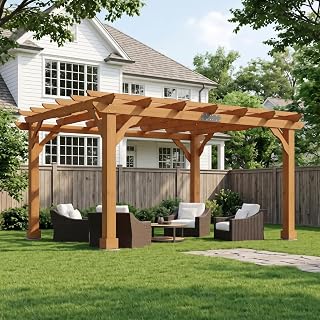
The Beaumont stands out for its thoughtful engineering: pre-cut, stain-grade cedar paired with a proprietary PowerPort that lets you plug in lights, fans, or a speaker without running extension cords across the patio. Its high-wind rating and all-season durability make it the most confidence-inspiring kit for homeowners who want a permanent fixture rather than a seasonal accessory.
BlueWish 10′ x 12′ Cedar Wood Pergola
BlueWish delivers a solid cedar structure at a price point that undercuts most competitors by a noticeable margin. The slatted trellis roof provides attractive filtered shade and an ideal framework for wisteria or grape vines, while the overall build quality punches above its cost tier — a strong pick for first-time pergola owners testing the waters.
Jocisland 12×24 FT Cedar Wood Pergola
If you’re outfitting a large entertaining area, the Jocisland’s generous 12′ x 24′ footprint is hard to beat. The included ground stakes add real stability, and the reddish-brown finish looks refined right out of the box. It demands more assembly time and a bigger concrete budget, but the result is a statement structure that anchors an entire outdoor room.
AMERLIFE 12×10 FT Cedar Pergola
AMERLIFE’s kit hits the sweet spot between compact footprint and heavy-duty construction. The thick cedar posts and reinforced slatted roof feel reassuringly substantial during assembly, and the red-brown stain resists fading well across seasons. It’s an excellent choice for a patio or deck where durability matters more than sheer size.
Outsunny 10′ x 12′ Arched Pergola
The Outsunny distinguishes itself with an arched roofline that adds architectural interest beyond the typical flat-top pergola. Concrete anchors are included for stable installation, and the dark brown finish coordinates easily with existing outdoor furniture. It’s particularly well-suited for climbing plant enthusiasts who want a graceful, curved training structure.
Frequently Asked Questions
Do cedar pergolas need to be stained or sealed?
Cedar is naturally resistant to decay and insects, so staining is optional from a structural standpoint. That said, a UV-protective sealant every two to three years will preserve the warm reddish tone and prevent the silvery-gray patina that develops with sun exposure. Most homeowners choose to seal for aesthetic reasons even though the wood would survive without it.
Can I build a wood pergola by myself?
Most 10′ x 12′ cedar pergola kits can be assembled by two people in a long afternoon. Larger kits like the Jocisland 12×24 benefit from a third set of hands and ideally a power drill with auger bits for post installation. Following the included instructions carefully — and pre-sorting hardware before you start — cuts assembly time significantly.
How deep should pergola post footings be?
For standard residential pergolas, footings should extend at least 24 to 36 inches below grade, or below the local frost line if it’s deeper. In regions with heavy frost heave, pouring concrete tube footings rather than surface-mounting prevents the structure from shifting seasonally. Always check local building codes before digging.
Will a wood pergola survive hurricane-force winds?
No freestanding wood pergola is rated for direct hurricane conditions, but kits like the Backyard Discovery Beaumont carry explicit high-wind ratings for severe weather events short of full hurricanes. If you’re in a coastal or storm-prone zone, anchoring the posts to concrete footings with heavy-duty brackets — and ideally adding diagonal bracing — dramatically improves wind resistance.
Final Thoughts
For most homeowners, the Backyard Discovery Beaumont represents the best overall balance of build quality, weather resilience, and integrated features like the PowerPort system. If budget is the primary driver, the BlueWish cedar pergola delivers genuine value without cutting corners on materials. And for those planning a serious entertaining space, the Jocisland 12×24 offers the kind of scale and presence that turns a backyard into a destination. Any of these five will look considerably better than that generic big-box alternative once it’s standing in your yard.